Terotechnica Asset Management College
  • 012 548 6096
  • 082 855 8016
  • info@terotechnica.com
Terotechnica Asset Management College
  • Home
    • About Terotechnica Maintenance College
    • Welcome to Terotechnica Maintenance College
    • Our Philosophy
    • In house courses
    • International Students
  • Search
  • 2027 Courses
  • Why Train?
  • Best Practices
  • Study Information
    • Diplomas
      • Subject Choices
      • Diplomas Awarded
      • Rules for Diploma Study
      • Diploma Enrolment
    • Comprehensive Courses
      • C101: Asset Management for Artisans
      • C201: Asset Management for Maintenance Supervisors
      • C301: Maintenance Planning
      • C302: Advanced Maintenance Planning
      • C303: Computerised Maintenance Management Systems (CMMS)
      • C501: Maintenance Shutdown and Project Management
      • C702: Reliability Engineering in Asset Management
      • C901: Maintenance Practice for Asset Management Engineers
      • C902: Leadership in Asset Management
      • C903: RCM Facilitation and Analysis
      • C904: RCM ProAktiv: Advanced Reliability Centred Maintenance
    • Short Courses
      • S801: RCM
      • S802: Asset Management for Executives
      • S803: Root Cause Failure Analysis
      • S804: Decision Making in Maintenance
      • S805: Maintenance Control
      • S808: Asset Management Logistics
      • S809: Data Analytics in Asset Management
      • S811: Water Treatment Plant Operation and Maintenance
      • S812: Road Maintenance
      • S813: Assets - Economical Replacement and Life Cycle Management
      • S820: What is Asset Management - how does it differ from Maintenance
      • S821: Understanding ISO 55000
      • S822: Implementing ISO 55000
    • Technical Courses
    • Occupational Certificates
  • Course Calendar
  • Terotechnica eCollege
  • Administration
    • Brochures
    • Terms
    • Inquiry / Application Form
    • Study Loans / Discounts
    • Privacy
  • People
    • Personnel
    • Diploma Ceremonies
      • 2023
    • Testimonials
      • Zonica (student) message to Melvin (lecturer) on her benefit from training with us
  • Offices
  • Contact us
Maintenance Planning Certification
Featured

How Maintenance Planning Certification Supports Better Coordination Between Operations and Engineering

How Maintenance Planning Certification Supports Better Coordination Between Operations and Engineering

Introduction

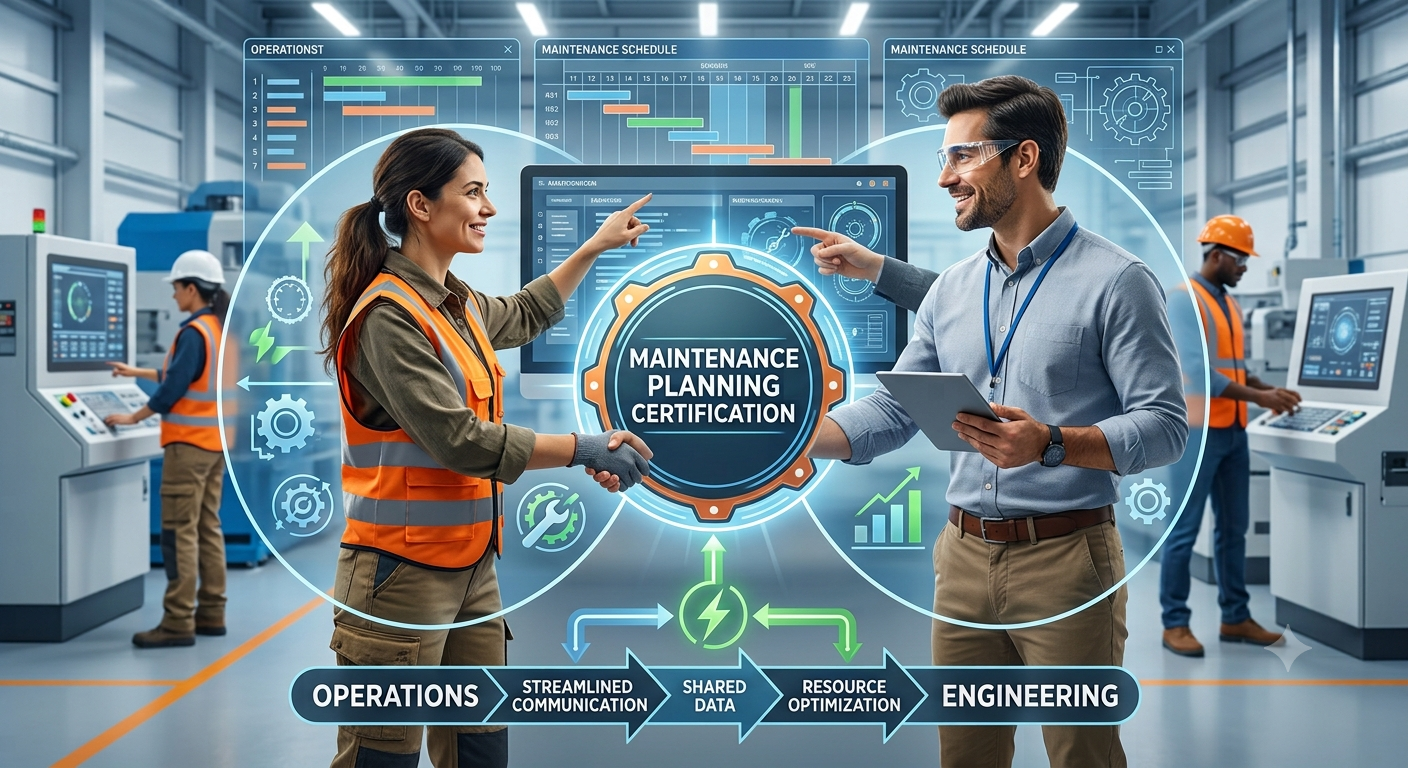
Maintenance planning sits at the intersection of engineering expertise, operational priorities, production requirements, and asset performance. When these functions operate independently, maintenance work can become reactive, schedules can become difficult to control, and important technical decisions may not align with production realities. A structured maintenance planning certification helps professionals understand how to coordinate these different interests through disciplined processes, reliable information, and clearly defined responsibilities. It also develops a stronger understanding of how maintenance activities affect production continuity, asset reliability, safety, cost, and overall business performance. At Terotechnica, we recognise that effective maintenance planning requires more than knowing how to prepare a work schedule because planners must also understand how engineering and operations interact throughout the asset lifecycle. Building this capability can create a common professional language that enables different departments to make better decisions together.

Understanding the Coordination Challenge

Operations and engineering often approach assets from different perspectives, even when both functions share the objective of maintaining reliable production. Operations teams are generally focused on production targets, operating conditions, process continuity, and immediate business requirements. Engineering teams are more likely to concentrate on equipment design, technical integrity, reliability improvement, failure mechanisms, and long term asset performance. Maintenance planning provides an important connection between these perspectives because it translates technical requirements into practical work that can be scheduled and executed without unnecessarily disrupting operations. Without a structured planning approach, engineering recommendations may reach the field without sufficient preparation, while operational priorities may cause technically important work to be postponed repeatedly. Certification helps maintenance professionals understand these competing priorities and develop methods for bringing them together within a controlled maintenance process.

Creating a Common Maintenance Language

One of the most important benefits of professional certification is the development of common terminology and processes across maintenance related functions. Operations personnel, engineers, planners, supervisors, and maintenance technicians need to understand what is meant by terms such as job scope, work priority, planning horizon, backlog, resource loading, equipment criticality, and maintenance window. When different departments interpret these concepts differently, meetings can become focused on disagreements rather than decisions. A certified maintenance planner is better equipped to establish consistent definitions and apply structured processes when preparing and coordinating work. This consistency makes communication more precise because participants can evaluate proposed maintenance activities using shared criteria rather than individual assumptions. Over time, a common maintenance language can reduce misunderstandings and improve cooperation between departments.

Translating Engineering Requirements Into Executable Work

Engineering teams frequently identify technical requirements that require maintenance intervention, but identifying the need for work is different from preparing that work for execution. A maintenance planner must understand the engineering requirement well enough to define the scope, identify necessary resources, determine required materials, establish safety requirements, and consider operational constraints. This translation process is particularly important when engineering recommendations involve inspections, modifications, condition based interventions, reliability improvements, or corrective actions. Certification can strengthen a planner's ability to distinguish between a technically desirable activity and an executable maintenance job with a clearly defined scope. Better planning also gives engineering teams greater confidence that their technical recommendations will be implemented correctly and efficiently. When technical knowledge is converted into a practical work package, the gap between engineering intent and maintenance execution becomes much smaller.

Aligning Maintenance With Production Requirements

Production schedules can change because of customer demand, process conditions, equipment availability, staffing levels, or commercial priorities. Maintenance activities therefore need to be coordinated carefully with operational requirements rather than being scheduled in isolation. A maintenance planning certification teaches professionals to consider the relationship between maintenance timing and operational constraints when developing work programs. This can involve identifying appropriate maintenance windows, coordinating equipment isolation requirements, reviewing production dependencies, and establishing realistic durations for planned activities. Such coordination allows operations teams to understand why a particular maintenance intervention is necessary while enabling maintenance teams to understand when the equipment can realistically be released. The result is a more balanced approach in which maintenance reliability objectives and production objectives are considered together.

Improving Work Identification and Prioritisation

Not every maintenance task carries the same operational or business consequence, which makes prioritisation a central part of effective coordination. Engineering may identify several technically important issues, while operations may be dealing with immediate production constraints and maintenance teams may have limited labour or equipment available. A structured planning methodology helps organisations evaluate work based on factors such as asset criticality, risk, failure consequences, safety implications, production impact, and available resources. Certification gives planners the knowledge needed to apply these principles consistently rather than allowing work priorities to be determined solely by urgency or individual influence. This helps operations and engineering reach better decisions about which tasks should be completed immediately and which can safely be scheduled for a later period. A disciplined prioritisation process therefore becomes an important mechanism for resolving competing departmental demands.

Strengthening Maintenance Backlog Management

A poorly controlled maintenance backlog can become a major source of tension between operations and engineering. Engineering may continue to identify technically necessary work, while operations may be concerned about the impact of taking equipment offline to complete that work. At the same time, maintenance teams need sufficient time and resources to prepare jobs properly before execution. Certification provides planners with methods for reviewing backlog quality, removing obsolete work, improving job information, assigning appropriate priorities, and maintaining a realistic forward workload. When backlog information is reliable, operations and engineering can make decisions using a clearer picture of what work exists and why it remains outstanding. This transparency helps prevent important work from becoming hidden within an expanding list of incomplete tasks.

Supporting Better Weekly Scheduling

Weekly scheduling is one of the areas where coordination between operations and engineering becomes particularly visible. A schedule must reflect available labour, materials, tools, permits, equipment access, production constraints, and technical requirements. If one of these elements is overlooked, planned work may fail to start or may require last minute changes that affect several departments. A maintenance planning certification develops an understanding of how work should move from identification and planning into scheduling and execution. This enables planners to facilitate more productive discussions between operations, maintenance, and engineering before the schedule is finalised. With better preparation, departments can identify conflicts earlier and agree on realistic commitments instead of discovering problems during execution.

Improving Engineering and Operations Meetings

Maintenance coordination meetings can become ineffective when participants arrive without reliable information or when discussions focus on individual problems without a structured decision making process. A professionally trained planner can bring useful information about backlog status, upcoming work, resource availability, asset priorities, outstanding materials, and operational constraints. This allows meetings to focus on decisions rather than simply exchanging updates. Engineering representatives can explain technical risks and recommendations, while operations representatives can communicate production requirements and equipment availability. Maintenance supervisors can then confirm whether the proposed work can realistically be executed within the available resources and timeframe. When each department contributes to a structured planning process, coordination meetings become an important control mechanism for maintenance performance.

Developing Better Resource Coordination

Maintenance execution depends on the availability of competent people, appropriate tools, materials, equipment, contractors, and technical support. Engineering may require specialist expertise for a particular intervention, while operations may need specific equipment released during a narrow maintenance window. Without advance planning, these requirements can conflict and create delays. Certification helps maintenance planners understand resource loading and the importance of preparing work sufficiently ahead of execution. Better resource coordination allows departments to identify shortages before the scheduled start date and make alternative arrangements where necessary. This improves the probability that planned maintenance can be completed during the agreed window without creating avoidable disruption.

Integrating Reliability Engineering With Planning

Reliability engineering generates valuable information about failure patterns, asset criticality, equipment performance, and maintenance strategies. However, reliability analysis only produces business value when its recommendations are translated into appropriate maintenance activities and operational practices. A trained planner can help connect reliability engineering outputs with the practical maintenance workflow by ensuring that recommended inspections, preventive tasks, modifications, and corrective actions enter the planning system with suitable detail. This creates a feedback loop between engineering analysis and maintenance execution. Once completed work generates new condition or failure information, that information can be returned to engineering for further analysis and strategy improvement. Certification therefore supports a more integrated relationship between reliability engineering and maintenance planning.

Supporting Preventive and Predictive Maintenance

Preventive and predictive maintenance programs depend heavily on coordination because many tasks require access to equipment at specific times or under particular operating conditions. Operations teams need to understand when equipment will be unavailable, while engineering teams need confidence that the required inspection or condition monitoring activity will provide meaningful information. Maintenance planners help coordinate these requirements by considering equipment availability, task frequency, required skills, tools, materials, and operational constraints. Professional training improves the planner's ability to distinguish between poorly specified recurring tasks and maintenance activities that genuinely support asset reliability. Better planning can also help organisations avoid excessive preventive maintenance that consumes resources without providing proportional value. This creates opportunities for operations, engineering, and maintenance to work together toward a more optimised maintenance strategy.

Managing Maintenance Windows More Effectively

Planned shutdowns and maintenance windows require particularly strong cooperation between operations and engineering because a large number of activities must often be completed within a limited period. Engineering may define inspection and repair requirements, operations may establish production and isolation constraints, and maintenance teams must determine how the work can be executed safely and efficiently. A certified planner can contribute by developing realistic work scopes, sequencing activities, identifying dependencies, and ensuring that resources are aligned with the agreed schedule. Effective planning also makes it easier to identify activities that can be completed simultaneously and those that must follow a particular sequence. This level of preparation reduces the likelihood of unexpected delays during critical maintenance windows. It also enables departments to make better decisions about what work should be included in the window and what should be deferred.

Improving Maintenance Data Quality

Good coordination depends on good information, and maintenance planning provides an important connection between field activities and maintenance records. Incomplete job descriptions, inaccurate equipment information, unclear failure descriptions, and poor work history can make it difficult for engineering and operations to understand asset performance. Certification encourages professionals to recognise the importance of accurate work identification, job plans, feedback, and historical records. When maintenance data is consistently captured, engineering teams can analyse recurring failures more effectively and operations teams can understand equipment behaviour more clearly. Planners can also use historical information to improve future estimates for labour, duration, materials, and specialist requirements. Over time, better maintenance data strengthens both operational decision making and engineering analysis.

Connecting Short Term Decisions With Long Term Asset Management

Maintenance planning should not be viewed only as a short term scheduling activity because decisions made today can influence asset performance for years. An organisation that repeatedly postpones technically important maintenance may reduce immediate production disruption while increasing long term reliability risk. Conversely, excessive maintenance can consume resources without delivering sufficient additional asset value. A maintenance planning certification helps professionals understand how individual work decisions relate to asset lifecycle considerations, risk management, maintenance strategies, and overall asset performance. This perspective enables planners to communicate more effectively with engineering and operations when discussing the consequences of postponing or accelerating work. It supports a more balanced approach in which immediate operational requirements are considered alongside long term asset management objectives.

Enhancing Communication Between Technical and Operational Teams

Communication problems are often less about a lack of information and more about differences in priorities and perspectives. Engineers may describe an issue in technical terms, while operations personnel may be primarily concerned with production consequences and equipment availability. Maintenance planners can act as translators by converting technical requirements into work scopes and operational constraints into scheduling considerations. Certification provides professionals with a broader understanding of maintenance management, which makes it easier to communicate with different stakeholders. When planners understand both the technical and operational implications of maintenance decisions, they can ask better questions and identify potential conflicts earlier. This creates a more collaborative environment where departments can solve problems together rather than passing responsibility between functions.

Building Accountability Across Departments

Effective coordination requires clear accountability for decisions, preparation, execution, and feedback. When responsibilities are unclear, maintenance delays can lead to disputes about whether the issue originated with operations, engineering, maintenance, procurement, or planning. A structured planning framework establishes clearer interfaces between these functions and helps define what information must be provided at each stage. Certification strengthens a professional's ability to understand these interfaces and apply disciplined planning practices. This can make it easier to identify whether a delay resulted from incomplete scope definition, unavailable materials, equipment access limitations, engineering clarification, or another constraint. Greater accountability improves organisational learning because recurring coordination problems can be identified and addressed rather than repeatedly treated as isolated incidents.

Supporting Maintenance Performance Measurement

Coordination improves further when departments can measure the results of their planning processes. Indicators such as schedule compliance, planned work percentage, backlog age, wrench time, maintenance rework, schedule break-in, and work order quality can provide insight into planning effectiveness. However, these measures are most useful when they are interpreted in the context of operational and engineering requirements rather than treated as isolated maintenance statistics. Certification helps professionals understand how maintenance performance measures relate to planning processes and organisational objectives. This enables teams to identify whether poor performance is caused by inadequate planning, resource constraints, operational interruptions, engineering changes, or other factors. A shared performance framework allows operations and engineering to participate more constructively in improvement initiatives.

Developing Professional Confidence in Maintenance Planning

Certification can also strengthen the professional confidence of people responsible for coordinating maintenance activities. Maintenance planning often requires individuals to communicate with experienced engineers, production leaders, maintenance supervisors, technicians, procurement teams, and contractors. Without a structured knowledge base, planners may find it difficult to challenge unrealistic schedules, incomplete work scopes, or poorly prioritised tasks. Formal training provides principles and methodologies that professionals can use when making planning decisions and explaining their recommendations. It also demonstrates a commitment to developing maintenance capability rather than relying solely on informal workplace experience. At Terotechnica, we view professional development as an important component of building maintenance organisations that can coordinate technical knowledge with practical execution.

Turning Certification Into Organisational Capability

The value of maintenance planning certification extends beyond the individual who completes the training. When certified professionals apply consistent planning methods, they can help introduce better processes across the wider maintenance organisation. They can improve work order quality, facilitate stronger coordination meetings, support better backlog reviews, and encourage more disciplined scheduling practices. They can also help colleagues understand why engineering recommendations need clear scopes and why operational constraints must be incorporated before work is scheduled. Over time, these practices can contribute to a stronger maintenance culture in which planning is treated as an essential business process rather than administrative preparation. The organisation therefore gains more than an individual qualification because it develops internal capability that can improve coordination across multiple functions.

Preparing Maintenance Professionals for Integrated Asset Management

Modern asset management requires organisations to consider assets as part of interconnected systems rather than treating maintenance as an isolated technical function. Decisions about maintenance frequency, operational use, asset replacement, reliability improvement, risk, lifecycle cost, and resource allocation are closely connected. Maintenance planners who understand these relationships can contribute more effectively to discussions involving engineering and operations. Professional certification provides an opportunity to develop this broader perspective while strengthening practical planning skills. It helps professionals recognise that effective maintenance is ultimately about achieving required asset performance while managing risk and resources responsibly. This broader understanding positions maintenance planners as important contributors to integrated asset management.

Conclusion

Maintenance planning certification can provide a structured foundation for improving coordination between operations and engineering. It helps professionals understand how to convert engineering requirements into executable work while incorporating production constraints, resource availability, risk, asset criticality, and maintenance priorities. It also strengthens the processes used for backlog management, scheduling, maintenance windows, reliability improvement, data quality, and performance measurement. When these capabilities are applied consistently, operations and engineering can move away from reactive discussions and toward more predictable, evidence based decision making. The greatest benefit comes when certification is supported by organisational processes that give planners the authority, information, and collaboration required to apply what they have learned. For organisations seeking stronger asset performance and more effective maintenance execution, developing qualified maintenance planning professionals can be a practical step toward creating better coordination across the entire asset lifecycle.

The Strategic Value of Maintenance Planning Certification

The modern maintenance environment demands professionals who can connect technical knowledge with operational realities. A maintenance planner must understand more than schedules because the role increasingly involves risk assessment, resource coordination, reliability principles, engineering communication, production planning, and lifecycle thinking. Structured certification can help develop these capabilities while providing a consistent framework for professional practice. It can also help organisations establish a stronger bridge between engineering recommendations and operational execution. When maintenance planning becomes a shared organisational discipline, decisions become easier to communicate, work becomes easier to prepare, and asset performance becomes easier to manage. Ultimately, investing in maintenance planning capability can help create a more coordinated organisation where operations, engineering, and maintenance work toward the same asset performance objectives.
 

CMMS Training

How CMMS Training Can Improve the Quality of Maintenance Master Data

How CMMS Training Can Improve the Quality of Maintenance Master Data

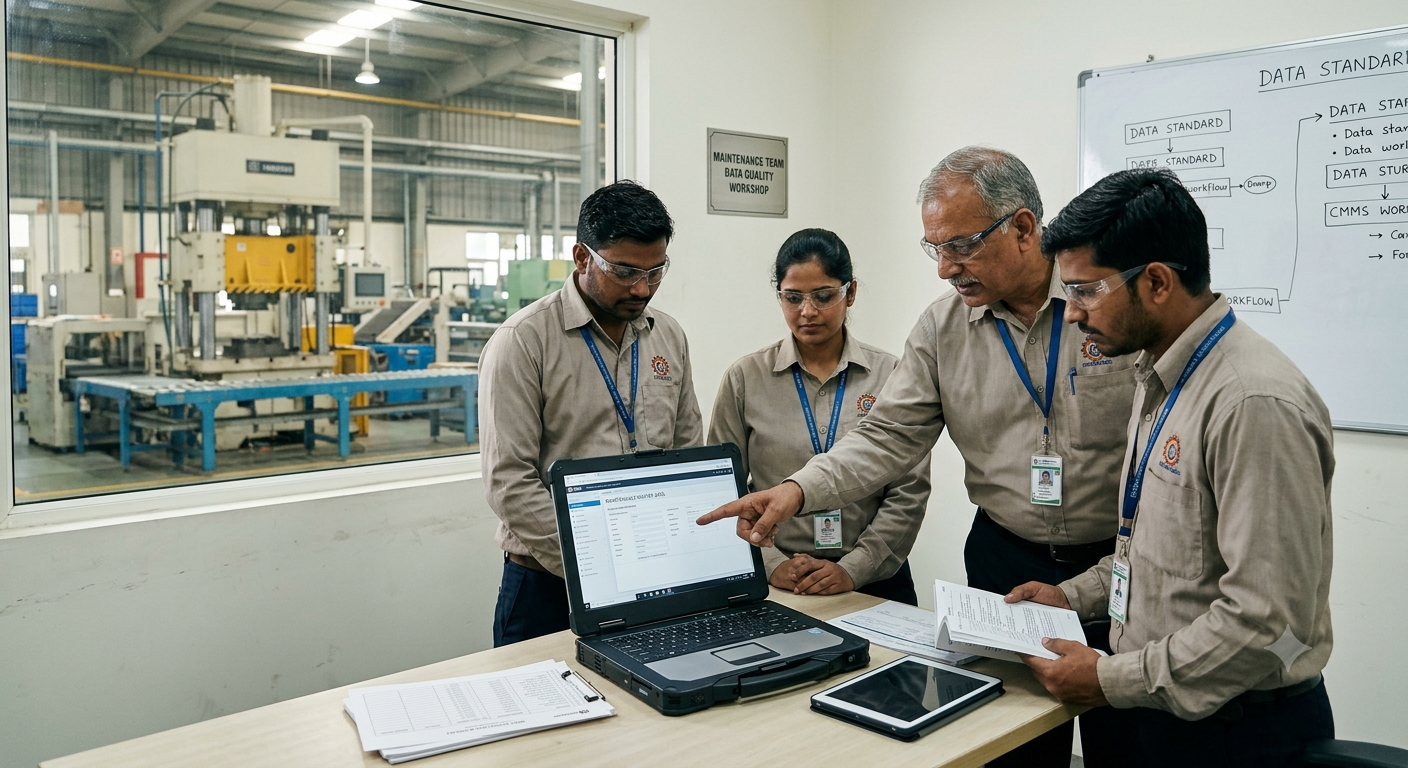
Maintenance master data is one of the most important foundations of an effective asset management strategy, yet it is often one of the most overlooked areas of maintenance improvement. Asset registers, equipment hierarchies, functional locations, bills of materials, maintenance plans, spare parts records, failure codes, task lists, and technical specifications all depend on accurate and consistent master data. When this information is incomplete, duplicated, outdated, or incorrectly structured, maintenance teams can struggle to plan work, analyse equipment performance, manage spare parts, and make reliable decisions. A Computerised Maintenance Management System, commonly known as a CMMS, can provide a powerful platform for managing this information, but the software itself cannot guarantee data quality. The quality of the information inside the system depends heavily on the knowledge, discipline, and practices of the people responsible for creating and maintaining it. This is why effective CMMS training should be considered an important component of any strategy focused on improving maintenance master data quality.

Understanding Maintenance Master Data

Maintenance master data refers to the relatively stable information that supports the ongoing execution and management of maintenance activities. It can include asset identification numbers, equipment descriptions, manufacturers, model numbers, serial numbers, technical characteristics, locations, criticality classifications, maintenance strategies, spare parts relationships, and standard maintenance tasks. Unlike transactional records such as completed work orders, master data provides the structural foundation on which maintenance transactions are performed. If an asset is incorrectly classified or linked to the wrong functional location, every subsequent maintenance activity involving that asset can potentially be affected. Poor master data can also make historical maintenance information difficult to interpret because similar assets may be recorded under inconsistent names or identifiers. For this reason, improving maintenance master data should be treated as a core element of maintenance management rather than as a simple data entry exercise.

Why CMMS Training Matters

A CMMS is only as effective as the processes and people supporting it, which means training plays a significant role in determining the reliability of the information stored within the system. Employees need to understand not only how to navigate screens and enter records, but also why particular data fields, structures, naming conventions, and relationships matter. Without this understanding, users may enter information according to personal preferences, resulting in inconsistent records across departments and sites. Proper training helps employees recognise the difference between essential master data and optional information while also showing them how their individual data entry decisions influence planning, reporting, procurement, reliability analysis, and asset performance management. It also establishes a common vocabulary that allows maintenance planners, engineers, technicians, stores personnel, and asset managers to work from the same information structure. By developing this shared understanding, organisations can reduce the variations that commonly undermine CMMS data quality.

Establishing Consistent Asset Naming Conventions

One of the most common master data problems occurs when different users describe the same type of equipment in different ways. A pump might be entered as "water pump," "pump water," "WP," or by a manufacturer-specific description, making it difficult to search, group, analyse, or report on similar assets. CMMS training can teach users how to apply standard naming conventions based on agreed organisational rules. Training can also explain the relationship between asset descriptions, equipment types, functional locations, tag numbers, and parent-child structures. When employees understand how these fields are intended to work together, they are less likely to create unnecessary variations or duplicate records. Standardised naming makes asset information easier to find and improves the reliability of maintenance reports and performance analysis.

Improving Asset Hierarchy Structure

A well-designed asset hierarchy provides a logical representation of how physical assets are organised within a facility, production process, or infrastructure network. It may connect sites to areas, areas to systems, systems to equipment, and equipment to components or subassemblies. Incorrect hierarchy structures can make it difficult to understand where failures occur and can distort maintenance costs when work is recorded against the wrong asset level. CMMS training can demonstrate how hierarchy design affects work management, cost reporting, reliability analysis, and maintenance history. Users can learn when information should be associated with a parent asset, a child asset, a functional location, or a specific maintainable item. This understanding helps prevent the gradual deterioration of asset structures that can occur when users create records without considering the wider information architecture.

Strengthening Equipment Identification

Reliable asset identification is essential for ensuring that maintenance activities are performed against the correct equipment. Training should therefore cover the appropriate use of asset numbers, tag numbers, serial numbers, equipment types, manufacturers, model references, and other identifiers. Users need to understand that these identifiers serve different purposes and should not be treated as interchangeable fields. A technician who understands the identification structure is more likely to select the correct asset when creating a work request or completing a work order. Maintenance planners can then use the resulting history with greater confidence when evaluating recurring failures, maintenance costs, and equipment performance. Consistent identification also reduces the risk of duplicate equipment records that can fragment maintenance history across multiple CMMS entries.

Improving Bill of Materials Accuracy

Equipment bills of materials provide an important connection between assets and the components or spare parts required to maintain them. If these relationships are incomplete or inaccurate, technicians may have difficulty identifying the correct parts, while stores teams may struggle to forecast demand. CMMS training can help maintenance personnel understand how equipment bills of materials should be structured and maintained. Users can learn how to distinguish between interchangeable parts, consumable items, critical spares, and components that belong to specific equipment configurations. Training can also reinforce the importance of reviewing bills of materials after equipment modifications, replacements, and engineering changes. Maintaining these relationships accurately improves maintenance preparation and creates a stronger connection between asset management, materials management, and procurement.

Reducing Duplicate and Inconsistent Records

Duplicate master data is a major source of confusion within maintenance systems because multiple records can represent the same physical asset, spare part, or equipment type. These duplicates can arise when users lack clear procedures for searching existing records before creating new ones. CMMS training can teach employees how to conduct effective searches using different identifiers, descriptions, classifications, and attributes before adding new records. It can also explain the consequences of duplication, including fragmented maintenance histories, inaccurate inventory information, misleading reports, and inflated asset counts. When users understand the operational consequences of duplicate records, they are more likely to follow established data creation procedures. Over time, this discipline can significantly improve the integrity and usability of the maintenance database.

Supporting Better Maintenance Strategy Data

Maintenance master data is closely connected to the maintenance strategies applied to individual assets. Preventive maintenance schedules, inspection requirements, lubrication tasks, condition monitoring activities, and statutory requirements all depend on accurate information about equipment and its operating context. CMMS training can help users understand how maintenance strategies should be associated with the correct assets and how standard task information should be structured. This is particularly important when organisations use equipment classes or templates to establish maintenance programs across groups of similar assets. Incorrect or poorly structured strategy data can lead to excessive maintenance on some assets while other assets receive insufficient attention. Better training allows maintenance professionals to build and maintain strategies that are more closely aligned with equipment function, failure modes, criticality, and operating requirements.

Developing Data Ownership and Accountability

Data quality improves when organisations clearly establish who is responsible for creating, reviewing, approving, and maintaining different categories of master data. Without defined ownership, everyone may assume that someone else is responsible for correcting inaccurate information. CMMS training can incorporate these responsibilities into the wider maintenance management process so that users understand their role in maintaining data integrity. Maintenance planners may be responsible for certain planning parameters, engineers may control technical attributes, stores personnel may maintain material information, and asset managers may oversee broader asset structures. Clear accountability creates a governance framework in which data quality becomes part of normal work rather than an occasional cleanup activity. When responsibilities are understood and supported by appropriate training, organisations can maintain higher-quality master data over the long term.

Connecting Training With Data Governance

CMMS training becomes significantly more effective when it is connected to formal maintenance data governance. Data governance establishes the rules that determine how information is created, classified, validated, changed, reviewed, and retired. Training provides the practical knowledge required for employees to apply those rules correctly during daily maintenance activities. A governance framework can define naming standards, mandatory fields, approval workflows, classification structures, duplicate prevention procedures, and data quality requirements. Training can then translate those requirements into practical behaviours that users can apply while working within the CMMS. This combination creates a stronger control environment because employees understand both the technical process and the business reason behind each data requirement.

Improving Data Quality Through Practical Training

Effective CMMS training should not rely entirely on theoretical demonstrations because master data quality problems are often best understood through realistic maintenance scenarios. Employees can be trained using examples involving incorrectly identified equipment, duplicate assets, incomplete specifications, inaccurate bills of materials, and poorly structured maintenance plans. These scenarios allow users to see how seemingly small data errors can affect downstream maintenance activities. Practical exercises can also demonstrate how a technician's work order entry eventually influences reliability analysis, management reporting, spare parts planning, and maintenance optimisation. This approach makes the consequences of poor data more tangible and encourages users to treat data entry as an operational responsibility. Over time, practical training can help transform master data management from an administrative task into an integral part of professional maintenance practice.

Training Maintenance Planners and Reliability Professionals

Maintenance planners and reliability professionals have particularly important roles in maintaining high-quality CMMS master data because they frequently interact with asset structures, maintenance strategies, task lists, failure information, and historical records. Their decisions influence how maintenance work is planned and how equipment performance is analysed over time. Advanced CMMS training can help these professionals understand data relationships rather than simply individual fields within the system. They can learn how poor asset classification affects reliability calculations, how inconsistent failure coding affects analysis, and how inaccurate equipment relationships can distort maintenance costs. This broader understanding allows planners and reliability professionals to identify data problems before they become embedded in recurring maintenance processes. It also encourages a more systematic approach to continuous improvement.

Training Technicians to Protect Data Quality

Technicians are often among the most important contributors to CMMS data quality because they interact directly with equipment and generate large volumes of maintenance information. Their observations can provide valuable information about equipment condition, failure symptoms, component replacements, operating abnormalities, and completed maintenance tasks. However, this information is only useful when technicians know how to record it consistently and accurately. CMMS training can show technicians how to select the correct assets, use standard failure and cause codes, record meaningful completion information, and identify changes that require master data updates. When technicians understand that their entries become part of the asset's permanent maintenance history, they are more likely to provide useful and accurate information. This creates a feedback loop in which field experience continuously improves the quality of the maintenance database.

Using Data Quality Checks as Part of Training

Organisations can strengthen CMMS training by teaching employees how to recognise common data quality indicators. These indicators may include missing mandatory fields, duplicate equipment records, inconsistent descriptions, obsolete assets, incomplete bills of materials, invalid classifications, and maintenance plans without appropriate task content. Training users to identify these issues encourages them to participate actively in data quality management instead of relying exclusively on a central administrator. Regular data quality reviews can then become part of maintenance management routines. Employees can use established rules to identify records requiring correction, validation, approval, or retirement. This creates a continuous improvement cycle in which training, data governance, system usage, and maintenance performance reinforce one another.

Supporting Asset Lifecycle Management

Master data quality should not be viewed as something that matters only when an asset is initially entered into the CMMS. Asset information changes throughout the lifecycle as equipment is modified, refurbished, relocated, replaced, upgraded, or decommissioned. CMMS training can help employees understand how these lifecycle events should be reflected in the maintenance database. Training can also explain the importance of preserving historical information while updating current asset status and configuration. When lifecycle changes are not captured correctly, organisations can end up maintaining obsolete equipment records or losing important historical relationships. Strong lifecycle data practices therefore help ensure that the CMMS remains an accurate representation of the physical asset base throughout its useful life.

The Relationship Between Master Data and Maintenance Performance

High-quality master data can have a direct influence on maintenance performance because reliable information supports better planning and decision-making. Accurate asset structures allow maintenance teams to identify where work is required and where costs are being generated. Reliable equipment classifications make it easier to compare similar assets and identify recurring problems across a population of equipment. Complete spare parts relationships improve work preparation and reduce the likelihood of delays caused by unavailable or incorrectly identified components. Consistent maintenance strategy information also supports more effective preventive and predictive maintenance programs. By improving the quality of the information used throughout these processes, CMMS training can contribute to better maintenance execution and stronger asset performance.

Building a Culture of Data Discipline

Technology alone cannot create a strong maintenance data culture because data quality ultimately depends on human behaviour and organisational discipline. Employees need to understand that maintenance data is an operational asset rather than merely information stored inside software. CMMS training provides an opportunity to establish this mindset by connecting individual data entry decisions to broader business outcomes. When employees recognise that accurate data supports safety, reliability, cost control, planning efficiency, spare parts availability, and management decision-making, they are more likely to treat data quality seriously. Managers can reinforce this culture by incorporating data quality expectations into maintenance procedures, performance reviews, audits, and improvement programs. A consistent culture of data discipline can prevent many of the problems that would otherwise require expensive database cleansing projects later.

Continuous Improvement Through Ongoing Training

A single CMMS training session is rarely sufficient to maintain high-quality master data because maintenance systems, equipment configurations, organisational structures, and business requirements change over time. New employees need onboarding, existing employees may require refresher training, and advanced users may benefit from specialised training in areas such as reliability analysis, maintenance optimisation, asset hierarchy design, and data governance. Periodic training can also be used to address recurring data quality problems identified through audits and system reports. This creates an opportunity to use actual organisational data issues as learning material for future training sessions. Continuous development ensures that employees remain aligned with current processes and understand how changes to the CMMS should influence their working practices. In this way, training becomes an ongoing mechanism for protecting and improving the value of maintenance master data.

Developing Professional CMMS Competence

Professional development in CMMS usage should extend beyond learning where to click within the system. Maintenance professionals need to understand the principles of asset information management, data structures, maintenance workflows, reliability concepts, and lifecycle management that sit behind the technology. Training that combines these disciplines can help employees make better decisions when creating or modifying master data. It can also improve communication between maintenance, engineering, operations, procurement, stores, and asset management teams because each function gains a clearer understanding of how its information affects other parts of the organisation. Our approach to maintenance education recognises that competent people are essential to achieving sustainable improvements in maintenance performance. Developing CMMS competence therefore means developing the capability to manage maintenance information as a strategic business resource.

CMMS training can make a substantial contribution to the quality of maintenance master data when it is designed around real maintenance processes rather than limited to software navigation. It can help users establish consistent naming conventions, build reliable asset hierarchies, reduce duplicate records, maintain accurate bills of materials, improve maintenance strategies, and strengthen asset lifecycle information. It can also clarify data ownership and encourage technicians, planners, engineers, stores personnel, and asset managers to recognise their individual responsibilities for data quality. The strongest results occur when training is combined with clear data governance, defined standards, practical workflows, quality checks, and continuous improvement. Organisations that invest in these capabilities can turn their CMMS from a basic maintenance record system into a dependable source of asset intelligence. At Terotechnica, we believe that effective maintenance training should develop not only software skills but also the professional judgement required to create, maintain, interpret, and improve the information on which modern asset management depends.


How Maintenance Planning Can Become a Competitive Advantage in Asset-Intensive Industries

How Maintenance Planning Can Become a Competitive Advantage in Asset-Intensive Industries

Asset-intensive industries depend on physical assets to generate revenue, maintain production capacity, protect quality, and deliver services consistently. Sectors such as manufacturing, mining, energy, utilities, transportation, oil and gas, chemicals, and heavy infrastructure often operate with equipment that represents a substantial portion of their capital investment. In these environments, maintenance is not simply a technical function responsible for repairing equipment after failure. It is a strategic capability that can directly influence operating costs, production reliability, safety performance, customer satisfaction, and long-term profitability. When maintenance planning is structured around business priorities, organizations can move from reactive decision-making toward predictable and controlled asset performance. This is why maintenance planning can become a genuine competitive advantage rather than remaining an administrative activity within the maintenance department.

Moving Maintenance From a Cost Centre to a Strategic Function

Many organizations still evaluate maintenance primarily by looking at how much money the department spends. This perspective can encourage short-term cost reductions without considering the operational consequences of inadequate maintenance. Reducing planned maintenance hours, postponing inspections, or minimizing spare parts inventories may appear financially attractive in the short term. However, these decisions can increase equipment failures, emergency work, production interruptions, overtime costs, and safety exposure over time. Effective maintenance planning changes this perspective by connecting maintenance resources with asset performance and business outcomes. When maintenance decisions are evaluated according to their contribution to production availability, asset life, risk reduction, and operational continuity, the function becomes a strategic contributor to organizational performance.

The Business Value of Effective Maintenance Planning

Maintenance planning creates value by ensuring that work is performed with the right resources, information, materials, tools, skills, and time available. A well-planned maintenance task can often be completed more quickly and with fewer interruptions than an unplanned task. The difference becomes particularly significant when organizations manage hundreds or thousands of assets across complex operating environments. Better planning can reduce equipment downtime while improving labour utilization and increasing the proportion of maintenance work that is completed according to schedule. It can also reduce the frequency of emergency interventions that disrupt production and place additional pressure on maintenance personnel. Over time, these improvements can translate into lower total maintenance costs and greater operational reliability.

Planning Versus Scheduling in Maintenance

Maintenance planning and maintenance scheduling are closely connected, but they are not the same activity. Planning determines what work needs to be performed, how the work should be carried out, what resources are required, and what preparations must be completed before execution. Scheduling determines when the prepared work should be performed in relation to production requirements, workforce availability, equipment access, and other operational constraints. Confusing these two functions can create unrealistic schedules because work may be placed on a schedule before the necessary preparation has been completed. Strong maintenance organizations therefore establish a clear distinction between planning and scheduling while ensuring that both processes operate as an integrated workflow. This distinction creates better visibility, improves schedule compliance, and helps maintenance teams spend more time executing prepared work instead of solving avoidable problems.

Improving Asset Availability Through Better Preparation

Asset availability is one of the most important performance considerations in industries where production depends heavily on physical equipment. Every hour of unnecessary downtime can represent lost production, missed delivery commitments, reduced utilization, and additional operational expense. Maintenance planning improves availability by preparing work before technicians arrive at the asset. This preparation may involve reviewing technical documentation, identifying required parts, confirming tools, estimating labour requirements, establishing safety requirements, and defining the correct work procedure. When these elements are available in advance, technicians can focus on executing the job rather than searching for information or waiting for materials. The result is a more efficient maintenance process that supports higher equipment availability and more predictable production.

Reducing Reactive Maintenance

Reactive maintenance occurs when organizations respond to equipment problems after they have already affected operations or created an immediate maintenance requirement. Although some corrective work will always be necessary, excessive reactive maintenance can consume resources that should otherwise be dedicated to planned and preventive activities. Emergency work often involves rushed decision-making, overtime, expedited parts procurement, production disruption, and increased safety risks. Maintenance planning reduces this dependency by identifying upcoming work and preparing it before the need becomes urgent. It also creates a mechanism for capturing corrective work discovered during inspections and converting that work into properly prepared maintenance tasks. As the percentage of planned work increases, organizations can gain greater control over maintenance resources and reduce the operational volatility associated with unexpected failures.

Using Failure History to Improve Planning Quality

Historical maintenance data provides valuable information for improving future planning decisions. Work orders can reveal recurring failure modes, typical labour requirements, commonly used spare parts, equipment-specific difficulties, and the frequency of corrective interventions. When this information is systematically reviewed, planners can develop more accurate job plans and resource estimates. Historical information can also identify assets that require additional engineering attention or changes to preventive maintenance strategies. Over time, repeated maintenance activities can become increasingly standardized as planners refine procedures based on actual execution experience. This creates a continuous improvement cycle in which every completed maintenance activity contributes knowledge that can improve future planning.

Integrating Maintenance Planning With Asset Management

Asset management provides a broader framework for balancing asset performance, cost, risk, and organizational objectives throughout the asset life cycle. Maintenance planning supports this framework by translating asset management objectives into practical maintenance activities. An asset strategy may identify critical equipment, acceptable levels of risk, desired performance standards, and life-cycle objectives. Maintenance planning then helps determine how inspections, preventive tasks, condition monitoring, corrective activities, and replacement work should support those objectives. This connection prevents maintenance teams from treating every asset in exactly the same way regardless of its business importance. Organizations can instead allocate maintenance resources according to asset criticality, risk exposure, operational consequences, and life-cycle value.

Prioritizing Work According to Asset Criticality

Not every maintenance task deserves the same level of urgency or resource allocation. An inexpensive auxiliary asset with limited operational consequences may require a different maintenance strategy from a critical production machine whose failure can stop an entire facility. Asset criticality analysis helps organizations distinguish between these situations by considering factors such as safety, environmental impact, production loss, quality consequences, repair cost, and redundancy. Maintenance planners can use this information to prioritize work and determine appropriate planning depth. High-criticality assets may require detailed job plans, specialist resources, condition monitoring, and carefully controlled maintenance windows. This approach helps ensure that maintenance effort is directed toward the areas where it can produce the greatest reduction in business risk.

Strengthening Preventive Maintenance Programs

Preventive maintenance is most effective when activities are designed around actual failure behaviour and operational requirements rather than simply repeating historical routines. Maintenance planning provides the practical structure needed to prepare these activities properly and ensure that they are executed at appropriate intervals. Planners can review task instructions, labour estimates, required materials, tools, access requirements, and safety controls before the work enters the execution schedule. Feedback from technicians can then be used to determine whether individual preventive tasks remain necessary, whether their frequency is appropriate, or whether their procedures need modification. This creates a more dynamic preventive maintenance program that evolves with asset condition and operating experience. Strong planning therefore helps organizations avoid both under-maintenance and unnecessary maintenance.

Supporting Predictive and Condition-Based Maintenance

Predictive maintenance technologies can provide valuable information about equipment condition, but data alone does not create business value. Vibration analysis, thermography, oil analysis, ultrasonic inspection, electrical monitoring, and other condition monitoring techniques can identify potential deterioration before functional failure occurs. Maintenance planning is required to convert those findings into actionable work that can be properly prepared and scheduled. When a condition monitoring system identifies an abnormality, planners need to determine the appropriate intervention, required resources, spare parts, technical requirements, and timing. This creates a connection between condition information and maintenance execution. The combination of accurate asset condition data and disciplined planning can significantly improve the organization's ability to intervene before failures become costly disruptions.

Improving Spare Parts Management

Spare parts availability is one of the most common factors affecting maintenance execution. A technician may have the required skills and equipment access, but the job can still fail to progress if the necessary component is unavailable. Effective maintenance planning identifies material requirements before work is scheduled, giving stores and procurement teams sufficient time to source and stage the necessary parts. This can reduce waiting time, emergency purchases, expedited shipping, and duplicate inventory. Planning data can also help organizations identify frequently used components and improve inventory policies for critical assets. Over time, better coordination between maintenance planning, materials management, procurement, and asset strategy can reduce working capital while improving maintenance readiness.

Making Better Use of Skilled Maintenance Labour

Skilled maintenance professionals are valuable resources, particularly in industries facing shortages of experienced technicians and engineers. Poorly planned work can cause these specialists to spend significant amounts of time searching for information, collecting tools, waiting for permits, locating parts, or coordinating access. Proper planning allows organizations to use skilled labour more effectively by preparing these requirements before the maintenance window begins. Planners can also identify specialist skills in advance and coordinate their availability with the expected work scope. This makes it easier to group related activities and reduce repeated mobilization of scarce expertise. Better labour utilization can therefore increase maintenance capacity without necessarily requiring a proportional increase in workforce size.

Increasing Maintenance Schedule Compliance

Schedule compliance provides an important indication of whether a maintenance organization can execute the work it has committed to completing. Low compliance can result from unrealistic workloads, insufficient preparation, changing production priorities, material shortages, inaccurate estimates, or excessive emergency work. Improving planning quality addresses several of these causes before the work reaches the weekly schedule. When jobs are properly scoped and prepared, supervisors can build more realistic schedules based on actual workforce capacity and operational constraints. High schedule compliance also improves communication between maintenance and operations because both functions have greater confidence in the work plan. Over time, predictable maintenance execution can become an important component of predictable production performance.

Building a Culture of Continuous Improvement

Maintenance planning should not be treated as a static administrative process. Every maintenance activity generates information about asset condition, job duration, material consumption, safety requirements, work methods, and potential improvement opportunities. Organizations that systematically capture and review this information can continuously improve their job plans and maintenance strategies. Planners can compare estimated labour hours with actual execution time and investigate significant differences. They can also incorporate technician feedback to remove unnecessary steps, clarify instructions, improve safety controls, and optimize resource requirements. This continuous improvement approach gradually transforms maintenance planning into an organizational learning mechanism.

Using CMMS Technology More Effectively

A computerized maintenance management system can provide the information infrastructure required to support disciplined maintenance planning. A CMMS can store asset hierarchies, maintenance strategies, work histories, job plans, task lists, labour requirements, materials information, and scheduling data. However, simply owning a CMMS does not guarantee effective planning because the quality of the system depends heavily on the quality of the information entered into it. Organizations need consistent asset structures, clear work order standards, accurate failure information, and properly maintained job plans. Planners and supervisors must also use the system as part of their daily workflow rather than treating it as a reporting database. When technology and process discipline work together, CMMS data can become a powerful foundation for maintenance optimization.

Connecting Maintenance With Production Planning

Maintenance and production often compete for access to the same equipment, particularly in continuous or high-utilization operations. Without coordinated planning, maintenance activities may be postponed because production requirements change, while production may experience unexpected downtime because maintenance opportunities were missed. Integrated planning creates a common view of equipment availability, production priorities, maintenance requirements, and operational constraints. Planned maintenance can then be aligned with production shutdowns, changeovers, low-demand periods, or other suitable operating windows. This approach minimizes disruption while ensuring that critical maintenance does not continue to be postponed indefinitely. The resulting relationship is less about maintenance versus production and more about maintenance and production working toward the same business objective.

Improving Safety Through Maintenance Planning

Safety performance is closely connected with the quality of maintenance preparation. Maintenance tasks frequently involve hazardous energy, confined spaces, working at height, chemicals, high temperatures, heavy equipment, electrical systems, and complex isolation requirements. Planning provides an opportunity to identify these hazards and define appropriate controls before technicians begin the work. It can also ensure that permits, isolation procedures, specialist competencies, personal protective equipment, lifting equipment, and other requirements are identified in advance. Better preparation reduces the likelihood that safety-critical decisions will be made under time pressure during execution. In this way, maintenance planning contributes not only to equipment reliability but also to safer working conditions.

Turning Maintenance Data Into Management Intelligence

Maintenance planning generates data that can support broader operational and financial decisions. Organizations can analyze planned versus reactive work, schedule compliance, maintenance backlog, labour utilization, material consumption, downtime, recurring failures, and asset-specific maintenance costs. These indicators can reveal patterns that may not be visible when maintenance is managed primarily through individual work orders. Management can use this information to identify underperforming assets, resource constraints, weak planning processes, and opportunities for engineering improvement. Financial teams can also use maintenance information to understand the relationship between maintenance expenditure and asset performance. This makes maintenance data a valuable input into capital planning, operational strategy, and long-term asset investment decisions.

Developing Maintenance Planning Competence

Technology and procedures are important, but effective maintenance planning ultimately depends on competent people. Planners need to understand maintenance strategies, asset reliability, work management, equipment characteristics, safety requirements, materials management, and operational priorities. They also need strong analytical skills because maintenance planning involves evaluating information and making decisions about resources, risks, priorities, and timing. Organizations should therefore treat maintenance planning capability as a professional competency rather than assuming that experienced technicians will automatically become effective planners. Structured education and professional development can help planners understand the principles behind effective work management and asset performance. At Terotechnica, we believe that developing maintenance competence is an important part of building the organizational capability required for sustainable asset performance.

Establishing Standardized Job Plans

Standardized job plans can significantly improve consistency across recurring maintenance activities. A good job plan should provide enough information for a competent technician to execute the task efficiently without requiring unnecessary clarification. It can include the work scope, task sequence, estimated labour, tools, materials, safety requirements, technical references, access requirements, and other relevant information. Standardization becomes especially valuable when organizations operate multiple sites or rely on different maintenance teams across shifts. It can also reduce variation in maintenance execution and make labour estimates more reliable. As experience accumulates, job plans can be reviewed and improved so that organizational knowledge becomes embedded in the maintenance management system.

Managing the Maintenance Backlog Strategically

A maintenance backlog is not automatically a sign of poor performance because some work may be deliberately deferred based on risk and operational priorities. The problem occurs when organizations lose visibility of why work is in the backlog, how long it has remained there, and what consequences may result from continued deferral. Maintenance planning provides a structured method for reviewing backlog items and ensuring that each task has an appropriate priority, scope, and resource requirement. Critical work can be escalated while low-risk activities can be grouped or rescheduled based on operational requirements. Regular backlog analysis can also reveal systemic issues such as insufficient maintenance capacity or recurring delays in material procurement. Managing backlog strategically therefore helps organizations maintain control over risk rather than allowing unfinished work to accumulate without clear decision-making.

Creating Competitive Advantage Through Reliability

Competitive advantage in asset-intensive industries often depends on an organization's ability to produce consistently, safely, efficiently, and predictably. Maintenance planning contributes to each of these objectives by improving the reliability and readiness of critical assets. When equipment performs consistently, organizations can plan production more confidently and meet customer commitments with greater certainty. Reliable operations can also reduce emergency expenditure, overtime, expedited logistics, quality problems, and reputational damage associated with repeated failures. Over time, competitors that rely heavily on reactive maintenance may face higher operating costs and greater production volatility. Organizations with mature maintenance planning practices can therefore achieve an operational advantage that is difficult to replicate quickly.

Supporting Life Cycle Cost Optimization

The true cost of an asset extends far beyond its original purchase price. Acquisition, installation, operation, maintenance, energy consumption, modifications, downtime, and eventual disposal all contribute to total life cycle cost. Maintenance planning helps organizations understand how maintenance activities influence asset performance throughout this life cycle. Accurate maintenance records can reveal whether an asset is becoming increasingly expensive to operate or whether recurring failures justify engineering modifications or replacement. This information supports better decisions about repair, refurbishment, replacement, and capital investment. By integrating maintenance knowledge into life cycle decision-making, organizations can move beyond minimizing immediate maintenance expenditure and focus on optimizing total asset value.

The Role of Leadership in Maintenance Planning

Successful maintenance planning requires leadership support because planning quality is influenced by organizational priorities and management behaviour. If leaders continuously prioritize immediate production output over planned maintenance, even well-designed planning processes can eventually break down. Management must establish clear expectations around work preparation, schedule compliance, backlog control, asset criticality, and maintenance performance. Leaders should also ensure that maintenance teams have sufficient time and resources to plan work properly instead of expecting planners to operate under constant emergency conditions. Cross-functional cooperation between maintenance, operations, engineering, procurement, safety, and finance is equally important. When leadership treats maintenance planning as a business process rather than a maintenance department activity, the organization is more likely to achieve sustainable results.

Measuring the Impact of Maintenance Planning

Organizations need meaningful performance indicators to determine whether improvements in maintenance planning are producing tangible results. Useful measures can include the percentage of planned work, schedule compliance, wrench time, emergency work percentage, preventive maintenance compliance, backlog age, material availability, equipment availability, and maintenance-related downtime. However, these indicators should not be evaluated independently because improving one metric can sometimes create unintended consequences elsewhere. For example, reducing backlog without considering asset risk could result in important work being removed rather than properly completed. Performance measurement should therefore connect maintenance activity with broader outcomes such as reliability, production stability, safety, cost, and asset risk. The objective is not to create more metrics but to create better visibility into whether maintenance planning is improving business performance.

Building a Future-Ready Maintenance Organization

The future of maintenance will increasingly involve connected assets, advanced analytics, artificial intelligence, remote monitoring, digital twins, mobile technologies, and automated decision support. These technologies can provide organizations with more information about asset condition and maintenance requirements than ever before. However, additional data will not eliminate the need for strong maintenance planning because organizations still need processes for turning information into prioritized and executable work. The planners of the future may spend less time manually gathering information and more time analyzing risk, coordinating resources, optimizing maintenance strategies, and supporting asset decisions. Organizations that develop these capabilities early can create a stronger foundation for adopting advanced technologies effectively. Digital transformation should therefore strengthen maintenance planning rather than attempt to bypass the fundamental principles of disciplined work management.

From Maintenance Efficiency to Business Resilience

Business resilience is increasingly important for organizations operating complex asset networks and uncertain supply chains. Equipment failures, labour shortages, spare parts constraints, energy disruptions, regulatory requirements, and changing customer demand can all challenge operational continuity. Effective maintenance planning improves resilience by increasing visibility into future work requirements and identifying resource constraints before they become urgent. It also enables organizations to prepare alternative strategies for critical assets, including contingency resources, specialist support, spare parts, and maintenance windows. This preparedness reduces dependence on emergency responses when unexpected events occur. Maintenance planning can therefore become part of a broader resilience strategy that helps asset-intensive organizations remain operational under changing conditions.

Conclusion

Maintenance planning has the potential to transform the way asset-intensive organizations think about reliability, productivity, cost, and operational risk. It creates structure around maintenance work by ensuring that tasks are properly defined, resources are prepared, materials are available, risks are understood, and execution is aligned with operational priorities. When planning is integrated with asset management, reliability engineering, production planning, materials management, and business strategy, maintenance becomes much more than a response mechanism for equipment problems. It becomes a capability that supports predictable operations, better asset utilization, stronger safety performance, and improved life cycle value. Organizations that consistently invest in planning competence can reduce reactive work while creating greater control over their maintenance environment. For industries where asset performance directly influences competitiveness, disciplined maintenance planning can become one of the most valuable operational capabilities an organization develops.

Building Maintenance Planning Capability for Long-Term Results

Developing this capability requires more than implementing a CMMS or introducing another maintenance procedure. Organizations need clearly defined work management processes, competent planners, reliable asset information, effective performance measures, leadership commitment, and a culture that values preparation. Training plays an important role because maintenance professionals need to understand not only how to perform individual tasks but also how maintenance decisions influence reliability, cost, risk, and business performance. A structured learning approach can help organizations establish common terminology, improve planning practices, strengthen analytical thinking, and develop more consistent maintenance strategies. We focus on helping maintenance and asset management professionals build the knowledge required to make maintenance a measurable contributor to organizational performance. Our approach recognizes that stronger maintenance capability is ultimately built through competent people, disciplined processes, practical application, and continuous learning.

A Strategic View of Maintenance Excellence

The organizations that gain the greatest value from maintenance are those that recognize the connection between physical assets and business strategy. Their maintenance teams understand which assets matter most, which failures create unacceptable risk, which work should be prioritized, and how resources should be deployed to protect operational objectives. Their planners do not simply prepare work orders because they understand how preparation affects productivity, reliability, safety, and cost. Their managers do not judge maintenance solely by expenditure because they understand the economic consequences of asset failure and poor reliability. This strategic perspective creates a maintenance environment where every activity can be evaluated in terms of value, risk, and performance. Terotechnica supports this broader view by promoting professional development and asset management knowledge that can help organizations strengthen maintenance capability and achieve more sustainable operational results.

Professional ISO 55000 Certification Course

What to Expect from a Professional ISO 55000 Certification Course and How to Prepare

Why ISO 55000 Knowledge Matters in Modern Asset Management

Organizations across industries are under increasing pressure to manage their physical assets more effectively while controlling costs, reducing risks, and improving long term performance. Asset management is no longer viewed as a maintenance function alone because it directly influences financial results, operational reliability, sustainability, and business resilience. This is why ISO 55000 has become an internationally recognized framework for organizations seeking to improve how assets are managed throughout their entire lifecycle. Professionals who understand these standards are in a stronger position to contribute to strategic decision making rather than focusing only on day to day maintenance activities. Whether you work in manufacturing, mining, utilities, transportation, infrastructure, or the public sector, learning the principles behind ISO 55000 can significantly strengthen your professional capabilities. A structured certification course provides the practical knowledge needed to understand the standard while showing how its concepts can be applied in real business environments.

Understanding What an ISO 55000 Certification Course Covers

A professional ISO 55000 certification course goes far beyond explaining the clauses within the standard. It introduces participants to the philosophy of asset management and demonstrates how organizational objectives should guide every asset related decision. Students learn how leadership, governance, risk management, lifecycle planning, financial planning, maintenance strategies, and performance measurement work together within an integrated asset management system. Instead of treating maintenance as an isolated department, the course explains how every function contributes to maximizing asset value over time. Participants also gain insight into how policies, objectives, processes, and continual improvement create an effective management framework. By the end of the course, learners understand not only what the standard requires but also why those requirements create stronger and more sustainable organizations.

Learning the Relationship Between Assets and Business Strategy

One of the most valuable aspects of ISO 55000 education is understanding that asset management begins with business objectives rather than equipment maintenance. Every investment, maintenance activity, inspection program, and replacement decision should support the organization's strategic goals. A professional course explains how organizational value is created through informed decision making across an asset's entire lifecycle. Students explore how financial planning, operational priorities, stakeholder expectations, regulatory compliance, and risk tolerance influence asset strategies. This broader perspective helps professionals move beyond reactive maintenance thinking toward long term business planning. Understanding this connection allows organizations to allocate resources more effectively while improving operational performance and financial sustainability.

Developing a Lifecycle Management Mindset

A major focus of ISO 55000 training is learning how assets should be managed from acquisition through disposal. Many organizations unintentionally increase costs because decisions made during procurement create maintenance challenges later in an asset's life. Professional training explains how planning should consider installation, operation, maintenance, upgrades, replacement, and eventual retirement as interconnected stages rather than separate activities. Participants learn how lifecycle costing supports smarter investment decisions that balance performance, reliability, and cost over many years. This comprehensive approach enables organizations to reduce unexpected failures while improving asset utilization and return on investment. Developing a lifecycle mindset becomes one of the most valuable outcomes of certification because it influences every future asset management decision.

Understanding Risk Based Asset Management

Modern asset management depends on understanding and managing risk rather than simply reacting to failures. An ISO 55000 certification course introduces practical methods for identifying operational risks, evaluating asset criticality, and prioritizing maintenance activities based on business impact. Students learn how failures affect safety, production, environmental compliance, customer service, and financial performance. Rather than applying identical maintenance strategies to every asset, professionals discover how risk assessments support more effective allocation of maintenance resources. This approach improves reliability while ensuring organizations focus attention where it creates the greatest value. Learning to evaluate assets through a risk management perspective helps organizations become more resilient and better prepared for future challenges.

How Professional Training Connects Maintenance with Asset Management

Many maintenance professionals initially believe ISO 55000 focuses only on documentation or compliance, but a quality certification course demonstrates how maintenance contributes directly to asset value creation. Preventive maintenance, predictive technologies, reliability engineering, work management, planning, scheduling, and performance measurement all support the broader objectives of asset management. Participants learn how maintenance activities should align with organizational priorities instead of operating independently. They also discover how maintenance data supports strategic decision making regarding replacements, upgrades, budgeting, and capital planning. This integration strengthens communication between technical teams and executive leadership. As a result, maintenance evolves from a cost center into an essential contributor to organizational success.

The Practical Skills You Can Expect to Develop

Professional ISO 55000 certification programs combine theoretical knowledge with practical application so participants can confidently implement what they learn. Students develop the ability to interpret asset management principles within the context of their own organizations rather than relying solely on textbook examples. They become familiar with asset management terminology, governance structures, performance indicators, risk evaluation methods, and continual improvement practices. Courses also strengthen analytical thinking by encouraging participants to examine organizational challenges from multiple perspectives. Practical exercises help reinforce concepts while demonstrating how they influence real operational decisions. These skills remain valuable regardless of industry because every asset intensive organization benefits from structured asset management practices.

How to Prepare Before Starting Your Certification Course

Preparation can significantly improve your learning experience and help you gain greater value from the course. It is helpful to review your organization's current maintenance practices, asset management policies, and operational challenges before training begins. Familiarizing yourself with common maintenance terminology, lifecycle concepts, and reliability principles will make it easier to understand advanced discussions during the course. Professionals should also think about the strategic goals of their organization because ISO 55000 consistently links asset management decisions to business objectives. Arriving with examples from your own workplace allows you to relate theoretical concepts to practical situations throughout the training. This preparation makes learning more meaningful because every topic can be viewed through the lens of real organizational experiences.

Building the Right Mindset for Successful Learning

Success in an ISO 55000 certification course depends on adopting a mindset focused on continuous improvement rather than simply passing an assessment. The standard encourages professionals to think systematically about how decisions influence organizational performance over many years. Participants benefit from approaching each topic with curiosity and a willingness to challenge existing assumptions about maintenance and asset management. Collaboration with fellow learners often provides valuable insights because professionals from different industries face similar challenges despite operating different assets. Remaining open to new approaches allows participants to identify opportunities for improving processes within their own organizations. This learning mindset ultimately becomes just as valuable as the technical knowledge gained during the certification program.

Applying ISO 55000 Principles After Certification

Completing certification marks the beginning rather than the end of professional development. The greatest value comes from applying the principles consistently within everyday operations and strategic planning. Organizations benefit when certified professionals help align maintenance activities, investment planning, risk management, and performance measurement with broader business objectives. Small improvements introduced over time often produce significant gains in reliability, efficiency, and financial performance. Professionals who continue expanding their knowledge through practical application become valuable contributors to organizational growth and long term sustainability. Certification provides the framework, but consistent implementation transforms knowledge into measurable business results.

Learn with Confidence at Terotechnica

Choosing the right training provider plays an important role in gaining meaningful knowledge that extends beyond examination requirements. At Terotechnica, we believe effective education should combine internationally recognized asset management principles with practical industry application that professionals can immediately use within their organizations. Our learning approach helps participants understand not only the requirements of ISO 55000 but also how those requirements support better business performance, improved reliability, and stronger decision making. We encourage learners to develop strategic thinking while strengthening their technical understanding of asset management systems across the complete asset lifecycle. Through practical learning experiences, real industry insight, and a commitment to professional excellence, we prepare our students to confidently contribute to successful asset management initiatives in organizations around the world.

Asset Management Training

The Competitive Advantage of Continuous Asset Management Training

Why Continuous Learning Has Become Essential in Modern Asset Management

Asset management has changed significantly over the past decade, and organisations can no longer depend on outdated maintenance practices or knowledge gained years ago. New technologies, evolving international standards, changing regulations, and increasing operational complexity require professionals to keep learning throughout their careers. Businesses that invest in continuous asset management training often outperform competitors because their teams make better decisions, reduce operational risks, and maximise the value of physical assets. As industries become more competitive, organisations need professionals who understand both traditional maintenance principles and modern asset management strategies. We believe that continuous learning creates a workforce that is adaptable, knowledgeable, and capable of responding confidently to changing business demands. Rather than treating training as a one-time event, successful organisations recognise it as an ongoing investment that strengthens operational performance and long-term business growth.

Building Knowledge That Evolves with Industry Standards

Asset management is closely connected to internationally recognised frameworks, best practices, and evolving methodologies that continue to shape how organisations operate. Professionals who regularly update their knowledge are better prepared to implement processes that align with current expectations instead of relying on outdated approaches. Continuous training allows maintenance teams, engineers, planners, and managers to understand why standards evolve and how those changes affect daily operations. This deeper understanding creates consistency across departments and improves collaboration between technical and management teams. Organisations that prioritise professional development are also better positioned to meet compliance requirements while maintaining efficient operations. We encourage learners to build knowledge that remains relevant as industries continue to evolve rather than depending on information that gradually loses its value.

Creating Smarter Maintenance Decisions Every Day

Maintenance decisions have a direct influence on production efficiency, operational costs, equipment reliability, and business profitability. Professionals who continue expanding their knowledge develop stronger analytical skills that help them identify the most effective maintenance strategies for different asset types. Instead of reacting to failures after they occur, trained professionals become more confident in planning preventive, predictive, and reliability-focused maintenance activities. Continuous education also improves the ability to interpret asset data and translate that information into practical actions that support operational objectives. Better-informed maintenance decisions reduce unnecessary repairs while extending the useful life of valuable assets. We focus on helping professionals strengthen the practical thinking required to support reliable operations across diverse industries.

Strengthening Organisational Resilience Through Skilled People

Technology plays an important role in asset management, but knowledgeable people remain the foundation of every successful maintenance strategy. Organisations with highly trained employees are generally more resilient because their teams can respond effectively to unexpected equipment failures, changing production requirements, and operational challenges. Continuous training develops confidence that enables professionals to make sound decisions under pressure without compromising safety or performance. Experienced employees who continue learning also become valuable mentors for newer team members, creating a culture where knowledge is shared throughout the organisation. This ongoing development reduces the risk of knowledge gaps that often appear when experienced employees retire or move into different roles. Investing in people strengthens the organisation far beyond the classroom because improved knowledge continues delivering value long after training has been completed.

Supporting Better Asset Life Cycle Management

Every asset follows a life cycle that includes planning, acquisition, operation, maintenance, renewal, and eventual replacement. Understanding each stage requires more than technical expertise because financial considerations, operational requirements, and business objectives all influence asset management decisions. Continuous training helps professionals evaluate long-term asset performance instead of focusing only on immediate maintenance activities. This broader perspective supports better investment decisions and helps organisations balance cost, reliability, and operational efficiency. Professionals with updated knowledge are also better equipped to identify opportunities for extending asset life while maintaining acceptable levels of performance and safety. We help learners develop the comprehensive understanding required to manage assets throughout their complete operational life cycle.

Improving Maintenance Planning and Scheduling Performance

Effective maintenance planning is one of the strongest contributors to operational efficiency because well-organised work reduces downtime and improves resource utilisation. Professionals who regularly update their planning skills become more capable of organising maintenance activities that minimise production interruptions while ensuring critical work is completed on time. Continuous education introduces new planning techniques, scheduling strategies, and workflow improvements that can significantly enhance maintenance performance. Better planning also improves communication between maintenance teams, production departments, contractors, and management. As coordination improves, organisations experience fewer delays, better labour productivity, and more consistent maintenance outcomes. Continuous learning ensures maintenance planners continue refining their abilities as operational environments become increasingly complex.

Enhancing Reliability and Operational Performance

Reliable equipment supports consistent production, predictable operating costs, and improved customer satisfaction. Continuous asset management training helps professionals understand how maintenance decisions influence reliability across the entire organisation rather than focusing on individual equipment failures. By developing stronger knowledge of reliability principles, teams become better at identifying recurring problems and implementing long-term solutions instead of temporary fixes. This proactive approach reduces repeat failures while improving equipment availability and operational stability. Organisations that consistently invest in employee development often experience stronger reliability performance because their teams understand how to connect maintenance activities with broader business objectives. Continuous learning transforms maintenance from a reactive function into a strategic contributor to organisational success.

Preparing Professionals for Digital Asset Management

Digital transformation continues changing the way organisations manage physical assets through technologies such as Computerised Maintenance Management Systems, predictive analytics, condition monitoring, and data-driven decision making. While these technologies offer significant opportunities, they only deliver meaningful value when professionals understand how to apply them effectively. Continuous training helps employees develop both technical competence and strategic thinking required for successful digital implementation. Professionals who regularly expand their knowledge become more comfortable interpreting digital information and integrating technology into maintenance planning and asset management processes. They also become more adaptable as new systems and innovations continue entering the workplace. Keeping skills current allows organisations to maximise returns from technology investments while avoiding the challenges associated with insufficient user knowledge.

Encouraging a Culture of Continuous Improvement

One of the greatest advantages of ongoing professional development is its ability to create a workplace culture that values continuous improvement. Employees who actively pursue learning are more likely to question inefficient practices, identify opportunities for improvement, and contribute innovative ideas that strengthen organisational performance. This mindset encourages collaboration because individuals become more willing to share knowledge and learn from one another. Continuous education also reinforces accountability since professionals better understand the impact of their decisions on reliability, safety, costs, and productivity. Over time, these behaviours become embedded within the organisation and contribute to sustainable operational excellence. We believe that creating a culture of learning is one of the most effective ways to build lasting competitive advantage.

Developing Future Leaders in Asset Management

Technical knowledge alone is not enough for professionals who aspire to lead maintenance and asset management teams. Leadership requires the ability to make strategic decisions, communicate effectively, manage change, and align technical activities with organisational objectives. Continuous training supports this development by exposing professionals to broader business concepts alongside advanced asset management principles. As learners gain experience and expand their knowledge, they become better prepared to lead multidisciplinary teams and guide organisational improvement initiatives. Strong leaders also inspire others to pursue ongoing professional development, creating a positive cycle of learning throughout the organisation. Investing in continuous education today helps build the knowledgeable leaders that organisations will depend on in the future.

Supporting Long Term Career Growth

Professionals who continue investing in their education often discover new career opportunities because employers increasingly value individuals who demonstrate commitment to lifelong learning. Continuous asset management training expands technical capability while improving problem-solving, communication, leadership, and strategic thinking skills that are valuable across many industries. As responsibilities increase, professionals with updated knowledge are often better positioned for promotions, leadership roles, and specialised technical positions. Ongoing education also builds confidence because individuals feel prepared to manage more complex operational challenges and changing workplace expectations. Career growth becomes more sustainable when learning remains an ongoing habit instead of a one-time achievement. We are committed to helping learners develop knowledge that supports both immediate workplace performance and long-term professional success.

Investing in Continuous Learning for Sustainable Success

Organisations that consistently invest in continuous asset management training position themselves to compete more effectively in increasingly demanding industries. Skilled professionals make better maintenance decisions, improve asset reliability, strengthen operational efficiency, and contribute directly to long-term business performance. Continuous education also helps organisations remain adaptable as technologies, standards, and operational challenges continue evolving. At Terotechnica, our commitment is to provide education that equips professionals with practical knowledge and strategic understanding that creates lasting value for both individuals and organisations. Through comprehensive learning opportunities, we help our students build expertise that supports stronger maintenance practices, better asset management decisions, and sustainable operational excellence. Continuous learning is not simply an educational activity but a competitive advantage that enables organisations and professionals to achieve greater success well into the future.

Certified Maintenance Planners

The Growing Demand for Certified Maintenance Planners Worldwide

The Growing Demand for Certified Maintenance Planners Worldwide

Industrial organisations across the world are facing increasing pressure to improve reliability, reduce operating costs, and maximise the performance of their physical assets. Every hour of unplanned downtime can result in substantial financial losses, safety risks, and disruptions across the supply chain. As industries continue to modernise and adopt advanced technologies, maintenance planning has become one of the most valuable business functions. Companies are no longer looking for individuals who can simply schedule maintenance tasks. They are searching for certified professionals who understand how to plan maintenance strategically while supporting long term operational excellence. This global shift has created an unprecedented demand for certified maintenance planners across almost every industrial sector.

Why Maintenance Planning Has Become a Strategic Function

Maintenance planning has evolved far beyond preparing work orders and assigning technicians to daily activities. Modern planners are expected to coordinate resources, optimise maintenance schedules, reduce downtime, manage spare parts, and ensure compliance with safety and quality standards. Their decisions directly influence production efficiency, asset reliability, and maintenance costs. Organisations increasingly recognise that successful maintenance begins long before technicians arrive on site. Careful planning eliminates unnecessary delays, improves communication, and ensures every maintenance activity is completed efficiently. This strategic responsibility explains why employers now place significant value on certified professionals with specialised maintenance planning knowledge.

Global Industries Are Facing Greater Operational Challenges

Manufacturing plants, mining operations, power stations, transportation networks, chemical facilities, and utilities are all becoming more complex than ever before. Equipment is more advanced, production schedules are tighter, and customer expectations continue to rise. Businesses must balance operational efficiency with cost control while maintaining strict environmental and safety regulations. Maintenance planners play a critical role in managing these competing priorities by developing structured maintenance programmes that reduce unexpected failures and improve asset availability. As industries expand internationally, the demand for qualified planners continues to grow in both developed and emerging economies.

Certification Provides Confidence to Employers

Professional certification demonstrates that a maintenance planner possesses recognised knowledge, practical skills, and a structured understanding of maintenance management principles. Employers increasingly prefer certified professionals because they reduce the learning curve and contribute more effectively from the beginning of their employment. Certification also reflects a commitment to continuous professional development and industry best practices. In competitive job markets, certified planners often stand out from other candidates because their qualifications provide measurable evidence of competence. This confidence benefits both employers seeking skilled professionals and individuals looking to advance their careers.

The Growing Importance of Asset Management

Modern organisations no longer view maintenance as a reactive function that simply fixes equipment after failure. Instead, maintenance has become an essential part of comprehensive asset management strategies designed to maximise the value of physical assets throughout their entire lifecycle. Maintenance planners contribute directly to this objective by ensuring maintenance resources are allocated efficiently and maintenance interventions occur at the optimal time. Their work supports reliability improvement, risk reduction, and long term business sustainability. As more organisations embrace internationally recognised asset management practices, the need for certified maintenance planners continues to accelerate.

Digital Transformation Is Increasing the Need for Skilled Professionals

Digital technologies have transformed maintenance operations throughout the world. Computerised Maintenance Management Systems, Enterprise Asset Management software, predictive analytics, Industrial Internet of Things devices, and artificial intelligence now generate enormous volumes of maintenance data. While these technologies improve visibility, they also require professionals who can interpret information, prioritise maintenance activities, and convert data into practical maintenance plans. Technology alone cannot improve reliability without knowledgeable people making informed decisions. Certified maintenance planners provide the expertise needed to combine digital tools with sound maintenance principles to deliver measurable operational improvements.

The Financial Impact of Effective Maintenance Planning

Maintenance departments are frequently among the largest operating cost centres within industrial businesses. Economic uncertainty has encouraged organisations to examine every expense carefully while still maintaining production targets and equipment reliability. Effective maintenance planning reduces overtime, minimises emergency repairs, improves workforce productivity, and optimises spare parts inventory. These improvements generate substantial financial savings while increasing equipment availability. Companies increasingly understand that investing in qualified maintenance planners produces returns far exceeding the cost of professional training and certification. This financial value continues to drive demand across global industries.

Building a Competent Maintenance Workforce

The quality of any maintenance programme depends on the competence of the people responsible for planning and executing maintenance activities. Even the most advanced maintenance technologies cannot achieve their full potential without skilled professionals who understand maintenance strategy, scheduling, reliability principles, and asset lifecycle management. Continuous education forms the foundation of a high performing maintenance organisation by equipping professionals with practical knowledge that can be applied immediately in the workplace. Organisations investing in workforce development consistently experience improved operational performance, stronger reliability, and greater long term competitiveness.

Why Professional Maintenance Education Matters

Learning organisations consistently outperform those that neglect employee development because they encourage continuous improvement at every level of the business. Maintenance education provides professionals with structured knowledge that extends beyond daily operational experience. Students gain a deeper understanding of maintenance engineering principles, planning methodologies, reliability improvement, and asset management practices that support informed decision making throughout their careers. Formal education also creates a common professional language that strengthens collaboration between maintenance teams, operations personnel, engineers, and senior management. This integrated approach helps organisations achieve sustainable improvements in performance.

Flexible Learning Supports Global Professionals

The worldwide demand for certified maintenance planners requires educational institutions to provide flexible learning opportunities that accommodate diverse professional schedules and geographic locations. Many maintenance professionals already hold full time positions while seeking career advancement through additional qualifications. Flexible study options allow learners to continue developing their expertise without interrupting their employment. Classroom learning, online education, and self paced study provide opportunities for professionals from different industries and countries to obtain recognised qualifications while balancing work and personal commitments. This accessibility has contributed significantly to the worldwide growth of maintenance education.

Preparing Future Leaders in Maintenance

The maintenance profession continues to evolve as industries adopt new technologies, sustainability initiatives, and increasingly sophisticated asset management practices. Tomorrow's maintenance leaders will require technical expertise alongside strong planning, communication, analytical, and leadership capabilities. Educational programmes that combine theoretical knowledge with practical industry application prepare professionals to address these future challenges confidently. By developing comprehensive maintenance planning skills today, professionals position themselves for leadership opportunities that extend beyond maintenance departments into broader asset management and operational management roles.
The worldwide demand for certified maintenance planners reflects the growing recognition that effective maintenance planning is essential for operational excellence, financial performance, and long term asset sustainability. Organisations across every major industry require professionals who can transform maintenance from a reactive activity into a strategic business advantage. At Terotechnica, we believe that building a knowledgeable maintenance workforce remains one of the strongest drivers of industrial success and continuous improvement. Through structured education, practical learning, and internationally relevant maintenance knowledge, Terotechnica continues to prepare professionals for rewarding careers in maintenance and asset management. As industries continue to evolve, Terotechnica remains committed to helping learners develop the expertise needed to meet the growing global demand for certified maintenance planners.

  1. Career Paths You Can Pursue After Completing Maintenance Management Training
  2. Why Engineering Professionals Are Investing in Maintenance Management Diplomas
  3. Key Differences Between Asset Management and Maintenance Management
  4. Asset Management Diploma Programs That Support Infrastructure Industries

Page 4 of 8

  • 1
  • 2
  • 3
  • 4
  • 5
  • 6
  • 7
  • 8
Terotechnica
Asset Management College

Training Maintenance Practitioners in the Art and Science of Maintenance Engineering for over 19 years.

Programmes

  • Diplomas
  • Comprehensive Courses
  • Short Courses
  • Technical Courses
  • Occupational Certificates

Resources

  • 2026 Courses
  • Upcoming Courses
  • Brochures
  • Inquiry/Application Form
  • Student Loans/Discounts
  • Search
  • Sitemap
  • Saama2026
© 2026 Terotechnica Asset Management College. All rights reserved.
  • Home
    • About Terotechnica Maintenance College
    • Welcome to Terotechnica Maintenance College
    • Our Philosophy
    • In house courses
    • International Students
  • Search
  • 2027 Courses
  • Why Train?
  • Best Practices
  • Study Information
    • Diplomas
      • Subject Choices
      • Diplomas Awarded
      • Rules for Diploma Study
      • Diploma Enrolment
    • Comprehensive Courses
      • C101: Asset Management for Artisans
      • C201: Asset Management for Maintenance Supervisors
      • C301: Maintenance Planning
      • C302: Advanced Maintenance Planning
      • C303: Computerised Maintenance Management Systems (CMMS)
      • C501: Maintenance Shutdown and Project Management
      • C702: Reliability Engineering in Asset Management
      • C901: Maintenance Practice for Asset Management Engineers
      • C902: Leadership in Asset Management
      • C903: RCM Facilitation and Analysis
      • C904: RCM ProAktiv: Advanced Reliability Centred Maintenance
    • Short Courses
      • S801: RCM
      • S802: Asset Management for Executives
      • S803: Root Cause Failure Analysis
      • S804: Decision Making in Maintenance
      • S805: Maintenance Control
      • S808: Asset Management Logistics
      • S809: Data Analytics in Asset Management
      • S811: Water Treatment Plant Operation and Maintenance
      • S812: Road Maintenance
      • S813: Assets - Economical Replacement and Life Cycle Management
      • S820: What is Asset Management - how does it differ from Maintenance
      • S821: Understanding ISO 55000
      • S822: Implementing ISO 55000
    • Technical Courses
    • Occupational Certificates
  • Course Calendar
  • Terotechnica eCollege
  • Administration
    • Brochures
    • Terms
    • Inquiry / Application Form
    • Study Loans / Discounts
    • Privacy
  • People
    • Personnel
    • Diploma Ceremonies
      • 2023
    • Testimonials
      • Zonica (student) message to Melvin (lecturer) on her benefit from training with us
  • Offices
  • Contact us
  • 012 548 6096
  • 082 855 8016
  • info@terotechnica.com