
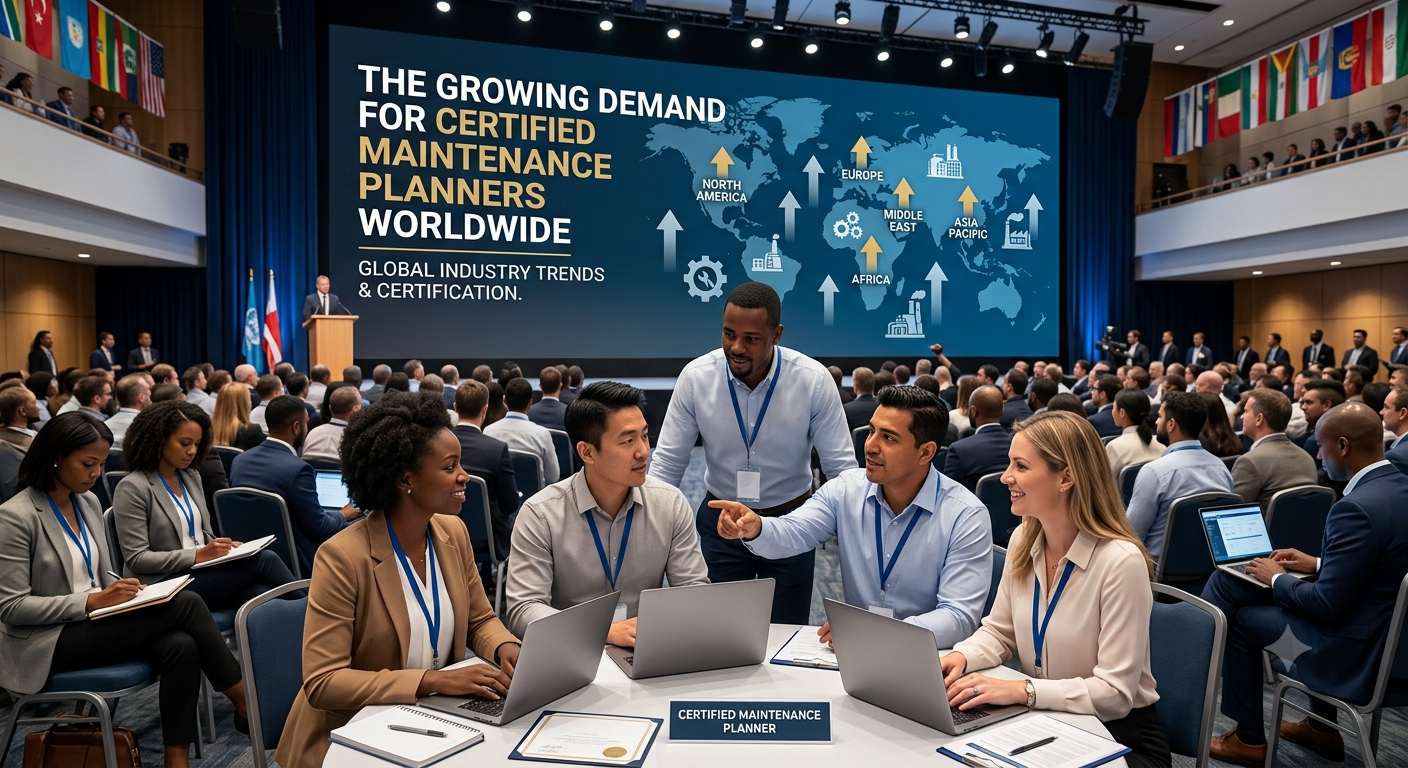
The Growing Demand for Certified Maintenance Planners Worldwide
Industrial organisations across the world are facing increasing pressure to improve reliability, reduce operating costs, and maximise the performance of their physical assets. Every hour of unplanned downtime can result in substantial financial losses, safety risks, and disruptions across the supply chain. As industries continue to modernise and adopt advanced technologies, maintenance planning has become one of the most valuable business functions. Companies are no longer looking for individuals who can simply schedule maintenance tasks. They are searching for certified professionals who understand how to plan maintenance strategically while supporting long term operational excellence. This global shift has created an unprecedented demand for certified maintenance planners across almost every industrial sector.
Why Maintenance Planning Has Become a Strategic Function
Maintenance planning has evolved far beyond preparing work orders and assigning technicians to daily activities. Modern planners are expected to coordinate resources, optimise maintenance schedules, reduce downtime, manage spare parts, and ensure compliance with safety and quality standards. Their decisions directly influence production efficiency, asset reliability, and maintenance costs. Organisations increasingly recognise that successful maintenance begins long before technicians arrive on site. Careful planning eliminates unnecessary delays, improves communication, and ensures every maintenance activity is completed efficiently. This strategic responsibility explains why employers now place significant value on certified professionals with specialised maintenance planning knowledge.
Global Industries Are Facing Greater Operational Challenges
Manufacturing plants, mining operations, power stations, transportation networks, chemical facilities, and utilities are all becoming more complex than ever before. Equipment is more advanced, production schedules are tighter, and customer expectations continue to rise. Businesses must balance operational efficiency with cost control while maintaining strict environmental and safety regulations. Maintenance planners play a critical role in managing these competing priorities by developing structured maintenance programmes that reduce unexpected failures and improve asset availability. As industries expand internationally, the demand for qualified planners continues to grow in both developed and emerging economies.
Certification Provides Confidence to Employers
Professional certification demonstrates that a maintenance planner possesses recognised knowledge, practical skills, and a structured understanding of maintenance management principles. Employers increasingly prefer certified professionals because they reduce the learning curve and contribute more effectively from the beginning of their employment. Certification also reflects a commitment to continuous professional development and industry best practices. In competitive job markets, certified planners often stand out from other candidates because their qualifications provide measurable evidence of competence. This confidence benefits both employers seeking skilled professionals and individuals looking to advance their careers.
The Growing Importance of Asset Management
Modern organisations no longer view maintenance as a reactive function that simply fixes equipment after failure. Instead, maintenance has become an essential part of comprehensive asset management strategies designed to maximise the value of physical assets throughout their entire lifecycle. Maintenance planners contribute directly to this objective by ensuring maintenance resources are allocated efficiently and maintenance interventions occur at the optimal time. Their work supports reliability improvement, risk reduction, and long term business sustainability. As more organisations embrace internationally recognised asset management practices, the need for certified maintenance planners continues to accelerate.
Digital Transformation Is Increasing the Need for Skilled Professionals
Digital technologies have transformed maintenance operations throughout the world. Computerised Maintenance Management Systems, Enterprise Asset Management software, predictive analytics, Industrial Internet of Things devices, and artificial intelligence now generate enormous volumes of maintenance data. While these technologies improve visibility, they also require professionals who can interpret information, prioritise maintenance activities, and convert data into practical maintenance plans. Technology alone cannot improve reliability without knowledgeable people making informed decisions. Certified maintenance planners provide the expertise needed to combine digital tools with sound maintenance principles to deliver measurable operational improvements.
The Financial Impact of Effective Maintenance Planning
Maintenance departments are frequently among the largest operating cost centres within industrial businesses. Economic uncertainty has encouraged organisations to examine every expense carefully while still maintaining production targets and equipment reliability. Effective maintenance planning reduces overtime, minimises emergency repairs, improves workforce productivity, and optimises spare parts inventory. These improvements generate substantial financial savings while increasing equipment availability. Companies increasingly understand that investing in qualified maintenance planners produces returns far exceeding the cost of professional training and certification. This financial value continues to drive demand across global industries.
Building a Competent Maintenance Workforce
The quality of any maintenance programme depends on the competence of the people responsible for planning and executing maintenance activities. Even the most advanced maintenance technologies cannot achieve their full potential without skilled professionals who understand maintenance strategy, scheduling, reliability principles, and asset lifecycle management. Continuous education forms the foundation of a high performing maintenance organisation by equipping professionals with practical knowledge that can be applied immediately in the workplace. Organisations investing in workforce development consistently experience improved operational performance, stronger reliability, and greater long term competitiveness.
Why Professional Maintenance Education Matters
Learning organisations consistently outperform those that neglect employee development because they encourage continuous improvement at every level of the business. Maintenance education provides professionals with structured knowledge that extends beyond daily operational experience. Students gain a deeper understanding of maintenance engineering principles, planning methodologies, reliability improvement, and asset management practices that support informed decision making throughout their careers. Formal education also creates a common professional language that strengthens collaboration between maintenance teams, operations personnel, engineers, and senior management. This integrated approach helps organisations achieve sustainable improvements in performance.
Flexible Learning Supports Global Professionals
The worldwide demand for certified maintenance planners requires educational institutions to provide flexible learning opportunities that accommodate diverse professional schedules and geographic locations. Many maintenance professionals already hold full time positions while seeking career advancement through additional qualifications. Flexible study options allow learners to continue developing their expertise without interrupting their employment. Classroom learning, online education, and self paced study provide opportunities for professionals from different industries and countries to obtain recognised qualifications while balancing work and personal commitments. This accessibility has contributed significantly to the worldwide growth of maintenance education.
Preparing Future Leaders in Maintenance
The maintenance profession continues to evolve as industries adopt new technologies, sustainability initiatives, and increasingly sophisticated asset management practices. Tomorrow's maintenance leaders will require technical expertise alongside strong planning, communication, analytical, and leadership capabilities. Educational programmes that combine theoretical knowledge with practical industry application prepare professionals to address these future challenges confidently. By developing comprehensive maintenance planning skills today, professionals position themselves for leadership opportunities that extend beyond maintenance departments into broader asset management and operational management roles.
The worldwide demand for certified maintenance planners reflects the growing recognition that effective maintenance planning is essential for operational excellence, financial performance, and long term asset sustainability. Organisations across every major industry require professionals who can transform maintenance from a reactive activity into a strategic business advantage. At Terotechnica, we believe that building a knowledgeable maintenance workforce remains one of the strongest drivers of industrial success and continuous improvement. Through structured education, practical learning, and internationally relevant maintenance knowledge, Terotechnica continues to prepare professionals for rewarding careers in maintenance and asset management. As industries continue to evolve, Terotechnica remains committed to helping learners develop the expertise needed to meet the growing global demand for certified maintenance planners.