Terotechnica Asset Management College
  • 012 548 6096
  • 082 855 8016
  • info@terotechnica.com
Terotechnica Asset Management College
  • Home
    • About Terotechnica Maintenance College
    • Welcome to Terotechnica Maintenance College
    • Our Philosophy
    • In house courses
    • International Students
  • Search
  • 2027 Courses
  • Why Train?
  • Best Practices
  • Study Information
    • Diplomas
      • Subject Choices
      • Diplomas Awarded
      • Rules for Diploma Study
      • Diploma Enrolment
    • Comprehensive Courses
      • C101: Asset Management for Artisans
      • C201: Asset Management for Maintenance Supervisors
      • C301: Maintenance Planning
      • C302: Advanced Maintenance Planning
      • C303: Computerised Maintenance Management Systems (CMMS)
      • C501: Maintenance Shutdown and Project Management
      • C702: Reliability Engineering in Asset Management
      • C901: Maintenance Practice for Asset Management Engineers
      • C902: Leadership in Asset Management
      • C903: RCM Facilitation and Analysis
      • C904: RCM ProAktiv: Advanced Reliability Centred Maintenance
    • Short Courses
      • S801: RCM
      • S802: Asset Management for Executives
      • S803: Root Cause Failure Analysis
      • S804: Decision Making in Maintenance
      • S805: Maintenance Control
      • S808: Asset Management Logistics
      • S809: Data Analytics in Asset Management
      • S811: Water Treatment Plant Operation and Maintenance
      • S812: Road Maintenance
      • S813: Assets - Economical Replacement and Life Cycle Management
      • S820: What is Asset Management - how does it differ from Maintenance
      • S821: Understanding ISO 55000
      • S822: Implementing ISO 55000
    • Technical Courses
    • Occupational Certificates
  • Course Calendar
  • Terotechnica eCollege
  • Administration
    • Brochures
    • Terms
    • Inquiry / Application Form
    • Study Loans / Discounts
    • Privacy
  • People
    • Personnel
    • Diploma Ceremonies
      • 2023
    • Testimonials
      • Zonica (student) message to Melvin (lecturer) on her benefit from training with us
  • Offices
  • Contact us
Asset Management Diploma

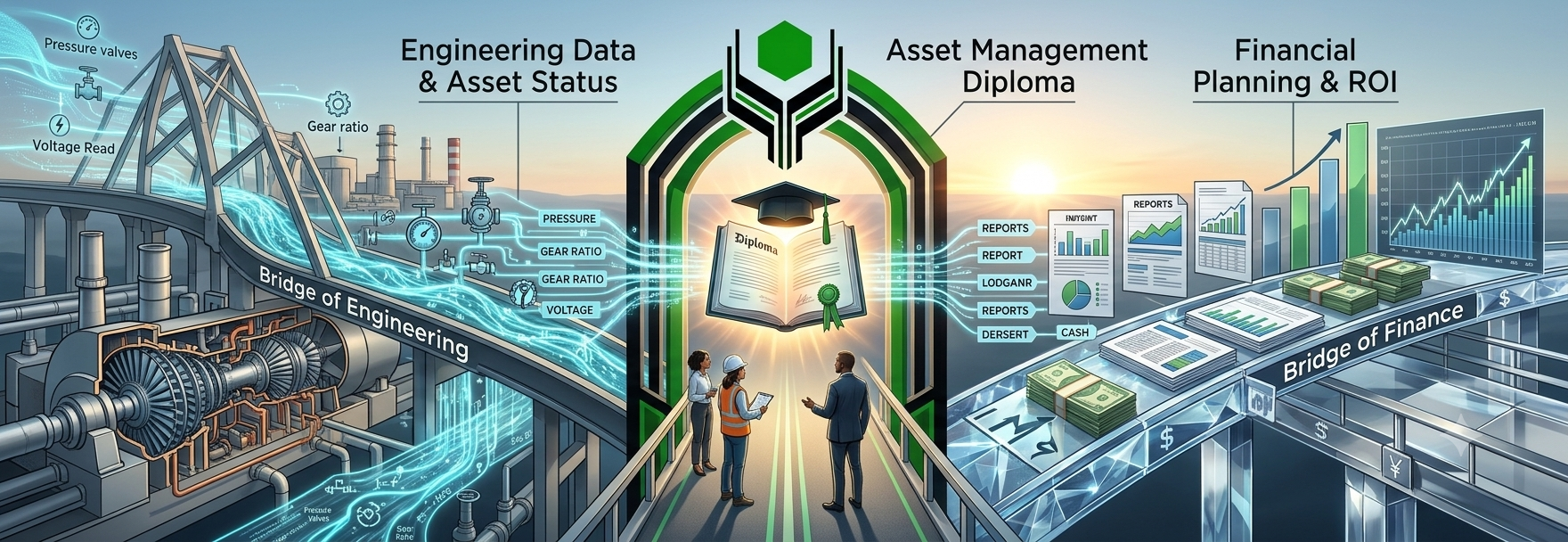
How an Asset Management Diploma Can Help Bridge the Gap Between Engineering Data and Financial Planning

Understanding the Connection Between Engineering and Finance

Modern organisations depend on physical assets to maintain productivity, control operating costs, and achieve long-term business objectives. These assets include industrial machinery, production equipment, electrical systems, infrastructure, vehicles, and buildings that require ongoing maintenance and investment. Engineering teams generate valuable information about asset condition, reliability, performance, maintenance requirements, and expected service life. Financial teams, meanwhile, focus on budgets, operating expenditure, capital investment, cash flow, and long-term financial sustainability. When these two functions operate independently, organisations may struggle to translate technical findings into financially sound decisions.

An effective asset management strategy connects engineering knowledge with financial planning to support informed decision-making throughout the asset lifecycle. Engineering data explains what an asset needs, while financial analysis determines how resources can be allocated to meet those requirements. This relationship is particularly important for South African organisations managing ageing infrastructure, rising operating costs, and increasing pressure to improve operational efficiency. A structured approach helps decision-makers evaluate the financial consequences of maintenance delays, equipment failures, and premature asset replacement. Through professional education, we help learners understand how asset management principles can bring technical and financial considerations together.

Why Engineering Data Matters in Financial Decision-Making

Engineering data provides the technical foundation for understanding how physical assets perform and what they require to remain operational. Information about equipment condition, failure frequency, maintenance history, energy consumption, and remaining useful life can reveal where organisations face operational risks. When properly analysed, these records help identify assets that require immediate attention and those that can continue operating safely and efficiently. However, technical information becomes more valuable when decision-makers understand its financial implications. For example, repeated equipment failures may indicate that preventive maintenance needs improvement or that replacement should be considered before repair costs escalate. Connecting these findings with financial analysis allows organisations to move beyond reactive spending towards more informed and planned investment decisions.

The Financial Challenges of Managing Physical Assets

Asset-intensive organisations must balance immediate operational demands with long-term financial commitments. Maintenance budgets, spare parts, labour costs, equipment upgrades, and replacement projects compete for limited financial resources. Without reliable engineering information, financial planners may underestimate maintenance requirements or allocate insufficient funding to critical assets. Such decisions can increase unplanned downtime, emergency repair expenses, production losses, and operational disruption. Conversely, replacing equipment too early without evaluating its condition and remaining useful life can result in unnecessary capital expenditure. A coordinated asset management approach helps organisations assess these competing priorities by considering technical performance, financial implications, and business objectives together.

How an Asset Management Diploma Builds Cross-Functional Knowledge

An asset management diploma can help professionals develop the knowledge required to connect engineering principles with financial and strategic decision-making. Rather than focusing exclusively on maintenance activities or financial calculations, structured learning introduces the wider processes involved in managing assets throughout their lifecycles. Learners can develop an understanding of asset performance, maintenance planning, lifecycle costing, risk assessment, investment prioritisation, and resource allocation. This knowledge helps technical professionals explain maintenance requirements in financial terms that managers and budget holders can understand. It also enables finance professionals to interpret engineering information more effectively when reviewing budgets and investment proposals. At Terotechnica, we emphasise the importance of asset management knowledge in supporting professionals who need to understand the relationship between technical performance, operational requirements, and organisational value.

Translating Maintenance Records into Financial Insights

Maintenance records contain information that can significantly influence budgeting and investment decisions. Work orders, repair histories, labour hours, spare parts consumption, and equipment downtime help organisations understand the actual cost of maintaining individual assets. When these records are analysed consistently, patterns can emerge that reveal inefficient maintenance practices or equipment requiring closer attention. For instance, an asset that repeatedly requires expensive repairs may cost more to operate over time than a suitable replacement would. However, this decision requires more than comparing repair invoices with the purchase price of new equipment. Professionals must also consider downtime, installation costs, energy efficiency, expected service life, and the financial impact of continued operation. An asset management qualification can help learners understand how maintenance information supports a more complete financial evaluation.

Understanding Lifecycle Costing and Total Cost of Ownership

Lifecycle costing is a valuable technique for connecting engineering decisions with long-term financial planning. It considers the costs associated with acquiring, operating, maintaining, upgrading, and eventually disposing of an asset. This approach provides a broader perspective than the initial purchase price, which may not reflect the full financial commitment required throughout an asset's useful life. Equipment with a lower purchase price may require more frequent maintenance, consume more energy, or experience greater downtime than a more efficient alternative. Evaluating these factors helps organisations compare investment options using a consistent financial framework. Through asset management education, professionals can develop the ability to assess lifecycle costs and explain how engineering decisions influence long-term expenditure.

Improving Capital Expenditure Planning

Capital expenditure planning involves deciding when to purchase, replace, upgrade, or expand physical assets. Engineering teams provide information about asset condition, operational capacity, technical obsolescence, and replacement requirements, while financial teams evaluate affordability, funding availability, and expected returns. An asset management diploma can help professionals understand how these perspectives contribute to a comprehensive investment decision. For example, a manufacturing facility considering new production equipment must assess not only the purchase price but also installation requirements, productivity improvements, maintenance implications, and potential operational savings. A well-supported proposal connects the technical justification for investment with measurable financial outcomes and clearly identified risks. This approach allows decision-makers to compare competing projects and allocate capital according to organisational priorities.

Using Risk-Based Maintenance to Protect Financial Resources

Risk-based maintenance helps organisations determine which assets require the greatest attention by considering the likelihood and consequences of failure. Equipment that supports critical production processes or essential services may justify a different maintenance strategy from equipment whose failure has limited operational consequences. Engineering assessments help establish the probability of failure and identify possible safety, environmental, and operational impacts. Financial analysis then helps decision-makers evaluate the potential costs of different maintenance interventions and the consequences of leaving risks unmanaged. This combined perspective supports the prioritisation of maintenance spending according to asset criticality rather than relying exclusively on historical expenditure or fixed maintenance schedules. Professionals with asset management knowledge can therefore contribute to maintenance strategies that protect operational continuity while making responsible use of available budgets.

Connecting Asset Performance Indicators with Financial KPIs

Key performance indicators help organisations measure whether their assets and maintenance processes are achieving the intended results. Engineering teams may track equipment availability, mean time between failures, mean time to repair, maintenance compliance, and overall equipment effectiveness. Financial teams may monitor maintenance cost as a proportion of replacement asset value, budget variance, capital expenditure, and lifecycle cost. When these indicators are reviewed together, organisations gain a clearer understanding of how operational performance affects financial outcomes. For example, improving equipment availability may support higher production output, while reducing repeated failures may lower repair expenditure and minimise lost operating time. Asset management education helps professionals understand the importance of selecting relevant performance measures and interpreting them within the wider business context.

Supporting Data-Driven Budgeting and Forecasting

Accurate financial planning depends on reliable information about future asset requirements. Engineering data can support forecasts for maintenance labour, spare parts, equipment upgrades, inspections, and eventual replacement. Historical expenditure provides a useful starting point, but forecasts become more meaningful when they also account for asset condition, operating intensity, failure trends, and expected changes in production demand. This information helps financial planners distinguish between routine maintenance requirements and exceptional expenditure associated with deteriorating or obsolete equipment. It also allows organisations to identify potential funding gaps before they affect operational performance. An asset management diploma can help professionals understand how technical records, lifecycle forecasts, and financial models work together to support more realistic budgets.

The Importance of Asset Information Systems

Asset information systems help organisations collect, organise, and analyse the data required for effective asset management. Computerised maintenance management systems, enterprise resource planning platforms, asset registers, and condition monitoring technologies can provide different parts of the information needed for technical and financial analysis. However, having access to digital systems does not automatically guarantee better decisions. Asset records must be accurate, consistently maintained, and structured so that engineering and finance teams can interpret the information in compatible ways. Linking maintenance costs to specific assets, recording failure histories, and maintaining reliable replacement values can improve the quality of financial assessments. Professionals who understand asset management processes are better positioned to identify information gaps, improve reporting practices, and support collaboration between technical departments and financial stakeholders.

Applying Asset Management Principles in South Africa

South African organisations across manufacturing, mining, energy, transport, water, healthcare, and public infrastructure depend on effective asset management to maintain reliable services and control expenditure. Many operate complex asset portfolios that require careful maintenance planning, refurbishment decisions, and long-term investment strategies. Financial constraints can make it especially important to understand which assets require immediate intervention and where planned investment can reduce future costs. Inadequate maintenance planning may increase the risk of equipment failure, service interruptions, and expensive emergency work. By integrating engineering assessments with financial evaluation, organisations can develop more structured approaches to managing these challenges. An asset management diploma can help professionals build relevant knowledge for contributing to lifecycle planning, maintenance optimisation, and investment decisions within the South African operating environment.

Developing Communication Between Engineering and Finance Teams

One of the most important benefits of cross-functional asset management knowledge is improved communication between departments. Engineers may understand the technical consequences of equipment deterioration but need to explain those consequences in terms of financial exposure, operational risk, and investment requirements. Finance professionals may understand budget limitations but require sufficient technical context to evaluate whether proposed maintenance or replacement expenditure is justified. A shared understanding of lifecycle costs, asset criticality, maintenance strategies, and financial performance can reduce misunderstandings between these teams. It also encourages discussions based on evidence rather than departmental assumptions or competing short-term priorities. By developing this broader perspective, professionals can contribute to decisions that balance engineering requirements with financial sustainability.

Building Skills for Strategic Asset Management Roles

Professionals who understand both asset performance and financial planning can contribute to a wider range of organisational responsibilities. Maintenance planners, reliability engineers, asset managers, project professionals, and operations supervisors may need to justify budgets, evaluate replacement proposals, or assess the long-term implications of maintenance strategies. Similarly, finance and procurement professionals working in asset-intensive environments can benefit from understanding how technical condition influences expenditure and investment requirements. Formal asset management education can strengthen the conceptual knowledge needed to participate in these discussions and support more structured planning processes. The value of this learning depends on the programme's curriculum, the learner's existing experience, and the ability to apply relevant concepts in the workplace. For professionals seeking to broaden their responsibilities, this combination of technical awareness and financial understanding can provide a useful foundation for career development.

Measuring the Value of Better Asset Management Decisions

The effectiveness of asset management should be evaluated through measurable operational and financial outcomes. Organisations can compare planned and actual maintenance expenditure, monitor unplanned downtime, assess equipment reliability, and review the cost of maintaining ageing assets. They can also evaluate whether capital investments deliver the expected improvements in productivity, safety, availability, or operating efficiency. These assessments help establish whether decisions are producing the intended results and where further improvements may be necessary. However, financial savings should not be considered in isolation because maintenance decisions must also account for safety, regulatory obligations, environmental impacts, and service reliability. An integrated evaluation framework helps organisations understand the broader value created when engineering evidence and financial planning support the same objectives.

Preparing for a More Integrated Approach to Asset Management

The growing need for reliable infrastructure, efficient operations, and responsible investment makes integrated asset management knowledge increasingly relevant across asset-intensive industries. Organisations need professionals who can interpret engineering information, understand financial constraints, and evaluate decisions across the complete asset lifecycle. An asset management diploma can help develop this perspective by connecting maintenance planning, lifecycle management, risk assessment, performance measurement, and investment evaluation. The practical benefit comes from applying these concepts to real organisational challenges, supported by accurate data and collaboration between relevant departments. Professionals who develop this capability can contribute to more transparent budgeting, better-informed replacement decisions, and improved alignment between operational requirements and business strategy. At Terotechnica, we recognise the role of structured asset management education in helping professionals strengthen their understanding of asset performance, financial planning, and sustainable organisational value.

Bridging the gap between engineering data and financial planning requires more than collecting maintenance records or preparing annual budgets. It requires an integrated understanding of how asset condition, reliability, maintenance strategies, lifecycle costs, and investment decisions influence organisational performance. An asset management diploma can help professionals develop the knowledge to connect these elements and communicate their implications across technical and financial teams. For South African organisations, this approach can support better maintenance prioritisation, more realistic capital expenditure forecasts, and stronger long-term asset sustainability. By using engineering evidence to inform financial decisions, organisations can improve the quality of their planning while managing operational risks and financial commitments more effectively. Investing in relevant asset management education can therefore be a meaningful step towards building the skills required for responsible, data-driven asset management.


Maintenance Planning Certification

How Maintenance Planning Certification Helps Professionals Distinguish Planned Work From Merely Scheduled Work

Understanding the Difference Between Planned and Scheduled Maintenance

Effective maintenance management depends on more than assigning dates to equipment repairs and routine inspections. Maintenance teams must ensure that every task is properly defined, adequately resourced, and supported by the information required for safe and efficient execution. Scheduled work refers to maintenance activities that have been assigned a specific date or time for completion. Planned work goes further by establishing the job scope, identifying the required materials, confirming labour availability, assessing risks, and preparing the necessary work instructions. Although these two concepts are closely connected, treating them as interchangeable can create unnecessary delays and operational inefficiencies. Understanding this distinction is an essential competency for professionals responsible for improving maintenance performance and asset reliability.

Why Maintenance Planning Requires More Than a Calendar

A maintenance schedule provides a timeline for executing work, but it does not automatically confirm that the organisation is ready to perform each task. A job may appear on the weekly schedule even when spare parts have not arrived, technical drawings are unavailable, or the necessary skills are not accessible. These gaps can result in postponed jobs, extended equipment downtime, and inefficient use of maintenance personnel. Proper maintenance planning addresses these issues before work reaches the execution stage by establishing what must be done and what resources are required. It also helps maintenance teams identify potential obstacles and resolve them before they affect operational priorities. When professionals understand this difference, they can move beyond managing dates and begin managing the actual readiness of maintenance work.

What Maintenance Planning Certification Teaches Professionals

Maintenance planning certification helps professionals develop a structured understanding of how maintenance activities should be identified, prepared, prioritised, and executed. Through formal learning, participants can strengthen their knowledge of work identification, job scoping, resource estimation, materials coordination, and maintenance documentation. They also learn how planning activities connect with scheduling, allowing them to distinguish technical preparation from the allocation of available work hours. This knowledge supports more consistent decision making across maintenance departments, particularly where multiple assets compete for limited labour and equipment downtime. Certification also introduces professionals to recognised maintenance management principles that can be applied within industrial facilities, manufacturing operations, utilities, mining environments, and other asset-intensive sectors. By developing these competencies, maintenance personnel can contribute more effectively to operational reliability and continuous improvement.

Job Scoping as the Foundation of Planned Maintenance

A properly planned maintenance task begins with a clear understanding of the work that needs to be performed. Job scoping involves defining the problem or maintenance requirement, identifying the affected asset, describing the necessary activities, and establishing the expected outcome. Without this preparation, technicians may arrive at a job site without knowing the full extent of the work or the procedures required to complete it. Maintenance planning training helps professionals recognise the importance of reviewing equipment history, technical specifications, inspection findings, and relevant operating information before finalising a job plan. A comprehensive scope also provides a basis for estimating labour hours, identifying tools, determining material requirements, and evaluating safety considerations. Consequently, job scoping transforms a general maintenance request into a clearly defined task that can be prepared for execution.

Resource Identification and Materials Readiness

One of the clearest differences between planned and merely scheduled work is the availability of the resources needed to complete a task. A scheduled maintenance activity may have an allocated date, but it can still fail to proceed if essential components, specialised tools, or qualified personnel are unavailable. Maintenance planning establishes these requirements in advance and coordinates them with procurement, stores, operations, and other relevant departments. Professionals learn to identify the materials needed for each job, verify their specifications, and confirm whether they are available before the work enters the execution schedule. Labour estimates and skill requirements also help supervisors assign suitable personnel while avoiding unnecessary competition between maintenance activities. When resource readiness becomes part of the planning process, organisations can reduce avoidable interruptions and make better use of available maintenance capacity.

The Role of Scheduling in Maintenance Execution

Scheduling remains an essential part of maintenance management because even well-prepared work must be coordinated with operational demands and available resources. A maintenance schedule determines when a job should take place, who will perform it, and how it fits into the broader workload. However, scheduling becomes less reliable when tasks are assigned dates before their preparation requirements have been satisfied. Maintenance planning certification helps professionals understand how job readiness, priority, labour availability, and equipment access should influence scheduling decisions. This approach encourages coordination between maintenance and operations teams so that equipment can be released at suitable times without creating unnecessary production disruption. By distinguishing planning from scheduling, professionals can establish a more dependable workflow in which the schedule reflects realistic execution opportunities rather than simply recording intended dates.

Improving Work Order Quality and Maintenance Documentation

Work orders provide the information maintenance personnel need to understand and complete assigned tasks. Poorly prepared work orders may contain vague descriptions, incomplete instructions, missing material details, or insufficient information about equipment condition. Such deficiencies can force technicians to spend valuable time clarifying requirements, locating resources, or repeating preliminary assessments. Maintenance planning certification helps professionals understand how to develop work orders that clearly communicate job scope, technical requirements, estimated durations, required resources, and relevant safety precautions. Better documentation also supports coordination between planners, supervisors, technicians, and operations personnel throughout the maintenance process. Over time, consistent work order quality improves communication, strengthens maintenance records, and creates a more reliable foundation for future planning decisions.

Risk Assessment and Safe Work Preparation

Maintenance activities often involve hazards associated with electrical systems, moving machinery, confined spaces, hazardous substances, elevated work, or the isolation of energy sources. Assigning a maintenance task to the schedule does not demonstrate that these hazards have been assessed or that the necessary controls are ready. Proper planning requires professionals to identify relevant risks, determine applicable work procedures, and coordinate the permits, isolations, equipment, and competencies required for safe execution. Maintenance planning training helps participants recognise how safety requirements must be incorporated into job preparation instead of being treated as administrative tasks immediately before work begins. This preparation allows maintenance and operations teams to address foreseeable hazards while confirming that appropriate controls are in place. By integrating safety into the planning process, organisations can support more controlled maintenance execution and reduce the likelihood of preventable disruptions.

Reducing Emergency Work and Unplanned Downtime

Unplanned downtime can affect production targets, operating costs, customer commitments, and the overall performance of physical assets. Although not every equipment failure can be prevented, stronger maintenance planning helps organisations address known defects and recurring maintenance requirements more systematically. Professionals who understand the difference between planned and scheduled work are better positioned to identify incomplete preparation, recurring delays, and work orders that remain open without meaningful progress. This visibility helps maintenance teams investigate underlying problems rather than repeatedly moving unfinished jobs to future dates. Better preparation can also improve the use of planned maintenance windows, allowing teams to complete more work during approved shutdowns or periods of reduced operational demand. As planning practices mature, organisations can make more informed decisions about maintenance priorities, equipment availability, and the allocation of limited resources.

Measuring Maintenance Planning Effectiveness

Maintenance planning should be evaluated through meaningful performance indicators rather than the number of jobs entered into a schedule. Metrics such as schedule compliance, planned maintenance percentage, emergency work percentage, work order backlog, and wrench time can provide useful insights when their definitions and limitations are understood. For example, a department may report high schedule compliance while still experiencing poor results because jobs are repeatedly deferred, inadequately scoped, or completed with significant additional work. Professionals with maintenance planning knowledge can interpret these indicators in context and identify where preparation or coordination needs improvement. They can also examine reasons for schedule interruptions, material shortages, inaccurate labour estimates, and repeated job postponements. This evidence-based approach helps organisations improve maintenance processes through targeted corrective actions instead of relying solely on activity counts.

Supporting Better Asset Management Decisions

Maintenance planning contributes to asset management by connecting individual maintenance tasks with equipment condition, operational risk, lifecycle performance, and organisational objectives. Assets require different maintenance strategies depending on their criticality, failure consequences, operating environment, and expected service life. Professionals who receive structured maintenance education can better understand how maintenance priorities should reflect these considerations rather than being determined exclusively by the age of a work order or the next available date. Effective planning also generates useful information about recurring defects, resource consumption, repair durations, and equipment performance. This information can support decisions about preventive maintenance intervals, condition monitoring, spare parts policies, and longer-term asset improvement initiatives. By developing a more systematic approach to work preparation, maintenance professionals can help their organisations balance reliability, cost, safety, and operational performance.

The Importance of Maintenance Planning Skills in South Africa

South African industries depend on reliable physical assets to support production, infrastructure, energy supply, mineral extraction, transportation, and essential services. In these environments, inadequate maintenance preparation can contribute to costly downtime, inefficient resource utilisation, and avoidable pressure on operational teams. Maintenance professionals therefore benefit from understanding how work identification, job preparation, resource coordination, and scheduling fit into an integrated maintenance management system. Certification can help individuals strengthen these practical competencies while developing a clearer understanding of maintenance processes and performance expectations. For professionals working in South Africa, these skills are relevant to organisations seeking to improve equipment availability, manage maintenance expenditure, and strengthen operational discipline. Developing maintenance planning expertise can also support career progression into roles involving maintenance coordination, planning, supervision, reliability, and asset management.

Applying Maintenance Planning Knowledge in the Workplace

The value of maintenance planning certification becomes evident when professionals apply its principles to everyday maintenance decisions. Consider a pump requiring a seal replacement that has already been assigned to the following week's schedule. If the replacement seal has not been verified, the required lifting equipment is unavailable, and the isolation procedure has not been coordinated, the task is scheduled but not fully prepared. A competent planner would identify these requirements in advance, confirm the necessary resources, establish the work scope, and coordinate equipment access with the operations team. Once the outstanding requirements are addressed, the job can be placed on the schedule with greater confidence that it is ready for execution. This practical distinction helps maintenance departments reduce avoidable delays and create a more predictable working environment for technicians and supervisors.

How Terotechnica Supports Maintenance and Asset Management Development

At Terotechnica, we recognise that effective maintenance management requires professionals to understand the relationship between technical preparation, resource coordination, scheduling, and asset performance. Our educational approach focuses on developing relevant knowledge that professionals can apply to real maintenance and asset management challenges. Maintenance planning education helps learners appreciate why a work order needs more than a completion date and why job readiness should be established before resources are committed. We aim to support professionals in strengthening their understanding of maintenance processes, lifecycle considerations, and the practical disciplines required for effective asset management. By building these competencies, learners can improve their contribution to maintenance teams and support more structured decision making within their organisations. Our commitment to professional development reflects the importance of equipping South African industry with the knowledge needed to manage assets responsibly and efficiently.

Building a More Reliable Maintenance Management Process

Distinguishing planned work from merely scheduled work is fundamental to creating a maintenance function that consistently delivers reliable results. Scheduling determines when work is intended to happen, while planning establishes whether the work has been sufficiently defined, resourced, and prepared for execution. Maintenance planning certification helps professionals develop the knowledge needed to manage these responsibilities systematically and recognise the operational consequences of incomplete preparation. When organisations strengthen job scoping, materials readiness, labour estimation, safety preparation, and performance measurement, maintenance activities become easier to coordinate and control. These improvements can contribute to reduced delays, better resource utilisation, more dependable maintenance schedules, and stronger asset performance. For professionals seeking to advance their maintenance management capabilities, developing formal planning knowledge is a practical step towards creating lasting value for their organisations and the industries they serve.

Why Production Bottlenecks Should Influence Asset Criticality and Maintenance Priorities

Why Production Bottlenecks Should Influence Asset Criticality and Maintenance Priorities

Understanding the Connection Between Production Bottlenecks and Asset Criticality

Production bottlenecks can significantly affect operational efficiency, production costs, and an organisation’s ability to meet customer expectations. A bottleneck occurs when a machine, process, or operational activity cannot keep pace with the required production flow. Although several assets may operate within the same facility, their individual contributions to overall production can vary considerably. A failure involving one machine may have limited consequences, while the breakdown of another may interrupt an entire production line. This is why asset criticality should reflect the operational consequences of equipment failure rather than relying solely on the purchase price, age, or technical specifications of an asset. At Terotechnica, we emphasise the importance of understanding how asset performance, maintenance decisions, and production requirements interact within an effective asset management framework.

How Bottlenecks Influence Overall Equipment Performance

A production bottleneck restricts the flow of materials, products, or services through an operational system. It may develop because of insufficient machine capacity, frequent breakdowns, lengthy changeovers, poor equipment reliability, or inadequate maintenance practices. When a critical machine operates below its required capacity, upstream processes may accumulate unfinished products while downstream operations experience material shortages. These disruptions can increase operating costs, extend production lead times, and reduce the effective utilisation of other assets. Maintenance professionals must therefore understand where production constraints occur and how equipment reliability influences the performance of the entire process. By connecting maintenance information with production data, organisations can identify assets whose condition directly affects throughput, delivery commitments, and operational continuity.

Why Traditional Asset Criticality Assessments May Be Inadequate

Traditional asset criticality assessments often consider factors such as equipment replacement cost, safety implications, environmental consequences, and the likelihood of failure. These factors remain essential, but they may not fully capture the production impact of an asset within a particular operating environment. A relatively inexpensive component can become critically important when its failure stops a production line with no available alternative. Conversely, expensive equipment may have a lower immediate production impact when standby capacity or an effective bypass arrangement is available. Asset criticality assessments should therefore consider equipment function, process dependencies, recovery time, and the availability of alternative production routes. Incorporating these considerations enables organisations to develop a more realistic understanding of operational risk and allocate maintenance resources according to the consequences of failure.

Identifying Assets That Control Production Throughput

Identifying production constraints requires a detailed understanding of how equipment and processes interact across the facility. Maintenance and production teams should examine process flow diagrams, equipment performance records, downtime reports, and actual production rates to determine which assets restrict throughput. Particular attention should be given to machines that consistently operate at maximum capacity, experience recurring failures, or create queues of unfinished work. Equipment that appears reliable in isolation may still represent a significant production risk if the surrounding process depends entirely on its availability. Understanding these relationships helps maintenance professionals distinguish between assets that support production and those that directly determine its achievable output. This analysis provides a stronger foundation for assigning criticality ratings that reflect operational realities rather than assumptions based solely on equipment characteristics.

Integrating Failure Consequences Into Maintenance Priorities

Maintenance priorities should reflect both the probability of equipment failure and the consequences associated with that failure. An asset located at a production bottleneck may require more frequent condition monitoring, improved preventive maintenance planning, or a carefully justified predictive maintenance strategy. However, increasing maintenance frequency without understanding the actual failure mechanisms can create unnecessary costs and introduce avoidable production interruptions. Maintenance teams should evaluate failure history, equipment condition, component degradation, repair duration, and the availability of suitable replacement parts before selecting an intervention. They must also consider whether planned maintenance can be performed during scheduled shutdowns or periods of reduced production demand. At Terotechnica, we recognise that effective maintenance prioritisation depends on combining technical evidence with a clear understanding of operational requirements and business risk.

Using Reliability-Centred Maintenance to Address Bottlenecks

Reliability-centred maintenance provides a structured approach to determining which maintenance tasks are appropriate for particular assets and failure modes. Instead of applying identical maintenance routines throughout a facility, organisations assess how equipment functions, how it can fail, and what happens when those failures occur. This approach is especially valuable for bottleneck assets because even a relatively minor component failure can have substantial consequences for production continuity. Maintenance strategies may include condition-based inspections, scheduled component replacement, functional testing, lubrication optimisation, or redesign of recurring failure points. Where appropriate, failure mode and effects analysis can help teams identify potential failures, assess their consequences, and determine suitable risk controls. By aligning maintenance interventions with the actual operational significance of equipment, organisations can improve reliability without automatically increasing maintenance expenditure across every asset category.

Balancing Production Availability With Planned Maintenance

Production bottlenecks often create pressure to keep equipment running for as long as possible, even when maintenance is overdue. Although continuous operation may appear beneficial in the short term, postponing essential maintenance can increase the likelihood of unplanned failures and extended recovery periods. Maintenance planners must balance immediate production requirements against the long-term reliability and condition of critical equipment. This involves coordinating shutdown windows, preparing work orders, confirming labour availability, and ensuring that necessary tools and spare parts are ready before work begins. Production schedules should account for maintenance requirements rather than treating maintenance as an interruption that must always be avoided. A coordinated approach allows organisations to protect equipment integrity while reducing the risk that unexpected failures will disrupt production at the most consequential points in the process.

Evaluating Spare Parts and Redundancy for Critical Assets

Spare parts management plays an important role in reducing the consequences of failures involving production bottlenecks. If a critical machine depends on a specialised component with a lengthy procurement lead time, even a relatively straightforward repair can result in prolonged downtime. Organisations should evaluate the operational consequences of component failure, replacement availability, supplier reliability, storage requirements, and the financial implications of holding inventory. This assessment can justify maintaining strategic spares for selected bottleneck assets while avoiding excessive stock levels for components with readily available alternatives. Redundancy may provide another means of reducing risk, particularly when a standby machine or alternative process can maintain production during equipment repairs. Decisions about spare parts and redundancy should be based on documented risk assessments, realistic recovery times, and the cost of lost production rather than general inventory rules.

Measuring the Production Impact of Maintenance Decisions

Maintenance performance indicators should reveal how effectively maintenance activities support production objectives. Measures such as mean time between failures, mean time to repair, equipment availability, and planned maintenance compliance provide useful information about reliability and maintenance execution. However, these indicators become more meaningful when interpreted alongside production throughput, bottleneck downtime, schedule adherence, and lost production hours. An asset with a relatively low number of failures may still represent a significant operational risk if each failure causes an extended production stoppage. Similarly, a maintenance intervention that reduces repair time may deliver substantial value when applied to equipment that constrains the entire facility. Organisations should therefore establish performance measures that connect equipment reliability with production outcomes and use the resulting evidence to review maintenance priorities regularly.

Applying Risk-Based Maintenance in South African Industries

South African organisations operate across diverse industrial environments, including mining, manufacturing, energy, processing, and infrastructure services. In these settings, production interruptions may affect customer commitments, equipment utilisation, labour productivity, operating costs, and the continuity of essential services. The consequences can become particularly significant where operations depend on specialised equipment, remote facilities, constrained supply chains, or limited access to technical support. Risk-based maintenance helps organisations account for these conditions when evaluating asset criticality and determining where maintenance resources will have the greatest operational impact. Professionals should also consider applicable safety and environmental requirements, equipment manufacturer recommendations, and relevant organisational standards when developing maintenance strategies. Through our asset management and maintenance education at Terotechnica, we support the development of technical knowledge that helps professionals evaluate equipment performance, understand operational risk, and make informed maintenance decisions within South Africa’s industrial environment.

Strengthening Collaboration Between Maintenance and Production Teams

Production bottlenecks cannot always be resolved through maintenance interventions alone because their underlying causes may involve process design, operating practices, capacity limitations, or scheduling decisions. Maintenance teams provide information about equipment condition, recurring failures, repair requirements, and reliability trends, while production teams contribute knowledge about throughput constraints and operational priorities. When these teams work independently, maintenance activities may target equipment that is easy to service rather than equipment that presents the greatest production risk. Regular cross-functional reviews help establish shared priorities, clarify shutdown requirements, and identify opportunities to eliminate recurring constraints. These discussions should be supported by reliable data, clear responsibilities, and agreed procedures for escalating emerging equipment risks. Better collaboration enables organisations to connect asset management decisions with production objectives and build a more consistent approach to operational improvement.

Using Root Cause Analysis to Eliminate Recurring Bottlenecks

Recurring production bottlenecks may indicate deeper problems that cannot be resolved through repeated repairs alone. Root cause analysis helps maintenance and production teams investigate why failures occur and determine which technical, operational, or organisational factors contribute to them. The investigation may reveal incorrect operating procedures, inadequate lubrication, contamination, unsuitable component specifications, poor installation practices, or maintenance tasks that do not address the dominant failure mechanism. Corrective actions should focus on removing or controlling the underlying causes instead of repeatedly restoring equipment to its previous condition. Teams should then monitor equipment performance to verify whether the intervention has reduced failures and improved production flow. This disciplined approach supports continuous improvement by transforming breakdown information into practical changes that strengthen reliability and reduce the recurrence of costly production interruptions.

Developing Asset Management Competence for Better Maintenance Decisions

Effective asset management requires professionals to understand the relationship between equipment reliability, production performance, risk assessment, and maintenance planning. Technical knowledge alone is insufficient when maintenance decisions must account for operational dependencies, financial consequences, and competing resource requirements. Professionals need to interpret asset registers, evaluate criticality assessments, analyse failure data, and understand how maintenance strategies influence equipment availability throughout its lifecycle. They must also communicate their findings clearly so that managers can compare maintenance expenditure with the operational risks of inadequate intervention. Structured learning in asset management and maintenance planning helps build these capabilities and supports more consistent decision-making across industrial organisations. Terotechnica provides an educational environment focused on strengthening the knowledge and practical understanding required to manage assets effectively, prioritise maintenance work, and support reliable industrial operations.

Conclusion: Aligning Asset Criticality With Production Reality

Production bottlenecks should play a central role in asset criticality assessments because the operational consequences of equipment failure can be substantially greater than the direct cost of repairing the affected machine. Organisations that recognise these relationships can prioritise maintenance activities according to production risk, equipment condition, failure consequences, and recovery requirements. Integrating bottleneck analysis with reliability-centred maintenance, spare parts planning, performance measurement, and root cause analysis creates a more comprehensive approach to asset management. This does not mean that every bottleneck asset automatically requires the highest maintenance expenditure, but it does mean that its criticality must be assessed in the context of the entire production system. Regular collaboration between maintenance and production teams helps ensure that priorities remain aligned with changing operational conditions and business objectives. By developing these capabilities, organisations can make better-informed maintenance decisions, improve production resilience, and strengthen the long-term performance of their physical assets.

Industrial Maintenance Training
Featured

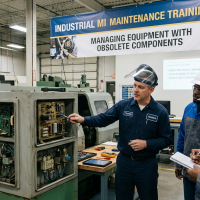
Industrial Maintenance Training for Managing Equipment With Obsolete Components

Understanding the Challenge of Obsolete Components

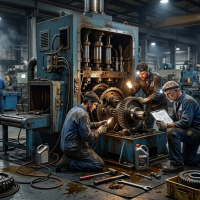
Industrial equipment is often expected to remain productive for many years, even when some of its original components are no longer manufactured. Obsolete components can include electronic control boards, sensors, drives, mechanical assemblies, specialised valves and older communication devices. When these parts become difficult to source, maintenance teams may face longer repair periods and increased operational risk. This makes knowledge of equipment history, component availability and maintenance strategy increasingly important in industrial environments. Our industrial maintenance training helps learners understand how ageing equipment can be managed systematically rather than through reactive repairs. This approach is particularly relevant to South African industries where many facilities continue operating established equipment alongside newer technologies.

Why Obsolescence Requires a Maintenance Strategy

Component obsolescence is not simply a purchasing problem because it can directly affect equipment availability, production continuity and maintenance costs. A component may become obsolete because the manufacturer has discontinued it, changed its product range or stopped supporting an older technology. Maintenance teams therefore need to identify potential obsolescence before a component failure creates an urgent operational problem. Early identification allows organisations to investigate alternatives, secure remaining stock or consider suitable upgrades. Our training places emphasis on planned decision-making so that maintenance personnel can respond to obsolescence using reliable information. This supports a more structured maintenance environment where equipment risks are understood before they become serious operational disruptions.

Identifying Obsolescence Risk in Critical Equipment

Not every obsolete component creates the same level of operational risk. A small non-critical component may be replaced without significantly affecting production, while an obsolete controller on a critical production asset could result in an extended shutdown. Maintenance personnel should therefore understand how component obsolescence relates to equipment criticality. This requires reviewing the function of the equipment, its failure consequences, available alternatives and the time required to restore operation. Through industrial maintenance training, learners can develop a more practical understanding of how these factors should influence maintenance planning. This helps organisations direct limited maintenance resources towards equipment where obsolete components present the greatest business risk.

Building an Equipment Obsolescence Register

An equipment obsolescence register can provide maintenance teams with a structured record of components that may become difficult to replace. Such a register can include manufacturer details, part numbers, equipment references, current availability, supplier information and possible replacement options. It can also record whether a component is supported by the original manufacturer and whether compatible alternatives have been identified. Keeping this information current allows maintenance planners to identify potential problems well before a component fails. At Terotechnica, we encourage learners to view maintenance information as an important asset management resource rather than simply administrative documentation. A well-maintained register can support better planning, procurement decisions and long-term equipment strategies.

Connecting Obsolescence With Asset Criticality

Asset criticality provides an important foundation for deciding how urgently obsolete components should be addressed. Criticality assessments can consider safety, environmental impact, production losses, quality requirements, financial consequences and recovery time. When these factors are understood, maintenance teams can prioritise obsolete components associated with assets that have significant operational consequences. This prevents organisations from spending the same level of effort on every ageing component regardless of its importance. Industrial maintenance training should therefore show how component obsolescence fits into broader asset management and maintenance planning processes. This connection allows maintenance teams to make decisions based on risk, consequence and business priorities.

Planning for Replacement Components

When an original component is no longer available, maintenance teams may need to identify an alternative that can perform the required function. However, replacing a component should not be based only on physical compatibility because electrical characteristics, software requirements, communication protocols and operating conditions may also need consideration. The proposed replacement should be evaluated against the equipment manufacturer's requirements and the site's engineering standards. Maintenance personnel should also understand whether additional modifications, testing or commissioning will be required before the equipment can return to service. Our approach to industrial maintenance training focuses on developing the technical awareness needed to investigate these factors before replacement work begins. Proper planning can reduce the likelihood of introducing a new failure point while attempting to resolve an obsolescence issue.

Managing Legacy Control Systems

Legacy control systems can create particular challenges because they may depend on outdated processors, proprietary software, discontinued programming tools or older communication protocols. A failure involving one of these systems can sometimes require specialist knowledge that is no longer readily available within the organisation. Maintenance teams therefore need to preserve relevant documentation, configuration files, software information and technical knowledge while the system remains operational. They should also understand which components are genuinely critical and which can be substituted or upgraded. Our training helps learners appreciate the importance of maintaining technical knowledge alongside physical equipment. This is especially useful when experienced personnel with knowledge of older systems retire or move out of the organisation.

Spare Parts Planning for Ageing Equipment

Strategic spare parts planning becomes increasingly important when equipment contains obsolete or hard-to-source components. Organisations may decide to hold additional stock of selected components when the consequences of failure justify the investment. However, simply purchasing large quantities of old components is not always practical because electronic parts can deteriorate during long-term storage and technology may continue to change. Maintenance teams should therefore consider component reliability, storage conditions, supplier availability, replacement lead times and equipment criticality. Industrial maintenance training can provide the foundation for making these decisions using a structured maintenance and asset management approach. The objective is to achieve an appropriate balance between inventory cost and the risk of extended equipment downtime.

Working With Suppliers and Specialist Vendors

Suppliers can provide valuable information about discontinued products, last-time-buy opportunities and recommended replacement technologies. Maintenance teams should maintain clear communication with suppliers so that changes affecting critical equipment are identified as early as possible. Specialist vendors may also assist with reverse engineering, refurbishment or migration from legacy systems where appropriate. However, proposed solutions should be evaluated carefully against technical requirements, reliability expectations and organisational risk controls. Our learners are encouraged to understand that supplier relationships should support maintenance strategy rather than replace internal technical decision-making. Good supplier information can strengthen the organisation's ability to manage ageing assets over their remaining life.

Refurbishment and Component Recovery

Refurbishment can sometimes provide an alternative when new replacement components are unavailable or uneconomical. Certain electronic, mechanical and control components can be repaired, tested and returned to service by competent specialist providers. Maintenance teams need to understand the risks associated with refurbished equipment, including remaining service life, warranty conditions and testing requirements. A refurbished component should be assessed according to the criticality and operating demands of the equipment where it will be installed. Training in industrial maintenance helps personnel recognise where refurbishment may be suitable and where a permanent engineering change may be more appropriate. This encourages maintenance decisions that consider reliability and risk rather than focusing only on immediate availability.

Using Condition Monitoring to Extend Equipment Life

Condition monitoring can provide useful information when organisations need to continue operating equipment containing obsolete components. Monitoring vibration, temperature, electrical characteristics, lubrication condition or other relevant parameters can help maintenance teams identify deterioration before functional failure occurs. Early warning can provide additional time to source difficult components, arrange specialist support or plan a controlled replacement. This can be particularly valuable when replacement lead times are long or production interruptions are costly. Our training introduces the relationship between condition-based maintenance, equipment reliability and long-term asset management. The aim is to help maintenance personnel use available condition information to support informed maintenance decisions.

Documenting Legacy Equipment Knowledge

Documentation becomes increasingly important as equipment ages because original manuals, drawings and technical records may become difficult to obtain. Maintenance departments should retain accurate information about component numbers, wiring, configurations, software versions, modifications and previous repairs. Photographs and technical records can also help maintenance personnel understand equipment condition and configuration during future interventions. Without reliable documentation, a relatively simple repair can become a lengthy investigation when specialist knowledge is unavailable. At Terotechnica, we recognise documentation as an important part of maintaining organisational knowledge throughout an asset's life. Strong documentation practices can therefore reduce dependency on individual employees and improve maintenance continuity.

Developing Skills for Ageing Industrial Assets

Managing obsolete components requires maintenance personnel who can combine practical technical knowledge with structured problem-solving. They need to understand equipment operation, failure modes, component identification, maintenance planning, risk assessment and basic asset management principles. They should also be comfortable reviewing technical information and communicating with engineering, procurement, operations and external suppliers. These capabilities become increasingly valuable as industrial facilities manage mixed generations of equipment across their operations. Our industrial maintenance training is designed to help learners build the knowledge required to work confidently with both established and modern industrial assets. Developing these skills can contribute to better maintenance decisions and stronger equipment reliability.

Integrating Obsolescence Into Maintenance Planning

Equipment obsolescence should be considered during maintenance planning rather than addressed only after a component has failed. Planned maintenance reviews can identify assets approaching the end of manufacturer support and determine whether action is required. Possible actions may include stocking selected spares, finding approved alternatives, upgrading specific components, modifying equipment or developing a replacement project. The appropriate response depends on equipment criticality, remaining useful life, technical feasibility and the organisation's operational requirements. Industrial maintenance training helps learners understand how these decisions can be incorporated into broader maintenance planning activities. This creates a more proactive approach to ageing equipment and reduces dependence on emergency maintenance.

Supporting Long Term Asset Management

Obsolete components are ultimately part of a wider asset management challenge because organisations must balance performance, risk, cost and remaining asset life. A machine may continue providing useful service for many years even when some of its original components are no longer supported. The decision to repair, modify, upgrade or replace that machine should therefore consider the complete asset lifecycle rather than one component in isolation. Maintenance professionals with appropriate training can contribute valuable technical information to these decisions. We focus on helping learners understand how maintenance activities support wider organisational objectives and sustainable asset performance. This perspective can help South African industries manage ageing equipment while making better use of existing infrastructure.

Preparing Maintenance Teams for Future Challenges

Industrial technology continues to change, and future maintenance teams will increasingly manage facilities containing both advanced digital systems and older mechanical and electrical equipment. This mixture makes it essential for maintenance personnel to understand how different generations of technology interact within the same production environment. Obsolete components should be identified, assessed and managed before they become unexpected causes of downtime. Effective training can give maintenance professionals the practical knowledge needed to recognise these risks and contribute to appropriate mitigation strategies. At Terotechnica, we support learning that connects maintenance practice with asset reliability, lifecycle thinking and operational risk management. By strengthening these capabilities, organisations can improve their readiness to manage ageing equipment and make informed decisions about the future of their industrial assets.

ISO 55000 Course

How an ISO 55000 Course Can Help Professionals Identify Gaps Between Asset Strategy and Daily Operations

Understanding the Gap Between Strategy and Operations

Effective asset management requires organisations to connect long-term business objectives with the activities performed by employees every day. An asset management strategy establishes how physical assets should support productivity, safety, financial sustainability, and service delivery. Daily operations translate these objectives into maintenance schedules, inspections, equipment monitoring, and resource allocation. However, these activities do not always reflect management's intended priorities, creating gaps that can affect reliability and operational efficiency. An ISO 55000 course helps professionals understand how to evaluate these differences and recognise where existing processes require improvement. At Terotechnica, we emphasise the importance of connecting strategic asset management decisions with practical workplace requirements across South African industries.

Why Asset Management Strategies Fail to Translate Into Action

An organisation may have a clearly documented asset management strategy without consistently implementing it across its facilities. Management might prioritise equipment reliability and reduced life cycle costs, while operational teams spend most of their time responding to immediate breakdowns. This disconnect can develop when responsibilities are unclear, resources are insufficient, or performance targets encourage short-term decisions. Over time, these inconsistencies can increase maintenance expenditure and prevent the organisation from achieving its intended outcomes. Professionals must therefore examine whether daily activities support established business objectives rather than assuming that documented plans guarantee effective implementation. Understanding asset management principles helps them recognise these weaknesses and identify practical opportunities to improve operational alignment.

Identifying Weaknesses in Asset Management Planning

Asset management plans establish how an organisation will achieve its objectives through coordinated activities, resources, responsibilities, and performance targets. However, maintenance schedules may not adequately reflect equipment condition, asset criticality, operational risks, or changing production requirements. Long-term replacement plans can also become disconnected from maintenance histories and actual equipment performance. These weaknesses make it difficult for organisations to allocate resources effectively and prioritise activities that deliver the greatest operational value. Through an ISO 55000 course, professionals can develop a structured understanding of how planning decisions should translate into measurable workplace activities. They can then evaluate whether existing plans provide sufficient direction for maintenance teams and other employees responsible for asset performance.

Evaluating Maintenance Practices Against Business Objectives

Maintenance activities often reveal whether an organisation's asset management strategy is being implemented effectively. A company may aim to improve equipment availability through preventive maintenance, yet technicians might spend most of their working hours addressing unexpected failures. This situation may indicate inadequate maintenance planning, ineffective inspections, poor work order management, or insufficient resources. Professionals need to determine whether current practices reflect equipment criticality and the consequences of potential failures. By examining maintenance schedules, breakdown records, recurring faults, and completed work orders, they can identify differences between planned and actual performance. This analysis helps organisations prioritise corrective measures and move towards a more proactive, reliable, and cost-effective maintenance approach.

Understanding Asset Criticality and Operational Risk

Not every asset contributes equally to organisational performance, making asset criticality an important consideration when allocating maintenance resources. Equipment failures can have different consequences depending on their effects on production, employee safety, environmental performance, and service continuity. When operational teams prioritise work based solely on urgency or convenience, high-risk assets may not receive adequate attention. This creates a disconnect between the risks management intends to control and the activities employees perform in practice. Professionals can identify this gap by comparing asset criticality assessments with maintenance frequencies, inspection procedures, and actual resource allocation. A risk-based approach helps organisations focus attention on assets where failure could have the most significant operational or financial consequences.

Improving Coordination Between Management and Maintenance Teams

Asset management involves several departments, including engineering, maintenance, operations, procurement, and finance. However, these departments may have different priorities, with production teams focusing on output, maintenance teams concentrating on equipment condition, and finance teams controlling expenditure. Without clearly defined responsibilities and shared objectives, these competing priorities can lead to inconsistent decisions. Professionals should examine whether departments understand their respective roles and communicate effectively when asset-related decisions affect other functions. Reviewing approval procedures, maintenance planning meetings, reporting structures, and responsibility assignments can reveal where coordination is breaking down. Improving collaboration helps ensure that daily operational decisions reflect the organisation's wider asset management priorities.

Using Asset Performance Data to Identify Gaps

Accurate asset information enables organisations to evaluate equipment condition, maintenance effectiveness, operating costs, and recurring failure patterns. However, collecting data does not automatically lead to better decisions, particularly when reports focus on completed activities rather than actual results. For example, a maintenance team may report that scheduled inspections were completed without demonstrating whether equipment reliability has improved. Incomplete maintenance records or inconsistent reporting can further prevent management from identifying emerging problems. Professionals should assess whether the information collected is accurate, relevant, and suitable for evaluating progress against asset management objectives. This analysis can reveal weaknesses in reporting systems and help organisations use operational evidence to support better planning and resource allocation.

Connecting Performance Indicators With Organisational Goals

Key performance indicators provide measurable evidence of whether asset management activities are delivering the expected results. Common measures include equipment availability, mean time between failures, maintenance costs, schedule compliance, and unplanned downtime. Nevertheless, individual indicators can create misleading conclusions when they are not connected to broader organisational objectives. For example, reducing maintenance expenditure may appear beneficial in the short term but increase future costs if essential inspections or preventive tasks are postponed. Professionals should examine whether performance measures encourage appropriate operational behaviour and reveal the actual condition of critical assets. Aligning indicators with strategic priorities enables organisations to identify underperformance, assess improvement opportunities, and make more informed asset management decisions.

Examining Asset Life Cycle Management Decisions

Asset management extends beyond maintaining existing equipment because decisions made during acquisition, operation, refurbishment, and disposal influence long-term value. An organisation may purchase new equipment without providing adequate operator training, spare parts arrangements, or suitable maintenance procedures. Similarly, teams may continue repairing ageing machinery without assessing whether the associated costs and operational risks justify continued use. These situations can create unnecessary expenditure and undermine long-term asset performance. Professionals should evaluate whether acquisition decisions, maintenance practices, replacement plans, and disposal criteria support a consistent life cycle management approach. This assessment helps identify opportunities to improve investment decisions and balance equipment reliability, operating costs, and long-term organisational requirements.

Strengthening Risk Management and Compliance Practices

Asset-intensive organisations must consider operational risks, safety requirements, environmental responsibilities, and applicable regulatory obligations when managing physical assets. Documented risk assessments are only effective when their recommendations are implemented consistently in daily operations. Inspection requirements may be overlooked, maintenance records may be incomplete, or operating procedures may not reflect changing equipment conditions. Such weaknesses can increase the likelihood of equipment failures, workplace incidents, and compliance concerns. Professionals can identify these issues by comparing documented controls with actual maintenance records, inspection results, and workplace practices. Addressing the differences helps organisations improve operational discipline and ensure that asset-related risks receive appropriate attention.

Conducting a Structured Asset Management Gap Analysis

Identifying gaps requires a systematic comparison between intended outcomes and actual operational performance. Professionals can begin by reviewing asset management policies, maintenance plans, operating procedures, performance indicators, and risk assessments. They should then examine operational evidence to determine whether activities are being completed as planned and whether the expected outcomes are being achieved. Each identified gap should be evaluated according to its underlying cause, potential consequences, and importance to organisational objectives. An ISO 55000 course can provide useful knowledge for understanding this assessment process and evaluating the relationship between asset management requirements and workplace practices. A structured gap analysis allows organisations to move beyond isolated operational problems and develop a clearer understanding of the weaknesses affecting overall asset performance.

Turning Findings Into Practical Improvement Initiatives

Identifying an operational gap is only the first step towards improving asset management performance. Organisations must also establish why the problem exists and determine which corrective actions will produce meaningful results. Some issues may require clearer responsibilities, while others could involve insufficient training, outdated procedures, inadequate resources, or ineffective information systems. Improvement initiatives should include realistic timelines, accountable owners, appropriate resources, and measurable success criteria. Professionals can use their understanding of asset management principles to prioritise these actions according to risk, operational impact, and strategic importance. Regular reviews then help determine whether the changes have reduced the identified gaps and improved asset performance.

Applying Asset Management Principles Across South Africa

South African organisations in manufacturing, mining, utilities, transport, and infrastructure depend on reliable equipment and coordinated maintenance activities. In these sectors, differences between strategic plans and operational practices can affect productivity, operating expenditure, safety, and service reliability. Professionals must consider local operating conditions, resource constraints, workforce capabilities, and applicable legal requirements when evaluating asset management processes. They should also recognise that improvements need to reflect the organisation's operational environment rather than rely on generic procedures. At Terotechnica, we recognise the value of developing professionals who can apply asset management knowledge to practical challenges within South African workplaces. This capability supports better maintenance planning, stronger operational coordination, and more informed decisions about the long-term use of physical assets.

Developing Professional Competence Through an ISO 55000 Course

Professionals working in engineering, maintenance, reliability, operations, and asset management need both technical knowledge and the ability to evaluate organisational processes. An ISO 55000 course can help them develop a broader understanding of asset management responsibilities, risk-based decision-making, performance evaluation, and continual improvement. This knowledge can strengthen their ability to recognise inconsistencies between management expectations and actual workplace activities. It can also improve how they communicate findings, assess operational consequences, and contribute to improvement initiatives. The practical value of training depends on how effectively professionals apply what they learn to their organisation's assets, procedures, and performance challenges. By developing these capabilities, professionals can help create stronger alignment between asset management objectives and daily operational responsibilities.

Conclusion

Gaps between asset management strategy and daily operations can undermine equipment reliability, increase life cycle costs, and prevent organisations from achieving their business objectives. Identifying these gaps requires professionals to examine maintenance practices, planning processes, asset criticality, risk controls, performance indicators, and operational information. An ISO 55000 course provides a foundation for understanding these relationships and evaluating whether existing activities support organisational priorities. By applying a structured gap analysis and addressing the underlying causes of operational weaknesses, professionals can contribute to more reliable equipment, improved resource utilisation, and better-informed investment decisions. At Terotechnica, we encourage asset management and maintenance professionals in South Africa to strengthen their capabilities through structured learning and practical application. A consistent approach to asset management can help organisations improve operational performance and create greater value throughout the asset life cycle.


Production Asset Management
Featured

How Production Asset Management Can Reveal the True Cost of Equipment Downtime

Understanding the Real Impact of Downtime

Equipment downtime is often measured by the number of hours a machine is unavailable for production. However, the visible downtime figure rarely represents the full financial impact experienced by an industrial organisation. A failed production asset can affect output, labour utilisation, energy consumption, product quality, customer commitments and maintenance resources at the same time. These effects can continue even after the equipment has been repaired and returned to service. Production asset management provides a structured way to understand these interconnected costs rather than treating downtime as an isolated maintenance event. At Terotechnica, we teach our learners to consider the wider operational and financial consequences when evaluating asset performance.

Moving Beyond the Maintenance Cost

The direct maintenance cost of a breakdown is usually the easiest figure to identify. It may include replacement components, specialist contractors, overtime, tools, transport and the labour required to restore the equipment. These expenses are important, but they represent only one part of the total cost of equipment failure. Production losses can sometimes be considerably greater than the repair invoice, particularly when a critical production asset supports a high-volume operation. A production asset management approach connects maintenance expenditure with production performance so that decision makers can see the broader financial picture. This helps organisations understand why preventing a failure can sometimes create substantially more value than simply reducing the cost of the repair itself.

Calculating Lost Production

Lost production is one of the most significant hidden costs associated with equipment downtime. When a critical machine stops, the organisation may lose the opportunity to manufacture products that would otherwise have generated revenue or supported contractual commitments. The actual calculation should consider production capacity, product value, contribution margin and the duration of the interruption rather than simply multiplying downtime hours by an average production figure. Production asset management makes it possible to connect equipment availability with production planning and operational priorities. This allows maintenance teams and production managers to identify which assets create the greatest financial exposure when they fail. A more accurate understanding of lost production can also support stronger decisions about maintenance intervals, spare parts and equipment renewal.

Recognising Labour Inefficiencies

Downtime can also create significant labour inefficiencies across an industrial facility. Operators may be unable to perform their normal duties while waiting for equipment to become available, while maintenance teams may need to divert resources from planned work to emergency repairs. Supervisors, engineers and production planners can also spend additional time responding to the disruption and reorganising production activities. These costs are not always recorded against the equipment that caused the original failure. By analysing the complete operational impact, production asset management can reveal how one equipment problem affects multiple teams. This broader view allows organisations to identify opportunities for improving maintenance planning and reducing the amount of reactive work.

Measuring the Cost of Quality Problems

Equipment failure does not always stop production completely. In some situations, a machine may continue operating at reduced performance or produce material that does not meet the required specification. This can result in increased scrap, rework, inspection requirements, customer complaints and additional processing costs. Production asset management encourages organisations to examine equipment performance in relation to quality outcomes rather than focusing only on whether the machine is running. Identifying these relationships can reveal that an apparently available asset is actually creating substantial hidden losses. Our approach helps learners understand why asset availability, performance and quality should be considered together when assessing production effectiveness.

Understanding Secondary Production Losses

A single equipment failure can create consequences beyond the machine that has stopped. Where production processes are interconnected, the failure of one asset can interrupt upstream or downstream operations and create bottlenecks throughout the facility. Materials may accumulate, downstream equipment may become starved of input, and production schedules may need to be changed. These secondary effects can significantly increase the total cost of an incident compared with the initial downtime calculation. Production asset management helps organisations map these dependencies and identify the assets that have the greatest operational influence. This information can support better asset criticality assessments and more targeted maintenance strategies.

Considering Customer and Supply Chain Consequences

The financial effect of downtime can extend outside the production facility. A prolonged interruption may delay customer orders, affect delivery commitments and require changes to distribution arrangements. In industries where production schedules are closely linked to customer contracts, repeated delays can also create commercial and reputational consequences. These effects are more difficult to quantify than direct repair costs, but they should still be considered when evaluating critical production assets. A comprehensive production asset management system can help organisations identify which equipment failures pose the greatest risk to supply continuity. This allows maintenance and operations teams to prioritise resources according to business consequences rather than equipment value alone.

Using Asset Criticality to Prioritise Risk

Not every production asset creates the same level of financial exposure when it fails. Some machines may have readily available alternatives, while others may represent a single point of failure for an entire production process. Asset criticality assessment helps organisations distinguish between these situations by considering factors such as safety, production impact, quality, environmental consequences, repair time and replacement availability. Production asset management uses this information to support more informed maintenance priorities. Critical assets may require stronger preventive maintenance programmes, condition monitoring, strategic spare parts and detailed failure response plans. This ensures that maintenance resources are directed towards assets where failure could have the greatest business impact.

Connecting Downtime With Life Cycle Costs

The true cost of downtime should also be considered throughout the asset life cycle. Older equipment may require more frequent intervention, have longer repair times and experience increasing difficulty with spare parts availability. Continuing to operate such equipment may appear cheaper than replacement when only immediate maintenance expenditure is considered. However, repeated downtime and declining production performance can significantly increase the total cost of ownership. Production asset management brings maintenance, operational and financial information together to support life cycle decisions. This can help organisations determine whether an asset should be maintained, refurbished, upgraded or replaced based on its overall contribution to business performance.

Improving Maintenance Planning

Understanding the true cost of downtime can transform the way maintenance activities are planned. Instead of scheduling work solely according to equipment age or manufacturer recommendations, organisations can consider failure probability alongside business consequence. This creates an opportunity to prioritise preventive and predictive maintenance activities where they can provide the greatest operational value. Maintenance planning can also be improved by analysing recurring failures, mean time between failures, mean time to repair and equipment availability trends. These indicators become more meaningful when they are linked to production and financial outcomes. Our learners are encouraged to understand maintenance as a business function that contributes directly to production performance and organisational value.

The Role of Condition Monitoring

Condition monitoring can provide valuable information for reducing unexpected equipment failures. Technologies such as vibration analysis, thermography, oil analysis and equipment performance monitoring can help identify developing faults before they result in major breakdowns. However, monitoring should be applied according to asset criticality and the consequences of failure rather than simply being implemented because the technology is available. Production asset management provides the framework for determining where condition monitoring can deliver meaningful value. When early warning information is connected to maintenance planning, teams can intervene during controlled production windows rather than responding to emergency failures. This can reduce unplanned downtime while improving the utilisation of maintenance resources.

Turning Downtime Data Into Better Decisions

Historical downtime data can provide valuable insight when it is analysed correctly. Organisations can examine failure frequency, downtime duration, repair performance, production losses and recurring failure modes to identify patterns that would otherwise remain hidden. The objective is not simply to collect more data but to turn operational information into decisions that improve asset performance. Production asset management helps create the connection between equipment data and business outcomes. This enables managers to identify where reliability improvements can produce measurable operational benefits. Over time, these insights can support better budgeting, maintenance strategies, capital planning and production decisions.

Developing a Reliability-Focused Culture

Reducing the true cost of downtime requires cooperation between maintenance, production, engineering, finance and management teams. When each department evaluates equipment performance using different measures, the organisation can struggle to understand the full impact of asset failures. A reliability-focused culture encourages teams to share information and evaluate equipment according to its contribution to overall business objectives. Production asset management provides a common framework for bringing these perspectives together. It also encourages organisations to move from reactive problem solving towards planned risk management and continuous improvement. This cultural shift can be particularly valuable in South African industrial environments where operational efficiency, skills development and responsible resource management are important considerations.

Building Stronger Asset Management Capability

Understanding the true cost of downtime requires more than knowledge of maintenance techniques. Professionals need to understand asset life cycles, production systems, risk management, reliability principles, financial consequences and maintenance strategy. Structured education can help maintenance and asset management professionals develop the ability to connect these areas when making operational decisions. At Terotechnica, we focus on developing practical knowledge that helps learners understand how asset management principles can be applied within real industrial environments. This includes examining how equipment criticality, maintenance planning and production performance interact. Stronger professional capability can help organisations make more informed decisions about the assets that support their production objectives.

Making Downtime a Business Performance Issue

Equipment downtime should not be viewed simply as a maintenance department problem. It is a business performance issue that can influence production output, operating costs, quality, labour productivity, customer service and capital requirements. Production asset management provides the structure needed to understand these relationships and measure the consequences more accurately. By connecting equipment performance with business outcomes, organisations can identify where reliability improvements are likely to create meaningful value. This approach also supports more defensible decisions about maintenance investment, asset renewal and operational risk. Ultimately, understanding the true cost of downtime allows organisations to manage production assets according to their real contribution to sustainable business performance.

  1. Maintenance Engineering Courses: How Engineers Can Bridge the Gap Between Design and Operational Reliability
  2. Why Maintenance Planning Certification Should Include Asset Criticality Modeling
  3. How Asset Management Courses Teach the Hidden Economics Behind Maintenance Decisions
  4. What an ISO 55000 Course Reveals About the Gap Between Owning Assets and Managing Their Value

Page 1 of 8

  • 1
  • 2
  • 3
  • 4
  • 5
  • 6
  • 7
  • 8
Terotechnica
Asset Management College

Training Maintenance Practitioners in the Art and Science of Maintenance Engineering for over 19 years.

Programmes

  • Diplomas
  • Comprehensive Courses
  • Short Courses
  • Technical Courses
  • Occupational Certificates

Resources

  • 2026 Courses
  • Upcoming Courses
  • Brochures
  • Inquiry/Application Form
  • Student Loans/Discounts
  • Search
  • Sitemap
  • Saama2026
© 2026 Terotechnica Asset Management College. All rights reserved.
  • Home
    • About Terotechnica Maintenance College
    • Welcome to Terotechnica Maintenance College
    • Our Philosophy
    • In house courses
    • International Students
  • Search
  • 2027 Courses
  • Why Train?
  • Best Practices
  • Study Information
    • Diplomas
      • Subject Choices
      • Diplomas Awarded
      • Rules for Diploma Study
      • Diploma Enrolment
    • Comprehensive Courses
      • C101: Asset Management for Artisans
      • C201: Asset Management for Maintenance Supervisors
      • C301: Maintenance Planning
      • C302: Advanced Maintenance Planning
      • C303: Computerised Maintenance Management Systems (CMMS)
      • C501: Maintenance Shutdown and Project Management
      • C702: Reliability Engineering in Asset Management
      • C901: Maintenance Practice for Asset Management Engineers
      • C902: Leadership in Asset Management
      • C903: RCM Facilitation and Analysis
      • C904: RCM ProAktiv: Advanced Reliability Centred Maintenance
    • Short Courses
      • S801: RCM
      • S802: Asset Management for Executives
      • S803: Root Cause Failure Analysis
      • S804: Decision Making in Maintenance
      • S805: Maintenance Control
      • S808: Asset Management Logistics
      • S809: Data Analytics in Asset Management
      • S811: Water Treatment Plant Operation and Maintenance
      • S812: Road Maintenance
      • S813: Assets - Economical Replacement and Life Cycle Management
      • S820: What is Asset Management - how does it differ from Maintenance
      • S821: Understanding ISO 55000
      • S822: Implementing ISO 55000
    • Technical Courses
    • Occupational Certificates
  • Course Calendar
  • Terotechnica eCollege
  • Administration
    • Brochures
    • Terms
    • Inquiry / Application Form
    • Study Loans / Discounts
    • Privacy
  • People
    • Personnel
    • Diploma Ceremonies
      • 2023
    • Testimonials
      • Zonica (student) message to Melvin (lecturer) on her benefit from training with us
  • Offices
  • Contact us
  • 012 548 6096
  • 082 855 8016
  • info@terotechnica.com