
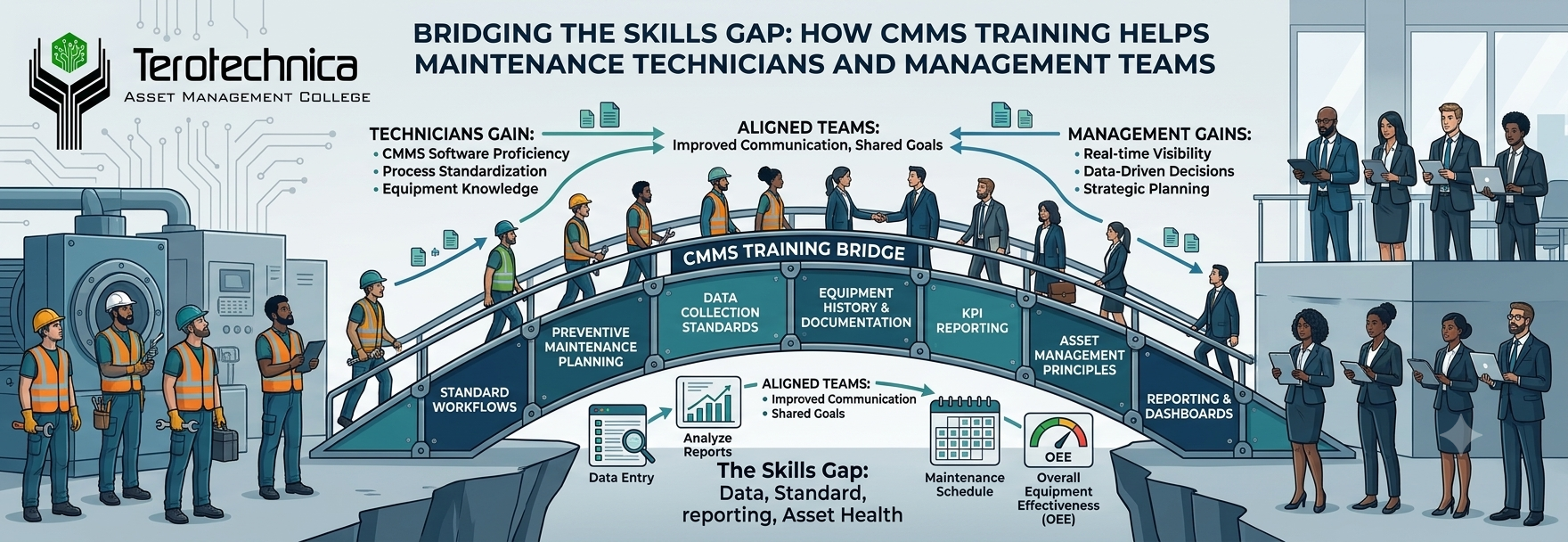
Effective maintenance management requires more than skilled technicians and experienced managers working independently. It depends on how well both groups communicate, share information, understand maintenance priorities, and make decisions that support organisational performance. In many industrial environments, maintenance technicians focus on equipment reliability and daily repair activities, while management teams concentrate on budgets, operational efficiency, resource allocation, and long-term planning. Although both groups work towards similar objectives, differences in technical knowledge, reporting practices, and operational expectations can create communication gaps. Computerised Maintenance Management System (CMMS) training provides an opportunity to bring these teams together through standardised processes, accurate maintenance records, and shared performance information. At Terotechnica, we recognise the importance of developing practical maintenance management skills that help professionals connect technical activities with broader organisational objectives.
Understanding the Skills Gap Between Maintenance Technicians and Management
Maintenance technicians and management teams often approach equipment maintenance from different professional perspectives. Technicians are primarily responsible for inspecting machinery, identifying faults, completing repairs, and ensuring that equipment operates safely and efficiently. Management teams must consider how maintenance activities affect production schedules, operating costs, workforce productivity, and business continuity. These different responsibilities can create challenges when technical findings are not communicated in a way that supports management decisions. For example, a technician may recognise that a particular machine requires frequent repairs, but management may not understand the financial implications without reliable maintenance records. We believe that closing this knowledge gap requires a combination of technical understanding, structured information management, and training that encourages both groups to work towards shared maintenance objectives.
Why Communication Gaps Create Maintenance Management Challenges
Poor communication between maintenance technicians and management teams can lead to unnecessary equipment downtime, delayed repairs, inefficient resource allocation, and increased operating expenses. When technicians rely on handwritten notes or informal communication, important information about equipment conditions may not reach decision-makers at the appropriate time. Similarly, managers may establish maintenance targets without fully understanding the technical requirements or operational challenges involved in achieving them. These situations can create confusion about work priorities, maintenance schedules, and the resources required to complete essential tasks. Over time, inconsistent communication can reduce confidence between departments and make it difficult to evaluate maintenance performance accurately. Through structured CMMS training, we help professionals understand how consistent documentation and shared maintenance information can improve communication and support more coordinated maintenance operations.
How CMMS Training Creates a Common Understanding of Maintenance Activities
One of the most valuable benefits of CMMS training is its ability to establish a common framework for managing maintenance activities across different organisational levels. A CMMS provides a centralised environment where equipment information, maintenance schedules, work orders, spare parts records, and maintenance histories can be organised and accessed by authorised personnel. Technicians learn how to record maintenance activities accurately, while managers develop a clearer understanding of how to interpret the information collected through the system. This shared approach reduces misunderstandings because both groups can refer to consistent maintenance records when discussing equipment performance and operational priorities. It also encourages accountability by making it easier to identify completed work, outstanding tasks, recurring equipment problems, and maintenance requirements. We emphasise the importance of understanding these processes because successful maintenance management depends on people using information consistently rather than simply having access to software.
Improving Work Order Management Through Practical CMMS Knowledge
Work order management is one of the most important areas where CMMS training can improve cooperation between maintenance technicians and management teams. Without a structured work order process, maintenance requests may be overlooked, duplicated, incorrectly prioritised, or completed without sufficient documentation. CMMS training helps technicians understand how to receive work assignments, record equipment faults, document repairs, update job statuses, and provide accurate information about completed maintenance activities. At the same time, managers learn how to monitor work order progress, evaluate maintenance backlogs, allocate resources, and identify delays affecting operational performance. When both groups understand the same workflow, maintenance activities become easier to coordinate and evaluate. This creates a more transparent working environment where technical responsibilities and management expectations are clearly connected through reliable maintenance information.
Connecting Technical Maintenance Data With Management Decisions
Maintenance technicians generate valuable information every time they inspect equipment, investigate a fault, replace a component, or complete a repair. However, this information only supports business improvement when it is recorded accurately and interpreted correctly. CMMS training helps technicians understand why details such as failure descriptions, repair durations, equipment conditions, and maintenance actions are important beyond the immediate repair task. Management teams can use this information to identify recurring failures, assess maintenance expenditure, evaluate equipment reliability, and determine where operational improvements may be necessary. For example, repeated repairs on the same equipment may indicate that a more detailed investigation or replacement assessment is required. By improving the way maintenance information is collected and analysed, we help professionals recognise how everyday technical activities contribute to informed management decisions.
Strengthening Preventive Maintenance Planning Across Departments
Preventive maintenance requires close coordination between the people responsible for performing maintenance activities and those responsible for scheduling, budgeting, and operational planning. Technicians understand the practical maintenance requirements of equipment, including inspection procedures, lubrication needs, component replacement intervals, and common failure patterns. Management teams must balance these technical requirements with production demands, available resources, and organisational priorities. CMMS training helps both groups understand how preventive maintenance schedules are created, assigned, monitored, and adjusted using equipment information and maintenance history. It also demonstrates how accurate task completion records can support future planning and help organisations evaluate whether their preventive maintenance strategies are effective. With better coordination, maintenance teams can move towards more organised maintenance practices that reduce avoidable interruptions and support equipment reliability.
Developing a Better Understanding of Maintenance Performance Indicators
Maintenance performance indicators provide a structured way to evaluate whether maintenance activities are supporting operational objectives. Common measures include mean time to repair (MTTR), mean time between failures (MTBF), preventive maintenance compliance, maintenance backlog, and equipment availability. Technicians may encounter these indicators through daily maintenance activities without always understanding how management uses them to assess performance. CMMS training helps explain the relationship between accurate technical records and the reliability of maintenance performance reports. Managers can also develop a better understanding of the operational circumstances behind these measurements rather than relying exclusively on numerical results. We encourage maintenance professionals to view performance indicators as tools for identifying improvement opportunities, supporting realistic planning, and encouraging cooperation between technical and management teams.
Reducing the Gap Between Maintenance Costs and Technical Requirements
Maintenance expenditure is often a major concern for industrial organisations, particularly when equipment repairs, spare parts, labour requirements, and unplanned downtime place pressure on operating budgets. Technicians generally focus on identifying the resources needed to complete maintenance tasks correctly, while managers must determine whether those resources are financially justified. Without reliable information, these different perspectives can create disagreements about repair priorities, replacement decisions, and maintenance expenditure. CMMS training helps technicians document the resources used during maintenance activities, including labour hours, replacement components, and equipment-related costs. Managers can then examine these records to identify expenditure patterns, assess maintenance requirements, and make more informed budgeting decisions. By developing a shared understanding of maintenance costs, organisations can improve financial planning without overlooking the technical requirements necessary to maintain safe and reliable equipment.
Supporting Knowledge Transfer Between Experienced and New Maintenance Professionals
Industrial maintenance departments often depend on experienced technicians who possess valuable knowledge about equipment behaviour, recurring faults, repair procedures, and operational challenges. When this knowledge remains with individual employees, organisations may struggle to maintain consistent maintenance practices as personnel change or retire. CMMS training encourages technicians to document maintenance activities in a structured format that can be accessed and understood by other authorised team members. Equipment histories, completed work orders, fault descriptions, and maintenance instructions can become useful sources of information for newly appointed technicians and supervisors. Management teams also benefit because documented maintenance knowledge reduces dependence on informal communication and supports continuity in maintenance planning. We consider knowledge transfer an important part of maintenance capability development because reliable maintenance operations require both practical experience and accessible technical information.
Helping Maintenance Supervisors Become More Effective Team Leaders
Maintenance supervisors play an important role in connecting frontline technicians with senior management and operational decision-makers. They must understand technical maintenance requirements while also coordinating workloads, monitoring performance, managing resources, and communicating departmental priorities. Without adequate training, supervisors may find it difficult to convert technical maintenance information into clear operational reports or realistic maintenance plans. CMMS training helps supervisors understand how to assign tasks, review work order information, monitor maintenance schedules, and identify areas requiring additional attention. It also supports more informed discussions with technicians because supervisors can refer to documented equipment histories and maintenance requirements when evaluating operational challenges. These capabilities help supervisors provide stronger leadership while ensuring that maintenance activities remain aligned with organisational objectives.
Improving Equipment Reliability Through Shared Maintenance Information
Equipment reliability depends on the ability of maintenance teams to identify potential problems, respond to developing faults, and make appropriate decisions about maintenance interventions. When technicians and managers operate with incomplete or inconsistent information, recurring equipment problems may remain unresolved for longer than necessary. CMMS training demonstrates how maintenance histories, failure records, inspection findings, and work order information can support more systematic reliability improvement activities. Technicians can use historical records to investigate recurring problems, while managers can assess whether additional maintenance resources, technical investigations, or equipment improvements are justified. This shared access to information helps organisations move beyond repeatedly addressing symptoms and encourages more detailed consideration of underlying equipment problems. We promote this approach because sustainable maintenance improvement requires technical observations and management decisions to support one another.
Encouraging More Effective Spare Parts and Inventory Management
Spare parts availability has a direct influence on maintenance response times, equipment downtime, and overall maintenance expenditure. Technicians may experience delays when essential replacement components are unavailable, while management teams may struggle with excessive inventory costs or inaccurate stock information. CMMS training helps maintenance personnel understand how spare parts usage can be recorded, linked to work orders, and monitored through structured inventory processes. Technicians gain a clearer understanding of why accurate parts documentation matters, while managers can use inventory information to evaluate stock requirements and purchasing priorities. Improved coordination can help organisations identify frequently used components, reduce unnecessary stock accumulation, and improve planning for critical maintenance materials. By strengthening inventory management knowledge, we support a more connected approach to maintenance execution and resource planning.
Building Digital Confidence Among Maintenance Professionals
The increasing use of digital systems in industrial environments means that maintenance professionals need more than traditional mechanical, electrical, or operational knowledge. They must also understand how digital information supports maintenance planning, equipment management, performance monitoring, and organisational decision-making. Some experienced technicians may be highly capable in practical maintenance activities but less familiar with computerised documentation and reporting processes. Similarly, managers may understand business reporting requirements without having sufficient knowledge of how maintenance data is generated at the operational level. CMMS training helps reduce these differences by introducing structured digital maintenance processes and explaining how system information supports different job responsibilities. At Terotechnica, we understand that developing digital confidence is an important part of preparing maintenance professionals for changing industrial requirements and more information-driven working environments.
Supporting Maintenance Standardisation Across Industrial Operations
Industrial organisations often operate multiple facilities, production departments, or maintenance teams with different approaches to recording and completing maintenance activities. These inconsistencies can make it difficult for management to compare performance, evaluate maintenance requirements, or establish common operational expectations. CMMS training helps employees understand standardised procedures for work order management, equipment identification, maintenance documentation, and task completion reporting. When technicians follow consistent processes, maintenance information becomes easier to interpret across departments and operational locations. Management teams can also benefit from more comparable records when reviewing maintenance performance and identifying opportunities for process improvement. We encourage the development of consistent maintenance practices because standardisation supports accountability, reduces avoidable confusion, and creates a stronger foundation for continuous improvement.
Connecting CMMS Skills With Long-Term Asset Management Objectives
Maintenance management is closely connected to the wider discipline of asset management because equipment maintenance decisions influence asset performance, operating expenditure, and long-term value. Technicians often concentrate on restoring equipment functionality, while asset managers must consider how maintenance activities affect asset condition, reliability, useful life, and lifecycle costs. CMMS training helps explain how maintenance histories and performance information can contribute to asset management planning and investment decisions. For example, records showing repeated failures and increasing repair expenditure may help organisations evaluate whether continued maintenance or equipment replacement deserves further consideration. This information can also support discussions about asset criticality, maintenance strategies, and resource allocation across different stages of an asset's lifecycle. By connecting maintenance activities with broader asset management principles, we help professionals understand how technical decisions contribute to sustainable organisational performance.
Why CMMS Training Matters for South African Industrial Organisations
South African industrial organisations operate in sectors where equipment availability, maintenance expenditure, workforce capability, and operational reliability are important business considerations. Manufacturing facilities, mining operations, utilities, engineering businesses, and infrastructure organisations all depend on effective maintenance coordination to support their activities. Differences in workforce experience, technical responsibilities, and access to digital maintenance knowledge can create challenges when organisations introduce or improve computerised maintenance systems. CMMS training provides an opportunity to develop more consistent maintenance practices while helping employees understand how technical information supports management responsibilities. It can also support professional development by preparing technicians, planners, supervisors, and managers to work more confidently with structured maintenance information. We believe that improving these capabilities can help South African organisations strengthen maintenance coordination, make better use of available resources, and support long-term asset performance.
Creating a Culture of Accountability and Continuous Maintenance Improvement
Successful CMMS implementation requires more than introducing software and expecting employees to follow new procedures. Organisations need to develop a working culture where accurate maintenance documentation, clear communication, and shared responsibility are recognised as essential parts of maintenance performance. CMMS training helps employees understand their responsibilities within maintenance workflows and the importance of completing records correctly and consistently. Technicians become more aware of how their work contributes to departmental performance, while management teams gain greater visibility into the operational challenges affecting maintenance activities. This improved understanding can encourage constructive discussions about recurring problems, resource limitations, process improvements, and maintenance priorities. We see continuous improvement as an ongoing process that becomes more achievable when technical and management teams use reliable information to evaluate results and agree on practical improvements.
Choosing CMMS Training That Supports Both Technical and Management Responsibilities
Not every maintenance professional requires the same level of CMMS knowledge, which makes it important to consider different responsibilities when planning training and professional development. Technicians may benefit most from understanding work order processing, equipment records, fault documentation, and maintenance task completion procedures. Maintenance planners and supervisors may require additional knowledge of scheduling, maintenance backlogs, resource coordination, and performance reporting. Management professionals may need a stronger understanding of maintenance indicators, cost analysis, system reporting, and the relationship between maintenance activities and asset management objectives. A well-structured learning approach should explain how these responsibilities connect rather than treating each role as an isolated function. We encourage organisations to consider their existing maintenance processes, workforce capabilities, and operational objectives when identifying the most relevant CMMS training requirements.
Invest in CMMS Training to Strengthen Maintenance Team Performance
Bridging the skills gap between maintenance technicians and management teams is an important step towards improving maintenance efficiency, equipment reliability, and organisational coordination. When employees understand how to document maintenance activities, interpret system information, and communicate operational requirements, they are better prepared to make informed decisions together. CMMS training helps create this connection by providing a structured understanding of maintenance workflows, performance information, resource management, and equipment histories. It also supports professional development by helping individuals recognise how their responsibilities contribute to wider maintenance and asset management objectives. At Terotechnica, we are committed to supporting the development of maintenance and asset management knowledge that helps professionals respond to the practical demands of modern industrial operations. Explore our relevant maintenance management and CMMS learning opportunities, and contact us to discuss how professional training can support your team's development and organisational maintenance goals.
Take the Next Step Towards Better Maintenance Management
The value of CMMS training extends beyond learning how to operate a computerised maintenance system because it helps professionals understand how maintenance information connects people, processes, equipment, and business decisions. Organisations that invest in developing these capabilities can create stronger communication between technicians, supervisors, planners, and management teams. Improved maintenance knowledge can also support more consistent work order practices, better equipment histories, informed resource allocation, and more effective performance evaluation. Whether you are a maintenance technician seeking to develop your professional skills or a manager looking to strengthen maintenance coordination, understanding CMMS principles can contribute to your long-term development. We are here to help professionals explore learning opportunities that support practical maintenance knowledge and a stronger understanding of asset management responsibilities. Contact our team today to learn more about suitable training options and take a meaningful step towards building a more capable, connected, and effective maintenance workforce.