Terotechnica Asset Management College
  • 012 548 6096
  • 082 855 8016
  • info@terotechnica.com
Terotechnica Asset Management College
  • Home
    • About Terotechnica Maintenance College
    • Welcome to Terotechnica Maintenance College
    • Our Philosophy
    • In house courses
    • International Students
  • Search
  • 2027 Courses
  • Why Train?
  • Best Practices
  • Study Information
    • Diplomas
      • Subject Choices
      • Diplomas Awarded
      • Rules for Diploma Study
      • Diploma Enrolment
    • Comprehensive Courses
      • C101: Asset Management for Artisans
      • C201: Asset Management for Maintenance Supervisors
      • C301: Maintenance Planning
      • C302: Advanced Maintenance Planning
      • C303: Computerised Maintenance Management Systems (CMMS)
      • C501: Maintenance Shutdown and Project Management
      • C702: Reliability Engineering in Asset Management
      • C901: Maintenance Practice for Asset Management Engineers
      • C902: Leadership in Asset Management
      • C903: RCM Facilitation and Analysis
      • C904: RCM ProAktiv: Advanced Reliability Centred Maintenance
    • Short Courses
      • S801: RCM
      • S802: Asset Management for Executives
      • S803: Root Cause Failure Analysis
      • S804: Decision Making in Maintenance
      • S805: Maintenance Control
      • S808: Asset Management Logistics
      • S809: Data Analytics in Asset Management
      • S811: Water Treatment Plant Operation and Maintenance
      • S812: Road Maintenance
      • S813: Assets - Economical Replacement and Life Cycle Management
      • S820: What is Asset Management - how does it differ from Maintenance
      • S821: Understanding ISO 55000
      • S822: Implementing ISO 55000
    • Technical Courses
    • Occupational Certificates
  • Course Calendar
  • Terotechnica eCollege
  • Administration
    • Brochures
    • Terms
    • Inquiry / Application Form
    • Study Loans / Discounts
    • Privacy
  • People
    • Personnel
    • Diploma Ceremonies
      • 2023
    • Testimonials
      • Zonica (student) message to Melvin (lecturer) on her benefit from training with us
  • Offices
  • Contact us
Asset Management Courses

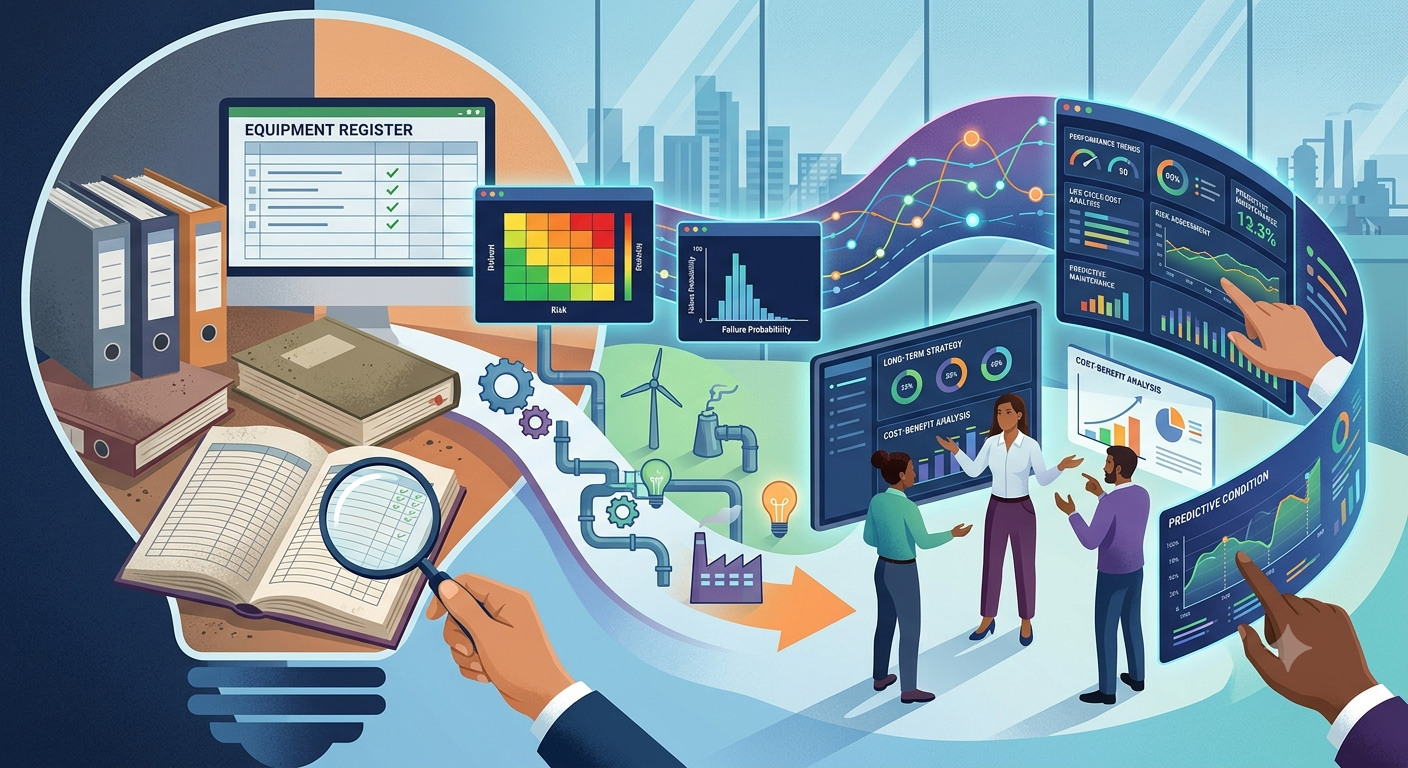
Beyond Equipment Registers: What Modern Asset Management Courses Reveal About Asset Decision Quality

Introduction: Asset Management Is More Than Knowing What You Own

An equipment register is often considered one of the foundations of effective asset management because it provides a structured record of physical assets, their locations, specifications, ownership, and operational status. While this information is essential, modern asset management requires organizations to go much further than maintaining an accurate list of equipment. The real challenge is understanding whether the decisions made throughout an asset's life are producing the right business, operational, financial, and risk outcomes. Asset decision quality depends on how effectively an organization connects asset information with objectives, risks, costs, performance expectations, and future requirements. This is why contemporary asset management education increasingly focuses on decision-making rather than treating asset registers as the primary destination. At Terotechnica, we recognize that developing stronger asset management capability means helping professionals understand how information should influence decisions throughout the complete asset life cycle.

Why Equipment Registers Are Only the Starting Point

An equipment register answers important questions such as what assets exist, where they are located, and what basic characteristics they have. However, it does not automatically explain whether an asset is delivering appropriate value or whether the organization should maintain, modify, replace, upgrade, or retire it. Two assets with similar specifications can require completely different management strategies because their operational criticality, failure consequences, maintenance history, and business importance may differ substantially. A register can therefore provide visibility without necessarily providing decision intelligence. Modern asset management approaches encourage professionals to interpret asset information within its operational and organizational context. The objective is not simply to collect more information, but to ensure that the available information supports better and more defensible decisions.

From Asset Data to Decision Intelligence

Modern asset management courses increasingly emphasize the difference between data availability and decision usefulness. An organization may possess thousands of equipment records, maintenance histories, inspection reports, condition assessments, and financial records without having a coherent process for turning that information into decisions. Decision intelligence emerges when information is connected to clearly defined objectives, risks, constraints, and performance requirements. This requires professionals to understand which information matters for a particular decision and how reliable that information is. It also requires an appreciation of uncertainty because asset decisions are rarely made with perfect knowledge of future operating conditions, failure probabilities, costs, or technological changes. Our approach to asset management education focuses on developing the capability to evaluate information critically rather than simply accepting data because it exists within a system.

Understanding the Asset Life Cycle

Asset decision quality improves when professionals consider the entire life cycle rather than focusing exclusively on maintenance activities. Decisions made during planning, design, procurement, installation, commissioning, operation, maintenance, modification, and disposal can influence value for many years. An inexpensive procurement decision, for example, can create higher maintenance requirements or increased downtime later in the asset's life. Similarly, a maintenance strategy that appears economical in the short term may increase operational risk or accelerate asset deterioration. Modern asset management education therefore encourages professionals to examine how decisions at one life cycle stage affect outcomes at another. This broader perspective helps organizations avoid isolated decisions that optimize one department while creating disadvantages elsewhere.

Connecting Asset Decisions With Organizational Objectives

An asset does not exist simply to operate according to its technical specification. Its purpose is ultimately connected to the outcomes the organization needs to achieve. A production asset may support throughput, quality, safety, customer commitments, and revenue, while an infrastructure asset may support reliability, service continuity, regulatory obligations, and public expectations. Asset decisions should therefore be evaluated according to how effectively they contribute to these wider objectives. Modern courses help professionals understand how organizational objectives can be translated into asset management requirements and measurable performance expectations. When this connection is clear, maintenance and investment decisions become easier to justify because they can be evaluated against outcomes rather than technical preferences alone.

Risk Is Central to Decision Quality

Risk-based thinking is one of the most important characteristics of modern asset management. Not every asset deserves the same level of attention, inspection, maintenance expenditure, or investment because the consequences of failure can vary considerably. A low-criticality component may be managed through a straightforward corrective maintenance strategy, while failure of a safety-critical or production-critical asset may require extensive preventive and predictive controls. Good asset decisions therefore consider the likelihood of failure alongside the consequences that failure could produce. Professionals also need to understand how risk changes as assets age, operating conditions change, and organizational requirements evolve. By incorporating risk into decision processes, organizations can allocate resources according to significance instead of treating every asset as equally important.

The Economics Behind Asset Decisions

Technical condition is only one part of an effective asset decision. Modern asset management requires professionals to consider life-cycle cost, operating expenditure, capital expenditure, downtime, energy consumption, maintenance requirements, and potential consequences of failure. An asset that appears inexpensive to purchase may become expensive to own when its energy requirements, spare parts, labor needs, and reliability limitations are considered over its useful life. Conversely, a higher initial investment may produce better long-term value through improved reliability, efficiency, maintainability, or risk reduction. Asset management courses help professionals develop a stronger understanding of these trade-offs so that decisions are not driven exclusively by acquisition cost. The emphasis is on evaluating value over the asset life cycle and understanding how financial and technical considerations interact.

Condition Data Needs Context

Condition monitoring has become increasingly important as organizations adopt technologies such as sensors, remote monitoring, predictive analytics, and computerized maintenance systems. However, collecting condition data does not automatically improve asset decisions. Professionals need to understand what the data means, how trustworthy it is, and whether a change in condition actually requires intervention. A minor deterioration in a non-critical asset may be acceptable, while the same deterioration in a critical asset could require immediate action. Modern asset management education therefore places emphasis on interpreting condition information alongside criticality, risk, failure modes, operating context, and performance requirements. This approach helps prevent organizations from responding mechanically to individual data points without understanding the wider asset management implications.

Maintenance Strategy and Decision Quality

Maintenance is often where asset decision quality becomes visible because maintenance teams make frequent choices about inspections, preventive tasks, condition monitoring, repairs, replacements, and interventions. However, effective maintenance is not simply about performing more maintenance activities. Excessive preventive maintenance can consume resources without delivering proportional risk reduction, while insufficient maintenance can increase failures and operational disruption. Modern asset management courses explore how maintenance strategies should be selected according to failure behavior, consequences, asset criticality, operating context, and available evidence. This encourages professionals to question whether each maintenance task has a clear purpose and whether it contributes to an intended performance or risk outcome. The result is a shift from maintenance volume toward maintenance effectiveness.

Replacement Decisions Require More Than Asset Age

Age is one of the most commonly used factors when organizations consider replacing equipment, but age alone rarely provides enough evidence for a high-quality decision. Some older assets can continue delivering acceptable performance with appropriate maintenance, while newer assets may become unsuitable because of changing operational requirements, technology, compliance expectations, or reliability concerns. Replacement decisions should therefore consider condition, performance, risk, maintainability, obsolescence, life-cycle cost, and future requirements. Modern asset management education teaches professionals to evaluate whether continued ownership remains capable of delivering the required value. This creates a more sophisticated approach than simply replacing equipment after reaching an arbitrary number of operating years.

Designing Better Asset Decisions

Decision quality can be improved by establishing a repeatable framework for significant asset decisions. Such a framework should clarify the decision being made, identify the objectives, establish relevant criteria, evaluate available alternatives, assess uncertainty, and document the rationale behind the selected option. This is particularly important for decisions involving major capital expenditure, asset renewal, maintenance strategy changes, technology upgrades, or risk controls. A structured process also creates organizational knowledge because future teams can understand why a decision was made rather than seeing only the final outcome. Our asset management training emphasizes the importance of disciplined decision processes because strong asset management is not simply about having technically competent people. It is about creating an environment where important decisions are consistently supported by evidence, context, and clearly understood objectives.

The Importance of Asset Management Competence

Technology can improve asset visibility, but technology cannot replace professional judgment. Asset management professionals need to understand engineering principles, maintenance strategies, financial considerations, risk management, operational requirements, data quality, and organizational objectives. They also need to communicate effectively with different stakeholders because asset decisions frequently involve engineering, finance, operations, procurement, leadership, and safety functions. Modern asset management courses help build this cross-functional competence by showing professionals how different disciplines contribute to asset value. At Terotechnica, we believe that education should prepare professionals to evaluate asset decisions from multiple perspectives rather than limiting learning to individual maintenance techniques or software processes.

Learning From Poor Decisions

Organizations can learn a great deal from asset decisions that produced unexpected outcomes. A premature replacement may reveal weaknesses in condition assessment, while an unexpected failure may expose gaps in criticality analysis, maintenance strategy, or operating assumptions. Reviewing these outcomes systematically can help identify whether the original decision was poorly informed, poorly executed, or simply affected by uncertainty that could not reasonably have been predicted. Modern asset management thinking treats these experiences as opportunities to improve decision processes rather than merely assigning responsibility for the outcome. This requires organizations to capture decision assumptions, evidence, expected outcomes, and actual results. Over time, this creates a stronger organizational learning cycle that can improve future asset decisions.

Building a Stronger Asset Management Culture

High-quality asset decisions require more than policies, software, and procedures because organizational culture strongly influences how people approach asset-related choices. A culture focused exclusively on short-term cost reduction may make decisions that increase long-term risk or life-cycle expenditure. Similarly, a culture that prioritizes technical perfection without considering business value can lead to unnecessary investment. A mature asset management culture encourages people to discuss value, risk, performance, cost, and uncertainty openly when evaluating alternatives. It also encourages evidence-based challenge, meaning that established practices can be questioned when circumstances change or better information becomes available. Developing this culture is one of the broader objectives of professional asset management education.

Moving Beyond the Equipment Register

The equipment register remains important because effective decisions require a reliable understanding of the asset base. Yet the register should be viewed as one component of a much larger asset management system rather than as the complete solution. Organizations need to understand asset criticality, condition, performance, risk, life-cycle cost, maintenance requirements, interdependencies, and future business needs. They also need processes that transform these inputs into decisions about intervention, investment, operation, maintenance, renewal, and retirement. Modern asset management courses reveal that maturity is demonstrated not by how much asset information an organization stores, but by how effectively that information supports better decisions. The ultimate objective is to ensure that assets continue to deliver appropriate value while risks and resources are managed responsibly.

Conclusion: Better Decisions Create Better Asset Outcomes

Modern asset management is increasingly concerned with the quality of decisions made throughout the asset life cycle. Equipment registers, maintenance systems, condition monitoring technologies, and performance dashboards all provide valuable inputs, but their real value comes from how effectively professionals use them to guide action. Strong asset decision-making connects organizational objectives with asset performance, risk, cost, condition, reliability, and future requirements. It recognizes that every maintenance, investment, replacement, and operational decision can influence value far beyond the immediate task. Professional education plays an important role in developing the judgment and structured thinking required to manage these complexities effectively. Terotechnica helps asset management professionals move beyond simply recording what assets exist and toward understanding how evidence, risk, economics, and life-cycle thinking can produce stronger asset decisions and more sustainable organizational outcomes.
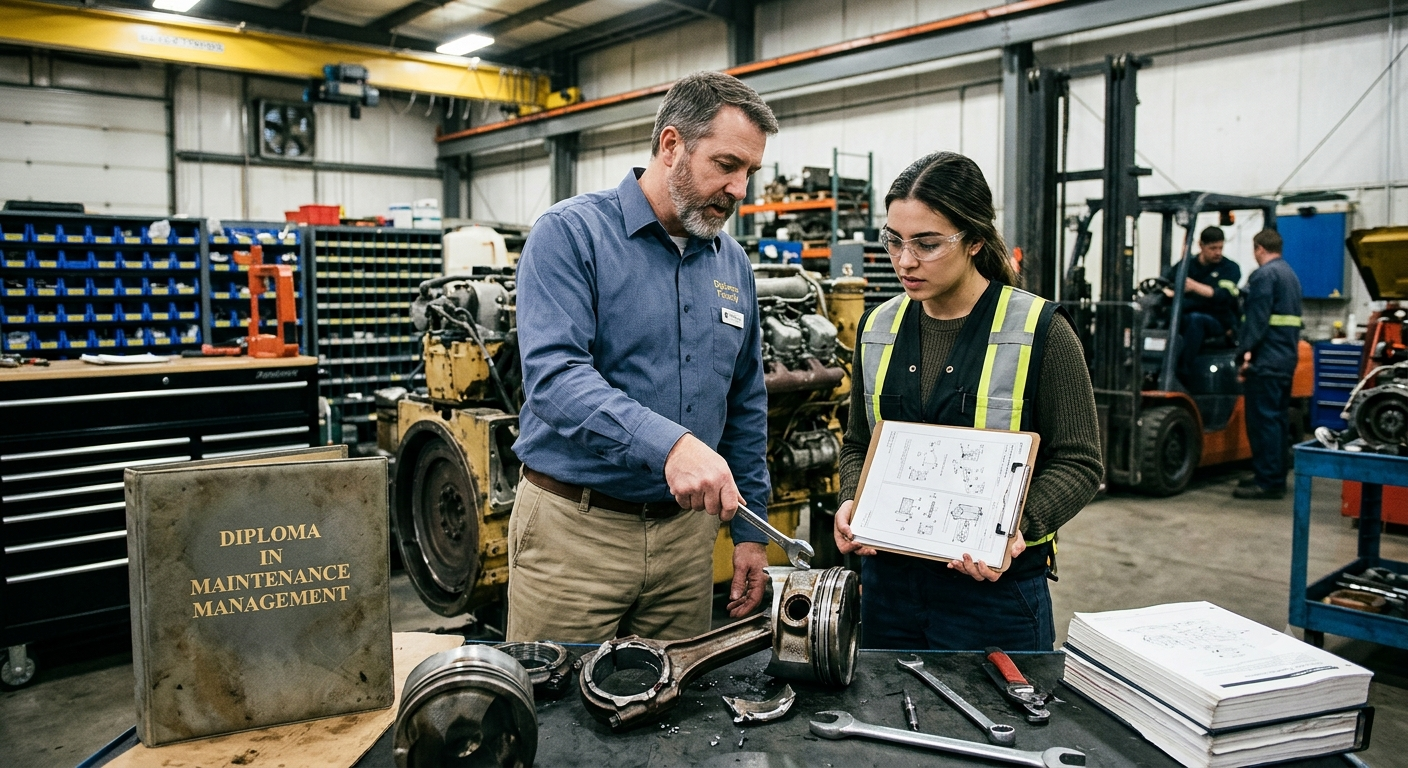

Maintenance Management Diploma

What a Maintenance Management Diploma Teaches About the Hidden Economics of Equipment Failure

Understanding the Real Cost of Equipment Failure

Equipment failure is often viewed as a technical problem, but its consequences extend far beyond a broken component or an unexpected repair invoice. In asset intensive organizations, a single failure can affect production, labor utilization, product quality, customer commitments, safety, energy consumption, and overall profitability. We teach maintenance professionals to look beyond the visible repair cost and examine the complete economic impact of asset failure. This broader perspective is essential because the invoice for replacing a bearing, motor, pump, valve, or control component may represent only a small fraction of the actual cost. The most significant losses can occur while equipment is unavailable and the organization struggles to recover normal operations. A maintenance management diploma helps professionals recognize these hidden costs and make better decisions before failure turns into a major business disruption.

Why the Repair Bill Does Not Tell the Whole Story

When equipment fails, management may initially focus on the cost of spare parts, contractors, overtime, and technician hours. These expenses are easy to identify because they appear directly in maintenance records and financial transactions. However, downtime can create much larger losses when production capacity is reduced or completely stopped. Depending on the operation, an unavailable asset can also create delays throughout interconnected production processes, causing bottlenecks that continue even after the original equipment has been repaired. We teach our students to connect maintenance events with operational and financial consequences rather than evaluating repairs in isolation. This approach makes it possible to understand why an inexpensive component can sometimes create an extremely expensive failure.

The Economics of Downtime

Downtime is one of the most important hidden economic consequences of equipment failure. The financial impact depends on factors such as production rate, asset utilization, labor requirements, customer commitments, inventory levels, and the availability of alternative equipment. A machine that produces a high volume of valuable products every hour can create substantial losses even when its physical repair is relatively simple. Unplanned downtime may also force organizations to reschedule production, use additional shifts, outsource work, or pay premium transportation costs to recover lost output. These secondary consequences can continue long after the equipment has returned to service. Our maintenance management education emphasizes the importance of understanding downtime as a business cost rather than treating it as merely a maintenance statistic.

Lost Production Is Only One Part of the Problem

Lost production is often the most obvious financial consequence of equipment failure, but it is not necessarily the only operational loss. A failure can interrupt upstream and downstream activities, leaving employees waiting for equipment to become available or materials unable to move through the process. In some environments, restarting equipment can also require extended testing, cleaning, calibration, inspection, or quality verification. This means that the productive loss can exceed the actual period during which the equipment was physically stopped. Some organizations may also experience reduced output after restart while operators and maintenance personnel stabilize the process. A maintenance management diploma teaches professionals to analyze the entire operational disruption rather than simply recording the duration of the breakdown.

Labor Costs During Equipment Failure

Labor represents another hidden dimension of equipment failure economics. When an asset stops unexpectedly, maintenance personnel may need to work overtime or respond immediately to restore production. Operations staff can remain unproductive while waiting for repairs, while supervisors and managers may spend significant time coordinating recovery activities. Contractors may also need to be brought in at premium rates when internal expertise or resources are unavailable. If failures occur repeatedly, maintenance teams can become trapped in a reactive cycle that consumes time that should have been dedicated to preventive maintenance, inspections, planning, and improvement activities. We help professionals understand how poor maintenance strategy can therefore increase labor costs across the organization even when maintenance department expenditure appears controlled.

Spare Parts and Emergency Procurement

Emergency spare parts can become significantly more expensive than planned purchases. When a critical component fails unexpectedly, an organization may have to purchase an item immediately, pay expedited shipping, use an unfamiliar supplier, or accept unfavorable commercial terms. The situation can become even more expensive when the required part is obsolete, difficult to source, or not included in the organization's critical spare inventory. Poor spare parts planning can therefore transform a manageable maintenance requirement into an urgent procurement problem. We teach the importance of connecting asset criticality, failure history, lead times, inventory policies, and maintenance strategies when determining spare parts requirements. This allows organizations to balance inventory investment against the financial consequences of being unable to restore critical equipment.

The Hidden Cost of Poor Asset Reliability

Repeated failures can create a financial pattern that is difficult to recognize when each incident is evaluated separately. An asset may experience several minor failures, each appearing to have an acceptable repair cost, while collectively generating substantial downtime, labor expenditure, production losses, and operational disruption. Frequent breakdowns can also reduce confidence in the equipment and encourage teams to operate with excessive contingency measures. Organizations may begin holding additional inventory, maintaining backup equipment, or assigning extra personnel simply because they cannot rely on asset availability. These responses carry their own costs and may remain hidden within different departmental budgets. A maintenance management diploma helps professionals identify these interconnected expenses and evaluate asset reliability from a total cost perspective.

Maintenance Strategy and Financial Decision Making

Effective maintenance management requires more than choosing between preventive and corrective maintenance. Professionals need to determine which maintenance strategy produces the most appropriate balance between reliability, risk, operational performance, and cost. Preventive maintenance can reduce certain failure risks, but excessive maintenance can also waste labor, consume spare parts, and introduce maintenance induced failures. Corrective maintenance may be economically reasonable for low consequence assets but unacceptable for equipment that can create major safety, environmental, production, or financial consequences. Predictive and condition based maintenance can provide additional information when failure patterns and asset criticality justify the investment. We teach our students to evaluate these strategies according to the consequences of failure rather than applying one maintenance philosophy to every asset.

Asset Criticality Changes the Economics of Failure

Not every piece of equipment deserves the same level of maintenance attention. Asset criticality analysis helps organizations identify equipment where failure could have particularly serious consequences. A small auxiliary component may have limited financial impact if it fails, while a single critical production asset could affect an entire facility. Criticality can include factors such as safety consequences, environmental exposure, production losses, quality risks, repair time, replacement cost, and availability of alternatives. Understanding these factors allows maintenance teams to prioritize resources where they can create the greatest value. Our approach to maintenance education encourages professionals to connect asset criticality with maintenance planning, risk management, and long term asset performance.

Failure Modes Reveal Economic Exposure

Understanding how equipment fails is another important part of evaluating the economics of reliability. Different failure modes create different consequences, and not every failure can be effectively controlled through the same maintenance task. A pump may experience seal degradation, bearing wear, cavitation, contamination, or electrical problems, with each condition requiring a different response. Identifying the likely failure modes allows maintenance professionals to determine which inspections, monitoring techniques, preventive tasks, or engineering controls can provide meaningful protection. It also helps organizations understand which failures are predictable and which require different risk management approaches. We incorporate this way of thinking because understanding failure mechanisms is essential for making economically rational maintenance decisions.

The Financial Value of Preventive Action

Preventive maintenance is often described in technical terms, but its true value is economic. Replacing a component before catastrophic failure may appear to create an additional maintenance expense, yet the intervention could prevent much larger costs associated with downtime, collateral damage, emergency labor, and lost production. The challenge is determining when preventive intervention is justified and when it simply adds unnecessary maintenance activity. Professionals therefore need reliable information about failure behavior, asset condition, operating context, and consequences. A maintenance management diploma provides a framework for evaluating these factors systematically rather than relying entirely on assumptions or historical habits. This transforms preventive maintenance from a routine checklist into a strategic business decision.

The Importance of Life Cycle Costing

Equipment purchase price can be misleading when organizations evaluate asset economics. An asset with a low acquisition cost may have high energy consumption, frequent maintenance requirements, expensive spare parts, or a short useful life. Another asset may require greater initial investment but provide better reliability, efficiency, maintainability, and long term performance. Life cycle costing considers these factors over the useful life of the asset rather than focusing exclusively on the original purchase price. We teach professionals to consider acquisition, installation, operation, maintenance, modification, downtime, and eventual disposal when evaluating asset decisions. This perspective helps organizations select assets based on total economic value rather than initial price alone.

Energy Consumption and Equipment Failure

Equipment condition can also influence energy performance. Degraded bearings, misalignment, friction, fouling, leakage, poor lubrication, and inefficient operating conditions can increase energy consumption before an obvious failure occurs. This creates an economic loss that may remain invisible because the equipment continues operating. Condition monitoring and maintenance analysis can help identify deterioration that affects both reliability and efficiency. By addressing these conditions early, organizations may reduce operating costs while also improving asset availability. Our maintenance management approach therefore considers equipment performance as a broader economic issue rather than limiting maintenance to the prevention of complete breakdowns.

Quality Costs Caused by Unreliable Equipment

Equipment failure can also affect product quality. A machine may continue operating while operating outside its intended parameters, producing inconsistent dimensions, temperatures, pressures, speeds, or other critical characteristics. The resulting products may require rework, additional inspection, discounting, or disposal. In industries with strict quality requirements, equipment instability can also create compliance concerns and damage customer confidence. These consequences may be recorded by quality or production departments rather than the maintenance department, making the relationship between equipment condition and financial performance harder to see. Maintenance professionals must therefore understand how reliability contributes to product quality and customer value.

Safety and Environmental Consequences

Some equipment failures carry consequences that cannot be measured simply through maintenance expenditure. Failure of safety critical equipment can increase exposure to personnel injury, while failures involving containment systems, pumps, valves, electrical equipment, or process controls may create environmental risks. The resulting costs can include investigation, corrective action, regulatory requirements, operational shutdowns, legal exposure, and reputational damage. These consequences demonstrate why maintenance management is closely connected with risk management and organizational governance. We teach professionals to consider safety and environmental consequences when assessing asset criticality and maintenance priorities. A financially attractive maintenance decision is not acceptable if it creates disproportionate safety or environmental risk.

Reliability Data Supports Better Economic Decisions

Reliable maintenance decisions depend on reliable information. Work orders, failure histories, inspection findings, downtime records, spare parts usage, maintenance labor, and equipment performance data can reveal patterns that are otherwise difficult to see. When this information is structured correctly, organizations can identify recurring failure modes, high cost assets, excessive corrective maintenance, and opportunities for improvement. Metrics such as mean time between failures, mean time to repair, availability, maintenance cost, and planned versus unplanned work can provide valuable insight when interpreted in the right operational context. A maintenance management diploma teaches professionals not simply to collect data but to use it for decision making. The ultimate objective is to convert maintenance information into actions that improve asset performance and business outcomes.

Moving From Reactive Maintenance to Economic Control

Reactive maintenance can create a cycle in which teams continually respond to the latest failure without addressing the underlying causes. This approach often feels productive because technicians are constantly solving visible problems, but it can consume resources without improving long term reliability. Over time, recurring failures can normalize excessive downtime, emergency work, overtime, and spare parts expenditure. Breaking this cycle requires maintenance planning, root cause analysis, preventive strategies, condition monitoring, and continuous improvement. Professionals must also communicate maintenance priorities in terms that management can understand, particularly financial risk and operational impact. Our educational approach helps develop this connection between technical maintenance activity and organizational performance.

What Professionals Learn About Failure Economics

A maintenance management diploma teaches a fundamental lesson: equipment failure is rarely as simple or inexpensive as it appears. The visible repair is only one element of a much larger economic event that can involve production, labor, energy, inventory, quality, safety, customers, and future asset performance. Understanding these relationships allows maintenance professionals to prioritize work according to business consequences rather than reacting only to the loudest technical problem. It also supports stronger investment decisions because organizations can compare the cost of maintenance interventions with the potential cost of failure. The result is a more structured approach to reliability, risk, and asset performance. Professionals who understand this hidden economics can contribute to decisions that extend beyond the maintenance department and influence the overall financial health of an organization.

Building Stronger Asset Management Decisions

Maintenance management becomes significantly more valuable when it is connected to the complete asset life cycle. Organizations need professionals who can evaluate asset risks, understand failure mechanisms, interpret reliability information, plan maintenance activities, and communicate the financial implications of technical decisions. This requires a combination of engineering knowledge, management capability, analytical thinking, and commercial awareness. Through structured education and professional development, maintenance practitioners can develop the ability to identify where maintenance expenditure creates genuine value and where resources are being consumed without reducing meaningful risk. Terotechnica focuses on developing this broader understanding so professionals can approach maintenance as a strategic business function rather than a purely reactive service. When organizations understand the hidden economics of equipment failure, they can make better choices about maintenance, reliability, asset investment, and long term operational performance.

Turning Maintenance Knowledge Into Business Value

The most effective maintenance professionals understand that their work ultimately supports organizational value creation. Every inspection, maintenance task, condition assessment, spare parts decision, and reliability improvement should be considered in relation to the risks and costs it controls. This does not mean minimizing maintenance expenditure at all costs, because under-maintaining critical assets can create much greater financial consequences later. Instead, it means directing maintenance resources toward activities that provide measurable improvements in reliability, availability, safety, quality, efficiency, and life cycle performance. A strong maintenance management education gives professionals the tools to make these judgments with greater confidence and consistency. By understanding what equipment failure truly costs, organizations can move from simply repairing assets to actively managing the economic performance of their asset base.

Asset Management Diplomas

Why Asset Management Diplomas Are Becoming the Blueprint for Data-Driven Infrastructure Decisions

The Shift Toward Data-Driven Infrastructure Management

Infrastructure has become increasingly dependent on reliable data, measurable performance, and informed decision making. Organizations managing buildings, utilities, transportation networks, industrial facilities, energy systems, and other critical assets can no longer rely entirely on experience or reactive maintenance practices. Every asset generates information through inspections, maintenance records, operational systems, sensors, financial reports, and performance monitoring. When this information is properly structured and interpreted, it can reveal opportunities to reduce costs, improve reliability, manage risks, and extend asset life. However, having large volumes of information does not automatically create better decisions because organizations need professionals who understand how to turn data into practical asset management strategies. This is why professional education in asset management is becoming increasingly important for organizations seeking to build infrastructure strategies around evidence rather than assumptions.

Why Asset Management Is Becoming More Strategic

Asset management was once commonly associated with maintenance schedules, repairs, inspections, and replacement planning. While these activities remain important, modern asset management has developed into a broader discipline that connects operational performance with financial objectives, organizational strategy, risk management, and long term planning. Decision makers now need to understand how individual assets contribute to wider business outcomes throughout their entire life cycle. A maintenance decision can influence operational continuity, capital expenditure, safety, environmental performance, and future replacement requirements. This makes asset management a strategic discipline rather than simply a technical maintenance function. Our approach to professional asset management education reflects this broader perspective by helping learners understand how technical information can support stronger organizational decisions. Terotechnica focuses on developing knowledge that can help professionals connect asset information, operational priorities, risk, cost, and performance within a structured management framework.

The Growing Importance of Asset Data

Modern infrastructure produces an enormous amount of data throughout its operational life. Information can come from computerized maintenance management systems, enterprise asset management platforms, condition assessments, inspection programs, remote monitoring devices, financial systems, engineering reports, and operational teams. This information can provide valuable insight into asset condition, reliability, failure patterns, maintenance requirements, utilization, and life cycle costs. The challenge is that data often exists in disconnected systems, inconsistent formats, or incomplete records. Professionals therefore need more than technical skills because they must also understand how to evaluate the quality, relevance, and context of asset information. An asset management diploma can provide a structured foundation for understanding how data should influence maintenance, renewal, investment, and operational decisions. As infrastructure becomes increasingly connected, professionals who can interpret asset data effectively will become more valuable across both public and private organizations.

From Historical Records to Predictive Decisions

Traditional infrastructure management often depends heavily on historical maintenance records and predetermined schedules. While historical information remains useful, modern organizations increasingly want to understand what is likely to happen next rather than simply documenting what has already happened. Condition monitoring and performance data can help identify developing problems before they become major failures. When combined with appropriate analytical methods, asset information can support more informed predictions about maintenance requirements, deterioration, replacement timing, and operational risk. This creates an opportunity to move from reactive maintenance toward proactive and predictive asset management. Professionals need to understand not only how predictive information is generated but also how it should be evaluated before it is used to influence business decisions. Our educational approach emphasizes the relationship between asset information and decision making so learners can better understand how evidence can support practical infrastructure strategies.

Life Cycle Thinking Changes Infrastructure Decisions

One of the most important principles in modern asset management is life cycle thinking. An asset should not be evaluated solely according to its initial purchase or construction cost because the financial and operational consequences continue throughout its useful life. Maintenance, energy consumption, inspections, downtime, upgrades, renewal, disposal, safety requirements, and environmental considerations can all influence the overall value generated by an asset. Data allows organizations to examine these factors over time and compare different strategies using measurable evidence. This can help decision makers determine whether repairing an asset, replacing it, upgrading it, or changing its operating strategy provides the strongest long term outcome. Asset management education introduces professionals to the concepts required to evaluate these interconnected decisions systematically. By developing life cycle thinking, learners can move beyond short term cost comparisons and consider the broader value, risk, and performance implications of infrastructure decisions.

Risk Has Become a Data-Driven Consideration

Infrastructure decisions are also increasingly influenced by risk. Organizations need to understand what could happen if an asset fails, how likely that failure may be, and what consequences could result for operations, safety, finances, customers, or regulatory obligations. Asset data can help professionals identify patterns and prioritize risks across large portfolios. However, risk assessment requires more than collecting failure statistics because professionals must understand asset criticality, consequence analysis, operational context, and organizational objectives. A technically healthy asset may still represent a significant business risk if its failure would interrupt a critical service. Similarly, an older asset may continue to provide acceptable value when its risks are well understood and appropriately controlled. Structured asset management education helps professionals develop the reasoning required to connect asset condition and performance information with risk based priorities.

Digital Transformation Is Reshaping Asset Management Careers

Digital transformation is changing the responsibilities of infrastructure and maintenance professionals. Technologies such as Internet of Things devices, artificial intelligence, digital twins, cloud based asset platforms, advanced analytics, mobile inspection applications, and automated monitoring are creating new sources of operational information. These technologies can improve visibility, but technology alone does not guarantee better asset management outcomes. Organizations still require professionals who understand what information matters, how it should be interpreted, and how it should influence decisions. This is creating demand for professionals who can operate between technical teams, management teams, finance departments, and strategic planning functions. An asset management diploma can help bridge these disciplines by developing a broader understanding of how asset information contributes to organizational performance. Terotechnica recognizes the growing connection between digital capability and asset management competence, making structured professional learning increasingly relevant for people working with complex infrastructure portfolios.

Connecting Maintenance With Business Objectives

Maintenance decisions have traditionally been evaluated through technical indicators such as failure frequency, downtime, repair duration, and equipment condition. Modern asset management requires these indicators to be considered alongside business objectives. A maintenance strategy may reduce failures while increasing expenditure, or it may reduce short term costs while increasing long term operational risk. Data can help organizations examine these tradeoffs more clearly when information is collected and analyzed consistently. Professionals must therefore understand how maintenance strategies affect service delivery, financial performance, risk exposure, and asset value. An asset management diploma can help learners develop the ability to connect maintenance activities with broader organizational outcomes rather than treating maintenance as an isolated function. This perspective enables organizations to make decisions that are aligned with both asset performance and strategic priorities.

Better Capital Planning Through Better Asset Information

Capital investment decisions can involve substantial financial commitments, particularly when organizations manage large infrastructure portfolios. Deciding which assets should receive investment and when that investment should occur requires reliable information about condition, performance, criticality, risk, remaining life, and future requirements. Without structured asset information, organizations may prioritize projects based on urgency, historical habits, or incomplete assessments. Data driven asset management provides a stronger foundation for comparing investment needs across an entire portfolio. Professionals can use asset information to identify renewal priorities, evaluate potential scenarios, and understand the consequences of delaying investment. This can help organizations make capital planning more transparent and defensible. The ability to connect technical asset information with financial planning is therefore becoming an important competency for modern infrastructure professionals.

Asset Management Education Builds Decision-Making Capability

The value of an asset management diploma extends beyond learning terminology or maintenance techniques. Effective professional education develops the ability to analyze complex situations and make decisions within a structured asset management framework. Learners can develop an understanding of asset life cycles, maintenance planning, risk management, performance measurement, replacement strategies, and organizational objectives. These capabilities become especially important when professionals must make decisions with incomplete information or competing priorities. Education can also provide a common framework that allows technical specialists and senior managers to communicate more effectively about asset related issues. When everyone understands how asset decisions are evaluated, organizations can create more consistent and accountable decision processes. We see professional development as an important part of building the human capability required to support increasingly sophisticated infrastructure environments.

The Role of Standards and Structured Frameworks

Modern asset management is supported by internationally recognized principles and structured frameworks that help organizations establish consistent processes. These frameworks encourage organizations to consider value, alignment, leadership, assurance, risk, life cycle management, and continual improvement. Understanding these principles allows professionals to move beyond individual maintenance activities and consider how asset management operates as an integrated organizational system. Data becomes particularly valuable when it is collected and managed within such a structured framework. Instead of treating every dataset as an isolated source of information, organizations can connect information to defined objectives, processes, risks, and performance measures. Professional education helps learners understand the relationship between standards, organizational strategy, asset information, and operational execution. This provides a foundation for creating asset management practices that are repeatable, measurable, and capable of continuous improvement.

Why Employers Are Looking for Broader Asset Management Skills

The changing infrastructure environment is increasing expectations for professionals across engineering, maintenance, operations, facilities, and management functions. Employers increasingly need people who can understand technical information while also considering cost, risk, performance, sustainability, and organizational priorities. This combination of skills can be difficult to develop through practical experience alone because professionals may only encounter a limited portion of the asset life cycle in their normal roles. Formal education can provide a broader perspective and introduce structured methods for analyzing decisions across different asset environments. It can also help professionals recognize how their individual responsibilities fit into wider asset management processes. For organizations, employees with these capabilities can contribute to better planning, stronger governance, and more consistent decision making. For individuals, these skills can create opportunities to move into asset management, reliability, maintenance strategy, infrastructure planning, and leadership roles.

Turning Data Into Infrastructure Intelligence

Data becomes valuable when it changes the quality of a decision. An organization can collect millions of records without gaining meaningful insight if the information is poorly structured, unreliable, or disconnected from business objectives. Asset management professionals play an important role in transforming raw information into actionable infrastructure intelligence. They must understand which performance indicators matter, how asset condition should be assessed, how risks should be prioritized, and how different investment scenarios can affect long term outcomes. This requires a combination of technical understanding, analytical thinking, financial awareness, and strategic judgment. Asset management diplomas are increasingly providing a structured pathway for developing these capabilities in professionals who need to operate in data rich infrastructure environments. The result is a workforce that can help organizations move from simply collecting information toward using information to make better decisions.

Preparing for the Future of Infrastructure

Infrastructure systems are becoming more complex while organizations face increasing pressure to improve reliability, control costs, manage risks, and demonstrate long term value. At the same time, digital technologies are generating more information than traditional management approaches were designed to handle. This creates a need for professionals who can combine asset management principles with data driven decision making. An asset management diploma provides a structured way to develop this combination of knowledge and prepare for increasingly analytical infrastructure roles. It can help professionals understand how technical performance, financial considerations, risk, and strategic objectives interact throughout an asset's life cycle. As organizations continue investing in digital infrastructure management, the ability to interpret and apply asset data will become an increasingly important professional competency. Terotechnica is committed to supporting this evolution by providing education that helps professionals develop the knowledge needed to manage assets strategically, systematically, and with a stronger focus on long term value.

The Blueprint for Smarter Infrastructure Decisions

The growing importance of asset management diplomas reflects a fundamental change in how infrastructure is managed. Organizations are moving away from isolated maintenance decisions and toward integrated strategies based on asset information, risk, life cycle performance, and organizational objectives. This transformation requires professionals who can understand both the technical characteristics of assets and the business consequences of infrastructure decisions. Structured education can provide the knowledge and framework required to develop that capability. As data becomes increasingly central to infrastructure planning, professionals who understand how to turn information into reliable decisions will play a critical role in improving asset performance and organizational resilience. The future of infrastructure management will not simply depend on having more data but on having the expertise to use that data effectively. For this reason, asset management diplomas are increasingly becoming a blueprint for developing the professionals capable of guiding infrastructure decisions in a more measurable, strategic, and sustainable direction.

 Maintenance Planning

Why Maintenance Planning Is Critical for High Performance Operations

Why Maintenance Planning Is Critical for High Performance Operations

Every successful industrial operation depends on more than advanced equipment and skilled personnel. Behind every reliable production line, manufacturing facility, mining operation, utility plant, or processing site is a well organised maintenance planning process that keeps assets performing at their best. While maintenance teams are responsible for carrying out repairs and inspections, their effectiveness is largely determined by how well maintenance activities are planned before work even begins.
Maintenance planning is not simply about preparing work orders. It is a structured process that ensures the right work is completed at the right time with the right people, tools, materials, and procedures. When organisations invest in effective maintenance planning, they experience greater equipment reliability, reduced downtime, improved safety, and stronger financial performance.
At Terotechnica, we believe that maintenance planning forms the foundation of high performance operations because every successful maintenance activity begins with careful preparation and informed decision making.

Understanding Maintenance Planning

Maintenance planning is the process of identifying maintenance requirements, defining work scope, estimating resources, scheduling tasks, procuring materials, and preparing all documentation before work is executed.
Rather than reacting to equipment failures after they occur, maintenance planning enables organisations to anticipate maintenance needs and organise resources efficiently. This proactive approach reduces unnecessary delays while ensuring technicians can focus on completing quality work instead of searching for information, spare parts, or specialised equipment.
Planning creates a structured workflow that supports maintenance teams while helping operations continue with minimal disruption.

Why Planning Determines Maintenance Success

Many organisations mistakenly believe that maintenance problems are caused by technician performance alone. In reality, many maintenance delays occur because work was not properly prepared before technicians arrived at the job site.
Without effective planning, maintenance personnel may encounter missing spare parts, incomplete work instructions, unavailable tools, unclear priorities, or scheduling conflicts. Each of these issues increases downtime and reduces productivity.
Well planned maintenance eliminates many of these obstacles by ensuring every task has been thoroughly prepared before execution begins. This allows technicians to spend more time performing productive maintenance rather than solving avoidable logistical problems.
The result is faster completion times, better workmanship, and improved operational reliability.

Reducing Equipment Downtime

Downtime remains one of the largest costs facing asset intensive industries. Every minute that critical equipment remains unavailable can reduce production capacity, delay customer deliveries, and increase operating expenses.
Maintenance planning helps minimise downtime by preparing every aspect of maintenance work before equipment is taken offline.
Effective planning allows maintenance teams to coordinate labour, secure replacement components, prepare technical documentation, and schedule work during appropriate maintenance windows. This organised approach shortens repair durations while allowing equipment to return to service more quickly.
When maintenance activities are carefully coordinated, organisations experience higher equipment availability and greater operational efficiency.

Improving Maintenance Scheduling

Planning and scheduling work together, but they perform different functions.
Planning focuses on determining what work needs to be completed and how it should be performed.
Scheduling determines when that work should take place while balancing operational priorities, workforce availability, production requirements, and maintenance resources.
High performing organisations rely on structured scheduling methods to organise maintenance activities efficiently. Whether using simple time based scheduling, shutdown planning, project network scheduling, or workshop scheduling, proper coordination ensures maintenance activities support overall operational objectives.
Effective scheduling also helps organisations reduce maintenance backlogs while improving workforce productivity.

Better Resource Management

Maintenance requires far more than skilled technicians. Successful maintenance also depends on spare parts, specialised tools, contractors, permits, technical drawings, equipment history, and accurate documentation.
Without planning, these resources often become unavailable when needed, leading to costly delays.
Maintenance planning identifies resource requirements well before work begins. Procurement teams can source components in advance, supervisors can allocate labour effectively, and maintenance personnel arrive fully prepared to complete assigned tasks.
This coordinated approach reduces wasted time while ensuring resources are used efficiently across the organisation.

Supporting Preventive Maintenance Strategies

Reactive maintenance often results in emergency repairs, unexpected failures, and higher operating costs.
Maintenance planning supports preventive maintenance by organising inspections, servicing activities, condition monitoring, and scheduled component replacements before failures occur.
Planned preventive maintenance extends equipment life, improves reliability, reduces breakdown frequency, and lowers long term maintenance expenses.
As organisations become more proactive, maintenance shifts from crisis management to strategic asset preservation.

Strengthening Maintenance Data and Reporting

Modern maintenance management depends heavily on accurate information.
Every completed maintenance activity generates valuable data regarding equipment performance, repair history, labour hours, material consumption, recurring failures, and maintenance costs.
Proper planning includes structured documentation and consistent feedback processes that capture this information effectively.
Reliable maintenance data supports better reporting, trend analysis, budgeting, asset performance evaluation, and continuous improvement initiatives.
Decision makers can identify recurring issues, optimise maintenance strategies, and allocate resources more effectively based on accurate operational information.

Improving Safety Across Operations

Maintenance activities often involve complex equipment, hazardous environments, and strict safety procedures.
Poor planning increases the likelihood of rushed work, communication failures, incomplete isolation procedures, and unnecessary risks.
Maintenance planning improves workplace safety by ensuring every task includes appropriate risk assessments, work instructions, permits, safety procedures, equipment isolation requirements, and resource coordination before work begins.
When maintenance teams understand the scope of work and have access to all necessary resources, they can complete tasks more safely and confidently.

Supporting Asset Management Objectives

Effective maintenance planning plays an important role within broader asset management systems.
Organisations that manage physical assets strategically recognise that maintenance planning contributes directly to asset reliability, lifecycle optimisation, operational performance, and long term financial sustainability.
Maintenance planning supports recognised asset management principles by helping organisations balance operational performance, maintenance investment, and equipment reliability throughout the asset lifecycle.
This integrated approach enables businesses to maximise value from their physical assets while controlling operational risk.

Developing Skilled Maintenance Planners

Maintenance planning requires a combination of technical knowledge, analytical thinking, organisational skills, communication, and practical experience.
Professional maintenance planners must understand maintenance principles, equipment behaviour, scheduling techniques, procurement processes, work order systems, reporting methods, backlog management, and maintenance information systems.
Developing these competencies enables planners to coordinate maintenance activities that improve both operational performance and organisational efficiency.
Comprehensive training provides maintenance professionals with practical experience that prepares them for the challenges encountered in real industrial environments.

Creating a Culture of Teamwork

Maintenance planning is not an isolated function.
Successful maintenance depends on collaboration between planners, supervisors, technicians, operations personnel, procurement departments, stores, engineering teams, and management.
When everyone works from a shared maintenance plan, communication improves, priorities become clearer, and work progresses more smoothly.
This collaborative environment helps organisations achieve common operational goals while reducing misunderstandings and unnecessary delays.

Long Term Business Benefits

Organisations that consistently invest in maintenance planning often experience measurable improvements across multiple areas of their business.
Equipment reliability increases because maintenance activities are performed proactively.
Maintenance costs decrease through better resource utilisation and fewer emergency repairs.
Productivity improves because assets remain available for longer periods.

Employee morale increases as maintenance teams work within organised systems rather than constantly responding to urgent breakdowns.
Customer satisfaction also improves because reliable operations support consistent production and dependable service delivery.
These long term benefits demonstrate that maintenance planning is not simply a maintenance activity. It is a strategic business function that contributes directly to operational excellence.
High performance operations are built on reliable assets, efficient maintenance processes, and effective decision making. Maintenance planning brings these elements together by ensuring maintenance work is organised, prioritised, and executed with maximum efficiency.
Strong planning reduces downtime, improves scheduling, supports preventive maintenance, strengthens safety, enhances reporting, and helps organisations maximise the value of their physical assets. As industries continue to pursue greater operational efficiency and reliability, skilled maintenance planners will remain essential contributors to organisational success.

At Terotechnica, we equip maintenance professionals with practical knowledge, structured methodologies, and industry relevant skills that prepare them to manage maintenance planning confidently in demanding operational environments. Through our specialised maintenance planning programmes, we help individuals and organisations build stronger maintenance systems that support long term operational excellence.

Asset Management Diploma Programs

Asset Management Diploma Programs That Support Infrastructure Industries

Asset Management Diploma Programs That Support Infrastructure Industries

Infrastructure industries form the backbone of modern economies. Transportation networks, power generation facilities, water treatment plants, mining operations, manufacturing sites, and public utilities all rely on well managed physical assets to deliver reliable services. As these industries continue to grow and modernize, the demand for professionals who understand asset management principles has increased significantly. Organizations are looking for individuals who can improve equipment performance, extend asset life, reduce operational risks, and make informed investment decisions.
A structured diploma program in asset management provides the practical knowledge and technical foundation needed to meet these expectations. By combining industry focused education with real world applications, students develop the confidence and expertise required to contribute to organizations that depend on reliable infrastructure.

Why Infrastructure Industries Depend on Asset Management

Infrastructure assets are expensive to acquire, maintain, and replace. Roads, bridges, manufacturing equipment, electrical systems, pipelines, railway networks, ports, and industrial facilities all require ongoing management to remain safe and productive. Poor maintenance planning or ineffective asset management can lead to unexpected failures, costly downtime, safety concerns, and unnecessary capital expenditure.
Professionals trained in asset management understand how to balance performance, cost, and risk throughout the entire lifecycle of an asset. Instead of simply reacting to equipment failures, they focus on long term planning, preventive maintenance, reliability improvement, and strategic decision making that supports organizational objectives.
This approach allows infrastructure organizations to maximize the value of their investments while maintaining high service standards.

The Value of a Comprehensive Diploma Program

A diploma program goes beyond introducing basic maintenance concepts. It provides an in depth understanding of asset lifecycle management, maintenance planning, reliability engineering, financial decision making, risk management, and continuous improvement.
Students gain knowledge that prepares them to evaluate existing asset management systems while identifying opportunities for greater efficiency and sustainability. The combination of theoretical learning and practical assignments encourages participants to apply concepts directly to workplace challenges.
This practical focus is especially valuable in infrastructure industries where every improvement in equipment reliability or maintenance planning can have measurable operational and financial benefits.

Building Skills That Industry Needs

Infrastructure organizations require professionals with a diverse range of competencies. Successful asset managers must understand engineering principles while also considering financial performance, operational efficiency, regulatory compliance, and organizational strategy.
An effective diploma program helps students develop analytical thinking, problem solving abilities, project planning skills, maintenance optimization techniques, and performance measurement capabilities. These skills enable graduates to participate in strategic decision making while improving day to day operational performance.
Students also gain experience interpreting asset information, developing maintenance strategies, assessing equipment risks, and supporting long term capital planning.

Learning Through Practical Coursework

Practical education remains one of the strongest features of professional asset management training. Rather than relying entirely on classroom theory, students benefit from assignments, case studies, and projects that reflect actual industry situations.
The Diploma in Asset Management offered by Terotechnica consists of approximately thirty one day modules, multiple assignments completed throughout the program, and a comprehensive final project. This structure allows students to progressively build knowledge while applying new concepts to practical situations that reinforce learning.
By working through realistic challenges, students strengthen their ability to make informed decisions that support operational excellence.

Flexibility for Working Professionals

Many people entering asset management education are already employed in engineering, maintenance, operations, utilities, mining, manufacturing, or government organizations. Balancing professional responsibilities with continued education requires flexibility.
Modern diploma programs accommodate different learning preferences by offering classroom attendance, online study, and self paced learning opportunities. This flexibility allows professionals to continue developing their expertise without interrupting their careers.
Students can select learning methods that best suit their schedules while maintaining steady progress toward completing their qualifications.

Supporting Multiple Infrastructure Sectors

Asset management principles apply across numerous industries because every organization depends on physical assets to deliver products or services. Although equipment types may differ, the underlying concepts remain remarkably consistent.
Professionals who complete a diploma program can contribute to sectors including transportation, mining, energy production, municipal services, manufacturing, healthcare facilities, telecommunications, aviation, ports, construction, and public infrastructure.
The ability to transfer knowledge across industries increases career opportunities while helping organizations adopt proven asset management practices.

Preparing for Leadership Responsibilities

As organizations recognize the strategic importance of asset management, leadership opportunities continue to expand. Employers increasingly seek professionals who can connect maintenance activities with broader business objectives.
A diploma program prepares students to move beyond technical maintenance roles into positions involving planning, asset strategy, reliability management, maintenance leadership, operational improvement, and organizational decision making.
Graduates develop the confidence to communicate effectively with engineering teams, financial managers, executives, and operational staff while supporting long term infrastructure performance.

Understanding Lifecycle Thinking

Infrastructure assets often remain in service for decades. Decisions made during planning, procurement, installation, operation, maintenance, and replacement all influence total lifecycle costs.
Diploma students learn to evaluate each phase of an asset's lifecycle rather than focusing only on immediate maintenance concerns. This broader perspective helps organizations minimize unnecessary spending while maximizing equipment availability and operational reliability.
Lifecycle thinking also supports sustainability by encouraging better resource utilization and extending the useful life of valuable infrastructure assets.

Meeting Growing Industry Expectations

Global infrastructure continues to become more technologically advanced. Digital monitoring systems, predictive maintenance technologies, condition based maintenance, and data driven decision making have transformed how organizations manage their assets.
Professionals entering the workforce require education that prepares them for these evolving expectations. Asset management diploma programs introduce structured methodologies that can be adapted alongside emerging technologies, allowing graduates to remain valuable as industries continue to modernize.
Organizations benefit from employees who understand both traditional maintenance principles and contemporary asset management practices.

Career Growth Through Professional Education

Asset management offers rewarding career opportunities because every asset intensive organization depends on effective management of its physical resources. Completing a diploma demonstrates commitment to professional development while providing employers with confidence in a candidate's technical knowledge and practical capabilities.
Graduates may pursue careers in maintenance management, reliability engineering, infrastructure planning, operations management, asset strategy, facilities management, consulting, or engineering leadership.
As infrastructure investment continues worldwide, demand for qualified professionals with specialized asset management expertise is expected to remain strong.

Choosing the Right Educational Path

Selecting the right diploma program involves more than comparing course titles. Prospective students should evaluate curriculum depth, practical learning opportunities, industry relevance, flexibility, experienced instructors, and opportunities to apply learning through assignments and projects.
Terotechnica provides students with multiple standardized diploma specializations, allowing them to tailor their education according to their career goals. With coursework that can be completed through classroom attendance, online learning, or self paced study, the program supports both new entrants and experienced professionals seeking to advance their careers.

This combination of flexibility, practical application, and comprehensive education helps students prepare for the complex challenges faced by modern infrastructure industries.
Infrastructure organizations rely on skilled professionals who understand how to maximize the value, reliability, and performance of physical assets. A well designed diploma program equips students with the technical knowledge, strategic perspective, and practical experience needed to support these critical industries.

Whether working in transportation, utilities, manufacturing, mining, or public infrastructure, asset management professionals play a vital role in improving operational efficiency and ensuring long term sustainability. Through comprehensive coursework, practical assignments, and flexible learning options, Terotechnica helps prepare students for successful careers in this growing profession. As infrastructure systems continue to evolve, investing in professional education remains one of the strongest steps toward long term career success, and Terotechnica continues to support learners with industry focused training that builds real world capability. Choosing Terotechnica means investing in knowledge that supports both professional growth and the future of infrastructure asset management.

Asset Lifecycle Management

Asset Lifecycle Management Concepts Every Student Should Master

Asset Lifecycle Management Concepts Every Student Should Master

Asset lifecycle management is one of the most valuable disciplines in modern engineering, maintenance, and asset-intensive industries. Every organization that depends on physical assets must make informed decisions about purchasing, operating, maintaining, upgrading, and replacing equipment. These decisions have a direct impact on profitability, operational efficiency, safety, and long term sustainability.

For students preparing for careers in asset management, maintenance engineering, reliability engineering, or industrial operations, understanding asset lifecycle management is essential. It is not simply about maintaining equipment after it has been installed. Instead, it involves making informed decisions from the earliest stages of planning until the asset reaches the end of its useful life.
At Terotechnica, we believe that mastering these concepts prepares students to make strategic decisions that create lasting value for organizations while reducing unnecessary costs throughout an asset's lifetime.

Understanding Asset Lifecycle Management

Asset lifecycle management is the systematic process of managing physical assets from the initial concept through design, acquisition, operation, maintenance, renewal, and eventual disposal or replacement. Rather than viewing equipment as a one time purchase, lifecycle management considers every stage that contributes to its total cost and overall performance.
Every decision made during an asset's life affects future expenses, reliability, productivity, and operational success. This comprehensive approach helps organizations maximize return on investment while minimizing risks and unexpected costs.
Students who understand this philosophy develop the ability to evaluate equipment based on long term value instead of simply comparing purchase prices.

The Complete Asset Lifecycle

One of the first concepts students should master is the complete lifecycle of an asset.
The lifecycle begins long before equipment is purchased. It starts with identifying a business need and determining whether a new asset is the right solution. Engineers and designers then develop concepts, prepare detailed designs, evaluate alternatives, and build prototypes where necessary.
Once the asset is acquired, attention shifts toward installation, commissioning, operation, maintenance, performance optimization, and continuous improvement. Eventually, aging equipment reaches a point where replacement becomes more economical than continued maintenance. At this stage, organizations evaluate retirement strategies and replacement planning.
Understanding every stage allows professionals to make decisions that improve performance throughout the asset's useful life rather than focusing on isolated maintenance activities.

Why Early Design Decisions Matter

Many students assume that maintenance costs begin once equipment is installed. In reality, a significant portion of an asset's lifetime costs are determined during the design phase.
Design choices influence energy consumption, maintenance accessibility, spare parts availability, reliability, safety requirements, and expected service life. Poor design decisions often create expensive operational challenges that continue for decades.
Engineers who understand lifecycle management recognize that investing additional effort during the planning and design stages often results in substantial savings throughout the operational life of the asset.
This mindset encourages proactive thinking instead of reactive problem solving.

Life Cycle Costing

Life cycle costing is one of the most important principles in asset management education.
Instead of evaluating equipment based solely on its purchase price, life cycle costing examines every cost associated with owning and operating an asset.
These costs may include planning expenses, design activities, procurement, transportation, installation, commissioning, maintenance, repairs, energy consumption, downtime, operator training, spare parts, upgrades, disposal, and replacement.
When students learn how to calculate these costs accurately, they gain a much clearer understanding of the true financial impact of investment decisions.
Organizations that apply life cycle costing often avoid purchasing equipment that appears inexpensive initially but becomes costly over time due to poor reliability or excessive maintenance requirements.

Engineering Economics

Engineering economics provides the financial foundation for asset lifecycle management.
Students should understand concepts such as the time value of money, annual compounding, present value, future value, depreciation, and investment analysis.
These principles help engineers compare competing investment opportunities while considering both current expenditures and future financial returns.
Engineering economics enables professionals to justify capital investments using objective financial analysis rather than assumptions or personal preferences.
This skill is highly valued because every asset management decision ultimately affects an organization's financial performance.

Comparing Investment Alternatives

Organizations frequently face multiple equipment options with different purchase prices, maintenance requirements, operating costs, and expected service lives.
Students must learn how to compare these alternatives objectively.
A lower purchase price may seem attractive initially, but higher maintenance expenses or shorter service life could result in greater total ownership costs.
Lifecycle analysis provides structured methods for evaluating competing investments while balancing cost, reliability, performance, and long term operational value.
Understanding these evaluation techniques allows future professionals to recommend solutions that deliver sustainable financial benefits.

Reliability and Maintenance

Maintenance plays a central role in asset lifecycle management.
Students should understand that maintenance is not simply repairing equipment after failure. Modern maintenance strategies focus on preventing failures, improving reliability, extending asset life, and reducing operational disruptions.
Preventive maintenance, predictive maintenance, condition monitoring, reliability centered maintenance, and risk based maintenance all contribute to maximizing equipment performance.
An effective maintenance strategy minimizes downtime while controlling maintenance expenditure throughout the asset's operational life.
Professionals who understand reliability engineering can identify recurring failure patterns and implement improvements before major problems occur.

Equipment Replacement Decisions

One of the most challenging concepts in asset management is determining the right time to replace equipment.
Replacing equipment too early may waste valuable capital, while waiting too long often results in rising maintenance costs, lower productivity, and increased operational risks.
Students should learn how to evaluate replacement decisions using engineering economics, depreciation analysis, maintenance history, operating costs, and remaining useful life.
Understanding these principles enables organizations to replace assets when doing so provides the greatest economic benefit rather than relying on intuition.

Managing Risk Throughout the Lifecycle

Every asset carries operational, financial, environmental, and safety risks.
Effective lifecycle management identifies these risks early and develops strategies to reduce their impact.
Risk assessment involves evaluating the likelihood of equipment failure, the consequences of downtime, potential safety hazards, environmental considerations, and regulatory compliance requirements.
Students who understand risk management can contribute to safer workplaces while protecting organizational assets and maintaining operational continuity.

Dealing with Uncertainty

Real world asset management rarely follows perfect predictions.
Unexpected equipment failures, changing market conditions, inflation, technological advances, and fluctuating operating demands all introduce uncertainty.
Students should learn how uncertainty influences lifecycle cost calculations and investment decisions.
Sensitivity analysis, scenario planning, and probability based evaluation techniques help organizations prepare for different future outcomes.
Developing these analytical skills improves confidence when making complex asset management decisions under uncertain conditions.

Data Driven Decision Making

Modern asset management increasingly depends on accurate data.
Organizations collect information from maintenance records, inspection reports, operational performance, condition monitoring systems, and financial reports to support informed decisions.
Students should become comfortable interpreting asset data and using it to identify trends, forecast maintenance needs, and evaluate equipment performance.
Data driven decision making improves accuracy while reducing reliance on assumptions.
As digital technologies continue to evolve, professionals with strong analytical skills become even more valuable.

Sustainability in Asset Management

Sustainability has become an important consideration throughout the asset lifecycle.
Organizations seek equipment that consumes less energy, produces lower emissions, requires fewer resources, and generates less waste.
Lifecycle management helps evaluate environmental impacts alongside financial performance.
Students who understand sustainable asset management contribute to responsible business practices while helping organizations achieve environmental objectives without sacrificing operational efficiency.

Cross Functional Collaboration

Successful asset lifecycle management requires collaboration across multiple departments.
Engineers, maintenance professionals, financial analysts, procurement teams, operations managers, and senior leadership all contribute to asset related decisions.
Students should appreciate the importance of effective communication and teamwork when managing complex assets.
The ability to explain technical recommendations in financial and operational terms makes professionals far more effective within multidisciplinary organizations.

Building Practical Skills

Theoretical knowledge alone is not enough.
Students benefit from solving practical case studies, analyzing real asset data, performing lifecycle cost calculations, evaluating replacement scenarios, and applying engineering economic principles to actual business situations.
Practical learning develops confidence and prepares graduates for workplace challenges where decisions often involve balancing technical performance, financial constraints, and operational priorities.
Terotechnica emphasizes developing both conceptual understanding and practical application so students are prepared for professional responsibilities immediately after completing their studies.

Preparing for Industry Expectations

Industries such as mining, manufacturing, transportation, utilities, infrastructure, oil and gas, and public services all depend on effective asset lifecycle management.
Employers increasingly seek graduates who understand how assets contribute to business performance rather than focusing solely on maintenance activities.
Professionals who master lifecycle management concepts can improve reliability, optimize maintenance strategies, reduce costs, extend equipment life, and support informed investment decisions.

These capabilities create strong career opportunities across a wide range of engineering and asset intensive sectors.
Asset lifecycle management combines engineering, finance, maintenance, reliability, and strategic planning into a comprehensive approach for maximizing asset value. Students who understand lifecycle costing, engineering economics, equipment replacement, reliability, risk management, and data driven decision making develop the skills needed to make informed decisions throughout an asset's entire life.

At Terotechnica, we equip students with the knowledge required to understand how design decisions influence long term costs, how maintenance affects operational performance, and how lifecycle analysis supports smarter investment choices. Through structured learning that combines theory with practical application, we help future asset management professionals build the expertise needed to succeed in today's increasingly complex industrial environments. By choosing Terotechnica, students gain a strong foundation that supports long term career growth and enables them to contribute meaningful value to organizations that depend on effective asset lifecycle management.

  1. CMMS Certification for Beginners: Everything You Need to Know Before Enrolling
  2. Subscribe
  3. Jon's Blog
  4. Welcome

Page 2 of 3

  • 1
  • 2
  • 3
Terotechnica
Asset Management College

Training Maintenance Practitioners in the Art and Science of Maintenance Engineering for over 19 years.

Programmes

  • Diplomas
  • Comprehensive Courses
  • Short Courses
  • Technical Courses
  • Occupational Certificates

Resources

  • 2026 Courses
  • Upcoming Courses
  • Brochures
  • Inquiry/Application Form
  • Student Loans/Discounts
  • Search
  • Sitemap
  • Saama2026
© 2026 Terotechnica Asset Management College. All rights reserved.
  • Home
    • About Terotechnica Maintenance College
    • Welcome to Terotechnica Maintenance College
    • Our Philosophy
    • In house courses
    • International Students
  • Search
  • 2027 Courses
  • Why Train?
  • Best Practices
  • Study Information
    • Diplomas
      • Subject Choices
      • Diplomas Awarded
      • Rules for Diploma Study
      • Diploma Enrolment
    • Comprehensive Courses
      • C101: Asset Management for Artisans
      • C201: Asset Management for Maintenance Supervisors
      • C301: Maintenance Planning
      • C302: Advanced Maintenance Planning
      • C303: Computerised Maintenance Management Systems (CMMS)
      • C501: Maintenance Shutdown and Project Management
      • C702: Reliability Engineering in Asset Management
      • C901: Maintenance Practice for Asset Management Engineers
      • C902: Leadership in Asset Management
      • C903: RCM Facilitation and Analysis
      • C904: RCM ProAktiv: Advanced Reliability Centred Maintenance
    • Short Courses
      • S801: RCM
      • S802: Asset Management for Executives
      • S803: Root Cause Failure Analysis
      • S804: Decision Making in Maintenance
      • S805: Maintenance Control
      • S808: Asset Management Logistics
      • S809: Data Analytics in Asset Management
      • S811: Water Treatment Plant Operation and Maintenance
      • S812: Road Maintenance
      • S813: Assets - Economical Replacement and Life Cycle Management
      • S820: What is Asset Management - how does it differ from Maintenance
      • S821: Understanding ISO 55000
      • S822: Implementing ISO 55000
    • Technical Courses
    • Occupational Certificates
  • Course Calendar
  • Terotechnica eCollege
  • Administration
    • Brochures
    • Terms
    • Inquiry / Application Form
    • Study Loans / Discounts
    • Privacy
  • People
    • Personnel
    • Diploma Ceremonies
      • 2023
    • Testimonials
      • Zonica (student) message to Melvin (lecturer) on her benefit from training with us
  • Offices
  • Contact us
  • 012 548 6096
  • 082 855 8016
  • info@terotechnica.com