
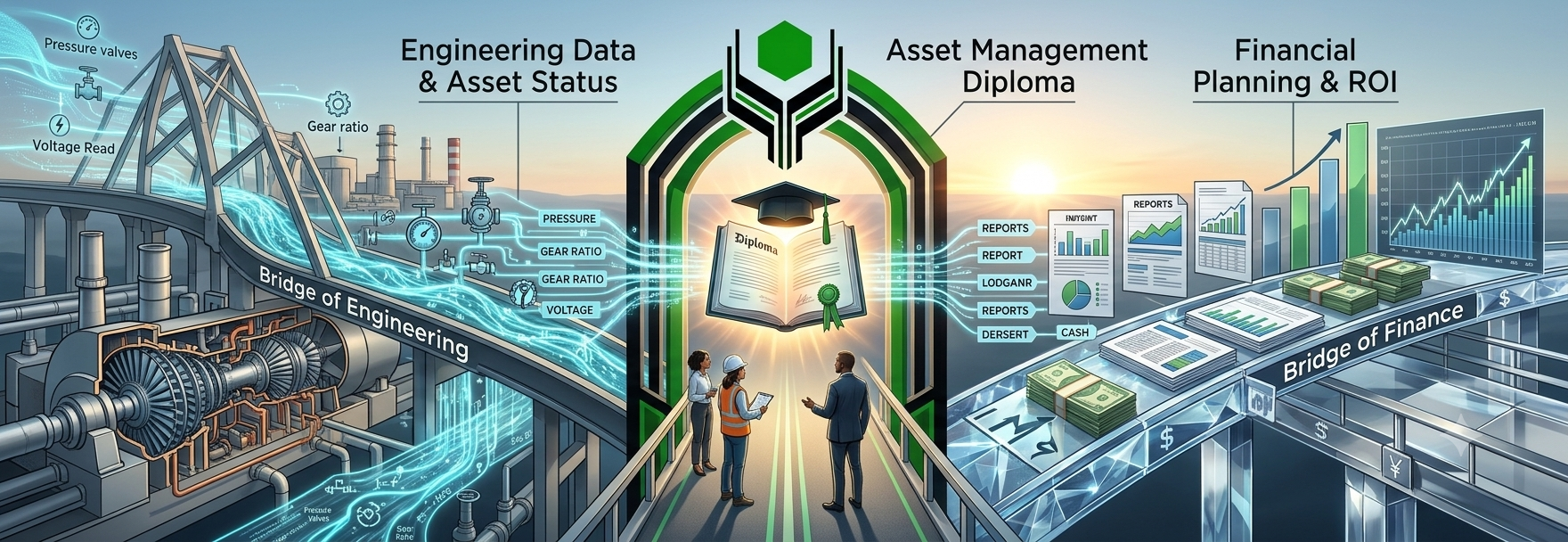
Understanding the Connection Between Engineering and Finance
Modern organisations depend on physical assets to maintain productivity, control operating costs, and achieve long-term business objectives. These assets include industrial machinery, production equipment, electrical systems, infrastructure, vehicles, and buildings that require ongoing maintenance and investment. Engineering teams generate valuable information about asset condition, reliability, performance, maintenance requirements, and expected service life. Financial teams, meanwhile, focus on budgets, operating expenditure, capital investment, cash flow, and long-term financial sustainability. When these two functions operate independently, organisations may struggle to translate technical findings into financially sound decisions.
An effective asset management strategy connects engineering knowledge with financial planning to support informed decision-making throughout the asset lifecycle. Engineering data explains what an asset needs, while financial analysis determines how resources can be allocated to meet those requirements. This relationship is particularly important for South African organisations managing ageing infrastructure, rising operating costs, and increasing pressure to improve operational efficiency. A structured approach helps decision-makers evaluate the financial consequences of maintenance delays, equipment failures, and premature asset replacement. Through professional education, we help learners understand how asset management principles can bring technical and financial considerations together.
Why Engineering Data Matters in Financial Decision-Making
Engineering data provides the technical foundation for understanding how physical assets perform and what they require to remain operational. Information about equipment condition, failure frequency, maintenance history, energy consumption, and remaining useful life can reveal where organisations face operational risks. When properly analysed, these records help identify assets that require immediate attention and those that can continue operating safely and efficiently. However, technical information becomes more valuable when decision-makers understand its financial implications. For example, repeated equipment failures may indicate that preventive maintenance needs improvement or that replacement should be considered before repair costs escalate. Connecting these findings with financial analysis allows organisations to move beyond reactive spending towards more informed and planned investment decisions.
The Financial Challenges of Managing Physical Assets
Asset-intensive organisations must balance immediate operational demands with long-term financial commitments. Maintenance budgets, spare parts, labour costs, equipment upgrades, and replacement projects compete for limited financial resources. Without reliable engineering information, financial planners may underestimate maintenance requirements or allocate insufficient funding to critical assets. Such decisions can increase unplanned downtime, emergency repair expenses, production losses, and operational disruption. Conversely, replacing equipment too early without evaluating its condition and remaining useful life can result in unnecessary capital expenditure. A coordinated asset management approach helps organisations assess these competing priorities by considering technical performance, financial implications, and business objectives together.
How an Asset Management Diploma Builds Cross-Functional Knowledge
An asset management diploma can help professionals develop the knowledge required to connect engineering principles with financial and strategic decision-making. Rather than focusing exclusively on maintenance activities or financial calculations, structured learning introduces the wider processes involved in managing assets throughout their lifecycles. Learners can develop an understanding of asset performance, maintenance planning, lifecycle costing, risk assessment, investment prioritisation, and resource allocation. This knowledge helps technical professionals explain maintenance requirements in financial terms that managers and budget holders can understand. It also enables finance professionals to interpret engineering information more effectively when reviewing budgets and investment proposals. At Terotechnica, we emphasise the importance of asset management knowledge in supporting professionals who need to understand the relationship between technical performance, operational requirements, and organisational value.
Translating Maintenance Records into Financial Insights
Maintenance records contain information that can significantly influence budgeting and investment decisions. Work orders, repair histories, labour hours, spare parts consumption, and equipment downtime help organisations understand the actual cost of maintaining individual assets. When these records are analysed consistently, patterns can emerge that reveal inefficient maintenance practices or equipment requiring closer attention. For instance, an asset that repeatedly requires expensive repairs may cost more to operate over time than a suitable replacement would. However, this decision requires more than comparing repair invoices with the purchase price of new equipment. Professionals must also consider downtime, installation costs, energy efficiency, expected service life, and the financial impact of continued operation. An asset management qualification can help learners understand how maintenance information supports a more complete financial evaluation.
Understanding Lifecycle Costing and Total Cost of Ownership
Lifecycle costing is a valuable technique for connecting engineering decisions with long-term financial planning. It considers the costs associated with acquiring, operating, maintaining, upgrading, and eventually disposing of an asset. This approach provides a broader perspective than the initial purchase price, which may not reflect the full financial commitment required throughout an asset's useful life. Equipment with a lower purchase price may require more frequent maintenance, consume more energy, or experience greater downtime than a more efficient alternative. Evaluating these factors helps organisations compare investment options using a consistent financial framework. Through asset management education, professionals can develop the ability to assess lifecycle costs and explain how engineering decisions influence long-term expenditure.
Improving Capital Expenditure Planning
Capital expenditure planning involves deciding when to purchase, replace, upgrade, or expand physical assets. Engineering teams provide information about asset condition, operational capacity, technical obsolescence, and replacement requirements, while financial teams evaluate affordability, funding availability, and expected returns. An asset management diploma can help professionals understand how these perspectives contribute to a comprehensive investment decision. For example, a manufacturing facility considering new production equipment must assess not only the purchase price but also installation requirements, productivity improvements, maintenance implications, and potential operational savings. A well-supported proposal connects the technical justification for investment with measurable financial outcomes and clearly identified risks. This approach allows decision-makers to compare competing projects and allocate capital according to organisational priorities.
Using Risk-Based Maintenance to Protect Financial Resources
Risk-based maintenance helps organisations determine which assets require the greatest attention by considering the likelihood and consequences of failure. Equipment that supports critical production processes or essential services may justify a different maintenance strategy from equipment whose failure has limited operational consequences. Engineering assessments help establish the probability of failure and identify possible safety, environmental, and operational impacts. Financial analysis then helps decision-makers evaluate the potential costs of different maintenance interventions and the consequences of leaving risks unmanaged. This combined perspective supports the prioritisation of maintenance spending according to asset criticality rather than relying exclusively on historical expenditure or fixed maintenance schedules. Professionals with asset management knowledge can therefore contribute to maintenance strategies that protect operational continuity while making responsible use of available budgets.
Connecting Asset Performance Indicators with Financial KPIs
Key performance indicators help organisations measure whether their assets and maintenance processes are achieving the intended results. Engineering teams may track equipment availability, mean time between failures, mean time to repair, maintenance compliance, and overall equipment effectiveness. Financial teams may monitor maintenance cost as a proportion of replacement asset value, budget variance, capital expenditure, and lifecycle cost. When these indicators are reviewed together, organisations gain a clearer understanding of how operational performance affects financial outcomes. For example, improving equipment availability may support higher production output, while reducing repeated failures may lower repair expenditure and minimise lost operating time. Asset management education helps professionals understand the importance of selecting relevant performance measures and interpreting them within the wider business context.
Supporting Data-Driven Budgeting and Forecasting
Accurate financial planning depends on reliable information about future asset requirements. Engineering data can support forecasts for maintenance labour, spare parts, equipment upgrades, inspections, and eventual replacement. Historical expenditure provides a useful starting point, but forecasts become more meaningful when they also account for asset condition, operating intensity, failure trends, and expected changes in production demand. This information helps financial planners distinguish between routine maintenance requirements and exceptional expenditure associated with deteriorating or obsolete equipment. It also allows organisations to identify potential funding gaps before they affect operational performance. An asset management diploma can help professionals understand how technical records, lifecycle forecasts, and financial models work together to support more realistic budgets.
The Importance of Asset Information Systems
Asset information systems help organisations collect, organise, and analyse the data required for effective asset management. Computerised maintenance management systems, enterprise resource planning platforms, asset registers, and condition monitoring technologies can provide different parts of the information needed for technical and financial analysis. However, having access to digital systems does not automatically guarantee better decisions. Asset records must be accurate, consistently maintained, and structured so that engineering and finance teams can interpret the information in compatible ways. Linking maintenance costs to specific assets, recording failure histories, and maintaining reliable replacement values can improve the quality of financial assessments. Professionals who understand asset management processes are better positioned to identify information gaps, improve reporting practices, and support collaboration between technical departments and financial stakeholders.
Applying Asset Management Principles in South Africa
South African organisations across manufacturing, mining, energy, transport, water, healthcare, and public infrastructure depend on effective asset management to maintain reliable services and control expenditure. Many operate complex asset portfolios that require careful maintenance planning, refurbishment decisions, and long-term investment strategies. Financial constraints can make it especially important to understand which assets require immediate intervention and where planned investment can reduce future costs. Inadequate maintenance planning may increase the risk of equipment failure, service interruptions, and expensive emergency work. By integrating engineering assessments with financial evaluation, organisations can develop more structured approaches to managing these challenges. An asset management diploma can help professionals build relevant knowledge for contributing to lifecycle planning, maintenance optimisation, and investment decisions within the South African operating environment.
Developing Communication Between Engineering and Finance Teams
One of the most important benefits of cross-functional asset management knowledge is improved communication between departments. Engineers may understand the technical consequences of equipment deterioration but need to explain those consequences in terms of financial exposure, operational risk, and investment requirements. Finance professionals may understand budget limitations but require sufficient technical context to evaluate whether proposed maintenance or replacement expenditure is justified. A shared understanding of lifecycle costs, asset criticality, maintenance strategies, and financial performance can reduce misunderstandings between these teams. It also encourages discussions based on evidence rather than departmental assumptions or competing short-term priorities. By developing this broader perspective, professionals can contribute to decisions that balance engineering requirements with financial sustainability.
Building Skills for Strategic Asset Management Roles
Professionals who understand both asset performance and financial planning can contribute to a wider range of organisational responsibilities. Maintenance planners, reliability engineers, asset managers, project professionals, and operations supervisors may need to justify budgets, evaluate replacement proposals, or assess the long-term implications of maintenance strategies. Similarly, finance and procurement professionals working in asset-intensive environments can benefit from understanding how technical condition influences expenditure and investment requirements. Formal asset management education can strengthen the conceptual knowledge needed to participate in these discussions and support more structured planning processes. The value of this learning depends on the programme's curriculum, the learner's existing experience, and the ability to apply relevant concepts in the workplace. For professionals seeking to broaden their responsibilities, this combination of technical awareness and financial understanding can provide a useful foundation for career development.
Measuring the Value of Better Asset Management Decisions
The effectiveness of asset management should be evaluated through measurable operational and financial outcomes. Organisations can compare planned and actual maintenance expenditure, monitor unplanned downtime, assess equipment reliability, and review the cost of maintaining ageing assets. They can also evaluate whether capital investments deliver the expected improvements in productivity, safety, availability, or operating efficiency. These assessments help establish whether decisions are producing the intended results and where further improvements may be necessary. However, financial savings should not be considered in isolation because maintenance decisions must also account for safety, regulatory obligations, environmental impacts, and service reliability. An integrated evaluation framework helps organisations understand the broader value created when engineering evidence and financial planning support the same objectives.
Preparing for a More Integrated Approach to Asset Management
The growing need for reliable infrastructure, efficient operations, and responsible investment makes integrated asset management knowledge increasingly relevant across asset-intensive industries. Organisations need professionals who can interpret engineering information, understand financial constraints, and evaluate decisions across the complete asset lifecycle. An asset management diploma can help develop this perspective by connecting maintenance planning, lifecycle management, risk assessment, performance measurement, and investment evaluation. The practical benefit comes from applying these concepts to real organisational challenges, supported by accurate data and collaboration between relevant departments. Professionals who develop this capability can contribute to more transparent budgeting, better-informed replacement decisions, and improved alignment between operational requirements and business strategy. At Terotechnica, we recognise the role of structured asset management education in helping professionals strengthen their understanding of asset performance, financial planning, and sustainable organisational value.
Bridging the gap between engineering data and financial planning requires more than collecting maintenance records or preparing annual budgets. It requires an integrated understanding of how asset condition, reliability, maintenance strategies, lifecycle costs, and investment decisions influence organisational performance. An asset management diploma can help professionals develop the knowledge to connect these elements and communicate their implications across technical and financial teams. For South African organisations, this approach can support better maintenance prioritisation, more realistic capital expenditure forecasts, and stronger long-term asset sustainability. By using engineering evidence to inform financial decisions, organisations can improve the quality of their planning while managing operational risks and financial commitments more effectively. Investing in relevant asset management education can therefore be a meaningful step towards building the skills required for responsible, data-driven asset management.