Terotechnica Asset Management College
  • 012 548 6096
  • 082 855 8016
  • info@terotechnica.com
Terotechnica Asset Management College
  • Home
    • About Terotechnica Maintenance College
    • Welcome to Terotechnica Maintenance College
    • Our Philosophy
    • In house courses
    • International Students
  • Search
  • 2027 Courses
  • Why Train?
  • Best Practices
  • Study Information
    • Diplomas
      • Subject Choices
      • Diplomas Awarded
      • Rules for Diploma Study
      • Diploma Enrolment
    • Comprehensive Courses
      • C101: Asset Management for Artisans
      • C201: Asset Management for Maintenance Supervisors
      • C301: Maintenance Planning
      • C302: Advanced Maintenance Planning
      • C303: Computerised Maintenance Management Systems (CMMS)
      • C501: Maintenance Shutdown and Project Management
      • C702: Reliability Engineering in Asset Management
      • C901: Maintenance Practice for Asset Management Engineers
      • C902: Leadership in Asset Management
      • C903: RCM Facilitation and Analysis
      • C904: RCM ProAktiv: Advanced Reliability Centred Maintenance
    • Short Courses
      • S801: RCM
      • S802: Asset Management for Executives
      • S803: Root Cause Failure Analysis
      • S804: Decision Making in Maintenance
      • S805: Maintenance Control
      • S808: Asset Management Logistics
      • S809: Data Analytics in Asset Management
      • S811: Water Treatment Plant Operation and Maintenance
      • S812: Road Maintenance
      • S813: Assets - Economical Replacement and Life Cycle Management
      • S820: What is Asset Management - how does it differ from Maintenance
      • S821: Understanding ISO 55000
      • S822: Implementing ISO 55000
    • Technical Courses
    • Occupational Certificates
  • Course Calendar
  • Terotechnica eCollege
  • Administration
    • Brochures
    • Terms
    • Inquiry / Application Form
    • Study Loans / Discounts
    • Privacy
  • People
    • Personnel
    • Diploma Ceremonies
      • 2023
    • Testimonials
      • Zonica (student) message to Melvin (lecturer) on her benefit from training with us
  • Offices
  • Contact us
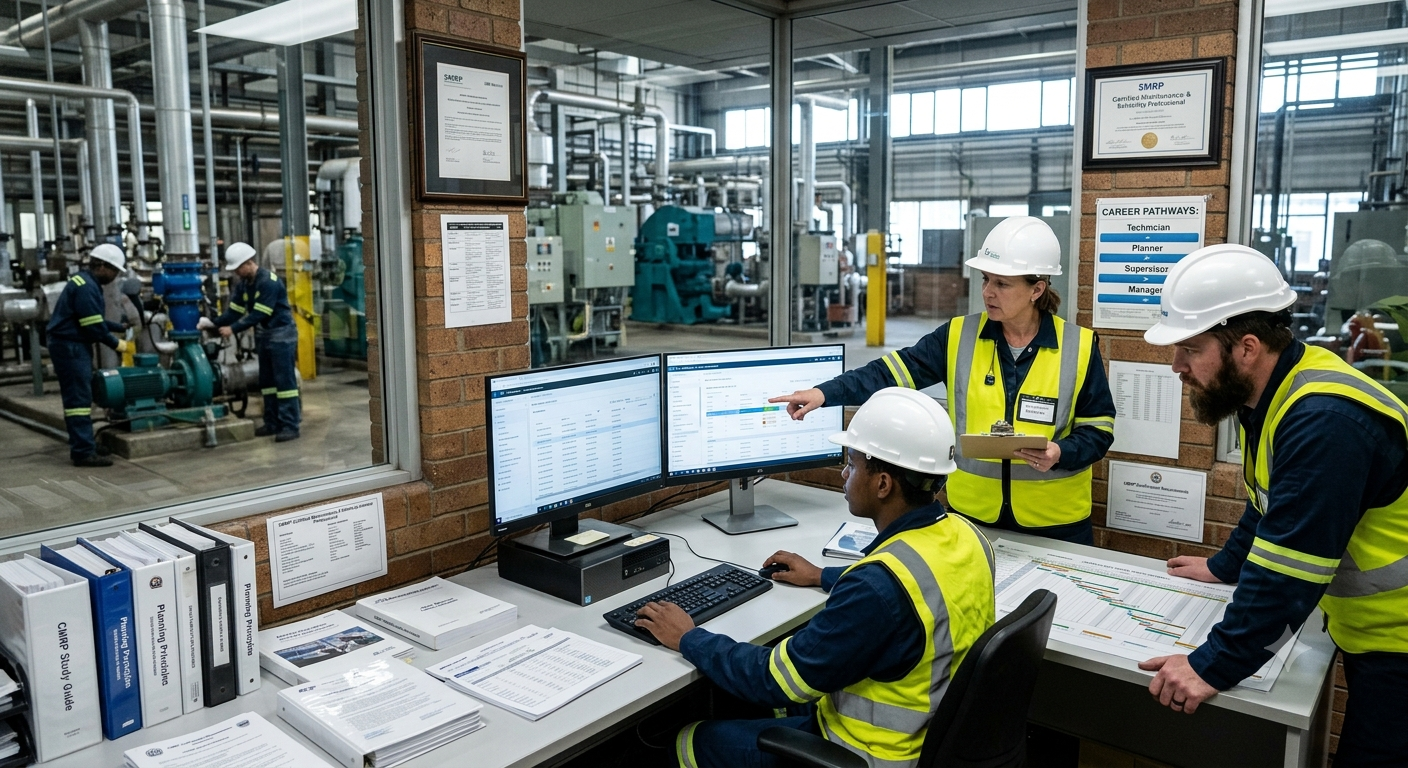
Maintenance Planner Certification

Maintenance Planner Certification Requirements

Maintenance Planner Certification Requirements and Career Pathways

Introduction

Modern industries depend on reliable equipment, efficient maintenance systems, and skilled professionals who can keep operations running smoothly. From mining and manufacturing to energy and transportation, organizations require maintenance planners who can coordinate resources, schedule maintenance activities, and reduce costly downtime.
As industries across South Africa and beyond continue to invest in asset reliability and operational excellence, the demand for qualified maintenance planners is growing. Professionals entering this field need a combination of technical knowledge, planning expertise, and recognized certifications that demonstrate their competence. Understanding the certification requirements and career pathways can help aspiring maintenance planners build successful and rewarding careers.
At Tero Technica, we help professionals develop the skills and industry knowledge needed to succeed in maintenance planning and asset management environments.

Understanding the Role of a Maintenance Planner

A maintenance planner serves as the link between maintenance strategy and execution. Their primary responsibility is ensuring that maintenance activities are properly prepared before technicians begin work.
This includes reviewing work requests, identifying required materials, estimating labor hours, arranging equipment access, and developing detailed job plans. Effective maintenance planning minimizes delays and improves workforce productivity while supporting safety and compliance objectives.
Maintenance planners also work closely with maintenance supervisors, reliability engineers, operations personnel, and supply chain teams. Their ability to coordinate across departments contributes directly to asset performance and organizational efficiency.

Why Certification Matters

While practical experience is highly valuable, certification provides formal recognition of a professional's skills and knowledge. Employers increasingly seek certified professionals because certifications demonstrate a commitment to industry standards and best practices.
Certification programs help maintenance planners gain a deeper understanding of maintenance management principles, planning methodologies, scheduling techniques, risk management, and asset reliability concepts.
For professionals looking to advance their careers, certification can strengthen job applications, improve promotion opportunities, and increase earning potential.
Organizations also benefit from employing certified maintenance planners because they often bring structured processes and proven methodologies that improve maintenance performance.

Educational Requirements for Maintenance Planners

The journey toward becoming a maintenance planner often begins with a technical or engineering-related education.
Many maintenance planners start their careers with qualifications in mechanical engineering, electrical engineering, industrial engineering, instrumentation, or related technical disciplines. Technical diplomas and vocational qualifications can also provide a strong foundation for entering maintenance and asset management environments.
Although educational requirements may vary between industries and employers, a solid understanding of equipment systems, maintenance processes, and industrial operations is generally essential.
Many successful maintenance planners first gain experience as technicians, artisans, or maintenance supervisors before transitioning into planning roles.

Essential Certification Areas

Maintenance planner certifications typically focus on several key areas that support effective maintenance management.
One important area is maintenance planning and scheduling. Professionals learn how to develop work packages, estimate resources, prioritize maintenance activities, and optimize workforce utilization.
Another critical area is asset management. Understanding asset lifecycle management, risk-based decision making, and performance optimization allows maintenance planners to contribute strategically to organizational goals.
Reliability and maintenance engineering concepts are also commonly included in certification programs. These subjects help professionals understand failure mechanisms, root cause analysis, preventive maintenance strategies, and continuous improvement practices.
Safety management remains a core component as well. Maintenance planners must understand how planning decisions affect workplace safety and regulatory compliance.

Industry-Recognized Certifications

Several certifications can strengthen a maintenance planner's professional credentials.
Maintenance planning and scheduling certifications focus specifically on work management processes and planning excellence. These programs teach practical methods for improving maintenance efficiency and reducing downtime.
Asset management certifications provide broader knowledge of organizational asset management frameworks and international standards. These qualifications are especially valuable for professionals seeking leadership opportunities within maintenance and reliability functions.
Reliability-focused certifications help maintenance planners understand equipment performance, failure prevention, and maintenance optimization techniques.
Project management certifications may also be beneficial because maintenance planners frequently coordinate resources, timelines, and project activities.
Selecting the most appropriate certification depends on career goals, industry requirements, and current experience levels.

Skills Needed Beyond Certification

Certification alone does not guarantee success. Maintenance planners must develop a range of practical and interpersonal skills that support effective planning and coordination.
Strong analytical abilities are essential for evaluating maintenance data, identifying priorities, and improving maintenance performance.
Communication skills are equally important because maintenance planners interact with multiple departments and stakeholders. Clear communication helps ensure that work plans are understood and executed correctly.
Problem-solving skills enable planners to address scheduling conflicts, resource constraints, and unexpected equipment issues.
Proficiency with computerized maintenance management systems is increasingly important as organizations rely on digital tools for maintenance planning, scheduling, and reporting.
Time management and organizational skills also play a significant role in maintaining efficient maintenance operations.

Career Pathways in Maintenance Planning

The maintenance planning profession offers multiple career progression opportunities.
Many professionals begin as maintenance technicians or tradespeople, gaining hands-on experience with equipment and maintenance procedures. This practical knowledge provides a valuable foundation for future planning responsibilities.
From there, individuals often move into junior planning positions where they learn maintenance scheduling, work management, and resource coordination.
With additional experience and certification, professionals may advance to senior maintenance planner roles. These positions typically involve greater responsibility for maintenance strategy, process improvement, and performance management.
Further advancement can lead to maintenance superintendent, maintenance manager, reliability manager, or asset management specialist positions.
Some professionals eventually transition into consulting, training, or executive leadership roles focused on asset management and operational excellence.

Opportunities Across Industries

Maintenance planners are needed across a wide range of industries.
Mining companies rely on maintenance planners to maximize equipment availability and support production targets.
Manufacturing organizations require effective planning to maintain production efficiency and minimize disruptions.
Energy and utilities sectors depend on maintenance planners to ensure critical infrastructure remains reliable and compliant.
Transportation, logistics, petrochemical, and processing industries also employ maintenance planners to manage complex asset portfolios and maintenance programs.
Because maintenance planning principles are transferable across sectors, certified professionals often enjoy diverse career opportunities throughout their working lives.

The Growing Importance of Asset Management Knowledge

As organizations adopt more sophisticated asset management strategies, maintenance planners are expected to contribute beyond traditional planning functions.
Today's maintenance professionals must understand how maintenance activities affect asset lifecycle performance, operational risk, sustainability objectives, and financial outcomes.
Knowledge of international asset management standards and best practices allows maintenance planners to support broader organizational goals while improving maintenance effectiveness.
This evolution creates additional opportunities for professionals who invest in continuous learning and professional development.

Building a Long-Term Career Success Strategy

A successful maintenance planning career requires ongoing development. Industry technologies, maintenance methodologies, and asset management practices continue to evolve.
Professionals who pursue additional certifications, attend industry training programs, and stay informed about emerging trends position themselves for long-term success.
Developing expertise in reliability engineering, digital maintenance systems, data analytics, and asset management can further enhance career prospects and leadership opportunities.
Continuous improvement should become a personal philosophy, just as it is within world-class maintenance organizations.
Maintenance planning is a critical function that supports asset reliability, operational efficiency, and business performance. Achieving success in this profession requires a combination of technical knowledge, practical experience, professional certifications, and strong organizational skills.
As industries place greater emphasis on asset management and reliability, certified maintenance planners are becoming increasingly valuable. Understanding certification requirements and career pathways helps professionals make informed decisions about their development and future opportunities.
At Tero Technica, we are committed to helping maintenance and asset management professionals gain the knowledge, skills, and qualifications needed to thrive in a competitive industrial environment. Through quality education and industry-focused training, we support the next generation of maintenance planners as they build rewarding and impactful careers.
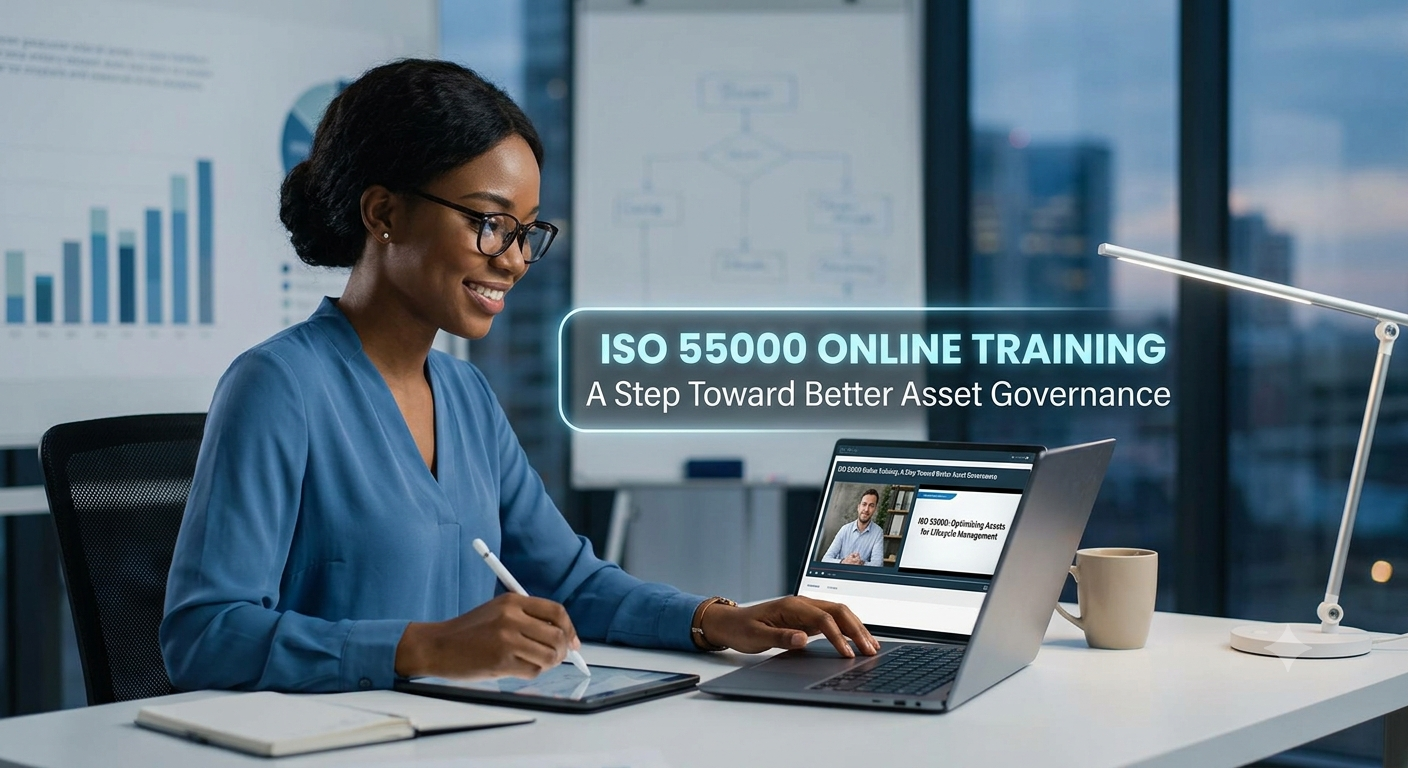
ISO 55000 Online Training

ISO 55000 Online Training

ISO 55000 Online Training: A Step Toward Better Asset Governance

Organizations across industries depend on physical, financial, technological, and infrastructure assets to achieve their objectives. Whether managing manufacturing equipment, transportation networks, utilities, facilities, or public infrastructure, effective asset governance plays a critical role in long-term success. As businesses face increasing pressure to improve efficiency, reduce risk, and maximize asset value, international standards have become essential tools for guiding best practices.
ISO 55000 provides a globally recognized framework for asset management that helps organizations align their assets with business goals. Through online learning, professionals can gain the knowledge needed to implement these principles effectively and contribute to stronger governance practices within their organizations.
At Tero Technica, we believe that developing expertise in ISO 55000 is one of the most valuable investments asset management professionals can make in today's competitive environment.

Understanding ISO 55000 and Its Importance

ISO 55000 is the international standard that outlines the fundamentals, concepts, and terminology associated with asset management. It forms part of the broader ISO 55000 series, which also includes guidance on establishing, implementing, maintaining, and improving asset management systems.
The standard emphasizes a systematic approach to managing assets throughout their lifecycle. Rather than focusing solely on maintenance or operations, it encourages organizations to consider how assets create value, support strategic objectives, and contribute to organizational performance.
Effective asset governance ensures that decisions regarding acquisition, operation, maintenance, renewal, and disposal are aligned with business priorities. ISO 55000 provides the foundation for achieving this alignment.

Why Asset Governance Matters More Than Ever

Organizations today operate in environments characterized by rapid technological change, growing stakeholder expectations, regulatory requirements, and financial constraints. Poor asset governance can lead to unnecessary costs, operational disruptions, safety incidents, and reduced organizational performance.
Strong governance structures help organizations make informed decisions about asset investments and resource allocation. They improve accountability, support transparency, and ensure that asset-related decisions are based on risk, performance, and long-term value.
ISO 55000 introduces principles that help organizations establish governance frameworks capable of balancing cost, risk, opportunity, and performance. Professionals who understand these principles become valuable contributors to organizational success.

The Benefits of ISO 55000 Online Training

Online training has transformed professional development by making high-quality education accessible to learners regardless of location. For asset management professionals, online ISO 55000 training offers flexibility while delivering practical knowledge that can be applied immediately in the workplace.
Participants gain a comprehensive understanding of asset management principles and learn how these concepts support organizational objectives. They develop the ability to identify gaps in current practices and recommend improvements that align with international standards.
Online learning also enables professionals to study at their own pace while balancing work responsibilities. This flexibility makes it easier for organizations to upskill employees without disrupting daily operations.
Through structured coursework, learners can explore real-world asset management challenges and understand how ISO 55000 principles address common governance issues.

Building a Strategic Asset Management Mindset

One of the most significant advantages of ISO 55000 training is the shift in perspective it creates. Many professionals initially view asset management through an operational lens focused on maintenance, repairs, and reliability.
The ISO 55000 framework encourages a broader strategic view. It highlights how asset decisions influence organizational performance, stakeholder value, financial sustainability, and long-term growth.
This strategic mindset enables professionals to connect asset activities with business outcomes. As a result, they become more effective at supporting executive decision-making and contributing to organizational planning processes.
At Tero Technica, we emphasize the importance of developing this strategic understanding because it helps learners move beyond technical execution and become leaders in asset governance.

Supporting Risk-Based Decision Making

Risk management is a central component of effective asset governance. Organizations must constantly evaluate potential threats and opportunities related to their assets.
ISO 55000 training introduces methodologies for assessing risks throughout the asset lifecycle. Participants learn how to evaluate the potential consequences of asset failures, identify vulnerabilities, and prioritize actions based on organizational objectives.
A risk-based approach allows organizations to allocate resources more effectively while reducing the likelihood of unexpected disruptions. It also supports compliance with regulatory requirements and enhances stakeholder confidence.
Professionals who understand risk-based asset management can help organizations make more informed and defensible decisions regarding asset investments and operational strategies.

Enhancing Organizational Performance

Asset management is not simply about maintaining equipment. It is about ensuring that assets contribute maximum value to the organization.
ISO 55000 training helps learners understand how performance measurement, continuous improvement, and lifecycle thinking work together to enhance organizational outcomes. Participants explore key performance indicators, governance structures, and management systems that drive sustainable results.
Organizations that implement effective asset management practices often experience improved reliability, reduced operational costs, better resource utilization, and stronger financial performance.
By understanding these relationships, professionals can play an active role in driving organizational improvement initiatives.

Preparing for Asset Management Leadership Roles

As organizations increasingly recognize the importance of structured asset management, demand continues to grow for professionals with expertise in international standards.
ISO 55000 training helps individuals build competencies that support career advancement. The knowledge gained through training can be valuable for asset managers, maintenance managers, engineers, infrastructure specialists, consultants, project managers, and executive leaders.
Professionals who understand asset governance frameworks are often better positioned to lead transformation initiatives, participate in strategic planning, and contribute to organizational decision-making processes.
These capabilities make ISO 55000 training a worthwhile investment for both current and aspiring leaders in the asset management field.

The Role of Online Learning in Professional Development

The digital learning environment offers significant advantages for professionals seeking specialized knowledge. Online training provides access to expert instruction, practical case studies, and internationally relevant content without geographical limitations.
Learners can revisit course materials as needed, reinforcing key concepts and improving retention. This approach supports deeper understanding and allows participants to apply lessons directly to workplace challenges.
At Tero Technica, our online training programs are designed to provide both theoretical foundations and practical insights, ensuring that learners gain skills that can be immediately applied in real-world asset management environments.

Creating Long-Term Value Through Better Governance

Asset governance is not a one-time initiative. It is an ongoing commitment to managing assets in a way that supports organizational objectives and stakeholder expectations.
ISO 55000 provides a framework for establishing governance systems that create sustainable value over time. Organizations that adopt these principles are better equipped to manage risks, optimize performance, improve accountability, and support long-term success.
Professionals who complete ISO 55000 training gain the knowledge necessary to contribute meaningfully to these efforts. They become advocates for best practices and play a critical role in helping organizations achieve greater maturity in asset management.

ISO 55000 online training offers much more than an introduction to an international standard. It provides a pathway toward stronger asset governance, improved decision-making, enhanced organizational performance, and long-term value creation.
As organizations continue to navigate complex operational and strategic challenges, the ability to manage assets effectively becomes increasingly important. Through comprehensive online learning, professionals can develop the skills and knowledge needed to support these goals and drive meaningful improvements within their organizations.
At Tero Technica, we are committed to helping asset management professionals build the expertise required to excel in today's evolving business landscape. By investing in ISO 55000 training, individuals take an important step toward becoming effective leaders in asset governance and organizational success.

How Asset Management Courses Prepare the Next Generation of Industry Leaders

How Asset Management Courses Prepare the Next Generation of Industry Leaders

Shaping Tomorrow’s Visionaries: How Asset Management Courses Prepare the Next Generation of Industry Leaders

In an era defined by rapid technological advancements, shifting economic landscapes, and a pressing need for sustainable infrastructure, the role of asset management has never been more critical. Organizations worldwide are realizing that physical assets, whether a fleet of commercial vehicles, a sprawling manufacturing plant, or municipal water systems, require more than just routine maintenance. They require strategic, forward-thinking stewardship.

At Terotechnica, we recognize this shifting paradigm. As a premier institution dedicated to asset management and maintenance engineering in South Africa, our mission is to equip aspiring professionals with the tools, mindset, and strategic acumen needed to guide industries into a profitable and sustainable future.

Here is how our specialized asset management courses are actively shaping the next generation of industry leaders.

Bridging the Gap Between Engineering and Executive Leadership

Historically, asset management was often siloed as a purely technical or maintenance-driven function. Engineers fixed what was broken, while executives handled the financial balance sheets. Today, a successful industry leader must speak both languages fluently.

Our curriculum bridges this traditional divide. We teach our students to view technical assets through a financial and strategic lens. A graduate from our program does not just understand how a piece of machinery operates. They understand its lifecycle cost, its risk profile, and how its performance directly impacts an organization’s bottom line and stakeholder value. By fostering this holistic perspective, we prepare our students to step out of the engine room and confidently enter the boardroom.

Mastering the Power of Data and Industry 4.0

The modern asset manager is inundated with data. From Internet of Things (IoT) sensors providing real-time equipment diagnostics to predictive analytics software forecasting potential failures, the data is there. The challenge lies in turning that raw data into actionable business strategy.

At Terotechnica, we integrate the principles of Industry 4.0 directly into our coursework. We train our students to use data-driven decision-making models, allowing them to move organizations from reactive firefighting to predictive, optimized asset care. By mastering these digital tools, our future leaders can significantly reduce operational downtime, extend asset lifespans, and save millions of Rands in unnecessary capital expenditures.

Tailoring Global Standards to the South African Context

While asset management principles like ISO 55000 provide a vital global framework, leadership cannot happen in a vacuum. Industry leaders in South Africa face a unique set of challenges, including localized infrastructure pressures, specific regulatory requirements, and the urgent need for sustainable resource management.

Our courses are explicitly designed to ground international best practices within our local reality. We address the nuances of managing aging infrastructure under budget constraints and navigating the socio-economic factors unique to the African continent. This ensures that when our students graduate, they possess a globally competitive skill set that is immediately practical and highly impactful within South African industries.

Fostering Sustainable and Ethical Decision-Making

Modern leadership is no longer judged solely by profit margins. Environmental, Social, and Governance (ESG) criteria are now central to asset management. Future leaders must know how to balance industrial productivity with carbon reduction goals, energy efficiency, and community safety.

Sustainability is woven into the very fabric of our training programs at Terotechnica. We challenge our students to consider the long-term environmental impacts of asset lifecycles, from sustainable procurement to green disposal methods. By instilling these values early on, we ensure that the next generation of leaders will build a resilient industrial sector that respects both the planet and the communities it serves.

Step Into Your Leadership Journey

The demand for qualified, strategically minded asset managers is growing exponentially across sectors like mining, manufacturing, public utilities, and logistics. The industry does not just need managers to maintain the status quo. It needs leaders who can innovate, optimize, and inspire.

Through our rigorous, practical, and forward-looking courses, Terotechnica is proud to be the launchpad for these future pioneers. We invite you to join our community, build your expertise, and drive the future of African industry forward.

Subscribe

blocks image 1 1 

We mail a regular information bulletin, called Maintenance Scraps. The bulletin is designed not to entail a lot of reading, but to give you compact bits of interesting information. If you are then interested to explore the information bits (scraps) further, links to more detail are provided. 

The bulletin will also remind you of the due dates of scheduled courses and other events.
 

Registration for
 Maintenance Scraps will also provide you with a free copy of our eBook Team functioning in the Maintenance Department.


We respect your email privacy


blocks image 4 1

blocks image 3 1HeavyLift

Graduate

We do not want to add to your junk mail. If you are at any point in time feeling that you do not want Maintenance Scraps any longer, you simply click on the unsubscribe link at the bottom of any copy of Maintenance Scraps - see 'We respect your email privacy' on the subscription form above.

Career Opportunities After Completing Maintenance Planner Courses in South Africa

Career Opportunities After Completing Maintenance Planner Courses in South Africa

Navigating the Job Market: Career Opportunities After Completing Maintenance Planner Courses in South Africa

In the fast-paced industrial landscape of South Africa, efficiency is everything. Plants, mines, and manufacturing facilities cannot afford unexpected downtime. That is where professional maintenance planning comes into play. At Terotechnica, we have spent decades shaping the professionals who keep our country’s infrastructure moving.

If you are considering enrolling in our maintenance planner courses, or if you have recently completed your qualification with us, you are likely wondering what your career path will look like. The good news is that the demand for skilled maintenance planners in South Africa is exceptionally high.

Let us explore the diverse career opportunities available to you and how our training positions you for success.

1. Maintenance Planner

This is the most direct and frequent career path for our graduates. As a maintenance planner, you are the bridge between strategy and execution. You will be responsible for scheduling routine maintenance, estimating material and labor costs, and ensuring that all necessary tools are available before a technician ever steps onto the floor.

• Key Industries: Manufacturing, FMCG (Fast-Moving Consumer Goods), and automotive plants.
• Your Impact: You directly reduce equipment failure rates and optimize the daily schedule of the engineering team.

2. Shutdown Coordinator

Industrial plants occasionally need to halt operations entirely for major overhauls, upgrades, or deep maintenance. These periods are high-pressure and require meticulous organization. Our advanced planning principles prepare you to step into the role of a Shutdown Coordinator.

• The Role: You will manage the critical path of a shutdown, coordinating hundreds of tasks and external contractors to ensure the plant restarts on time and within budget.
• Why It Matters: Every hour a plant is shut down costs millions of Rands. Your ability to plan effectively keeps those losses to an absolute minimum.

3. Reliability Engineer or Reliability Specialist

For those who want to dive deeper into data and asset longevity, transitioning into reliability engineering is an excellent option. While some reliability roles require a heavy university engineering background, practical experience combined with Terotechnica’s specialized maintenance planning modules provides a powerful foundation.
• The Focus: Instead of just planning the next maintenance cycle, you will analyze why assets fail in the first place. You will use root cause analysis to rewrite preventive maintenance strategies.

4. Maintenance Scheduler / Expeditor

In larger organizations, the roles of planning (determining what and how) and scheduling (determining when and who) are split. As a maintenance scheduler, you work closely with production managers to find the perfect windows of opportunity to take machines offline without disrupting commercial targets.

5. Asset Management Consultant

With experience and a strong grasp of the asset management principles we teach at Terotechnica, you can transition into a consultancy role. Many specialized engineering firms in South Africa look for consultants who can audit a company’s existing maintenance practices, identify gaps, and implement structured planning frameworks to turn struggling operations around.

Why the South African Market Demands Terotechnica Graduates

The South African industrial sector faces unique challenges, including aging infrastructure, fluctuating power supply, and the urgent need for cost optimization. Companies across the continent recognize that reactive maintenance (fixing things only when they break) is an expensive way to operate. They are actively seeking professionals who understand proactive asset management.

When you study with us, you are not just learning theory. We focus on practical, real-world applications designed specifically for the African industrial environment. Our curriculum aligns with global best practices, ensuring your qualification carries substantial weight when you submit your CV to top employers.

Take the Next Step in Your Career

Whether you are an artisan looking to move off the tools and into an office role, or a manager looking to formalize your team’s planning capabilities, our courses provide the exact roadmap you need. The career opportunities are vast, stable, and financially rewarding.

Are you ready to elevate your career and become an invaluable asset to any engineering team? Explore our upcoming course schedules on our website or get in touch with our admissions team today to find the program that best fits your professional goals. Together, let us build a more reliable future for South African industry.

Jon's Blog

Lorem ipsum: common examples

Most of its text is made up from sections 1.10.32–3 of Cicero's De finibus bonorum et malorum (On the Boundaries of Goods and Evils; finibus may also be translated as purposes). Neque porro quisquam est qui dolorem ipsum quia dolor sit amet, consectetur, adipisci velit is the first known version ("Neither is there anyone who loves grief itself since it is grief and thus wants to obtain it").

It was found by Richard McClintock, a philologist, director of publications at Hampden-Sydney College in Virginia; he searched for citings of consectetur" in classical Latin literature, a term of remarkably low frequency in that literary corpus.

  1. Welcome
  2. Terotechnica in a nutshell

Page 7 of 8

  • 1
  • 2
  • 3
  • 4
  • 5
  • 6
  • 7
  • 8
Terotechnica
Asset Management College

Training Maintenance Practitioners in the Art and Science of Maintenance Engineering for over 19 years.

Programmes

  • Diplomas
  • Comprehensive Courses
  • Short Courses
  • Technical Courses
  • Occupational Certificates

Resources

  • 2026 Courses
  • Upcoming Courses
  • Brochures
  • Inquiry/Application Form
  • Student Loans/Discounts
  • Search
  • Sitemap
  • Saama2026
© 2026 Terotechnica Asset Management College. All rights reserved.
  • Home
    • About Terotechnica Maintenance College
    • Welcome to Terotechnica Maintenance College
    • Our Philosophy
    • In house courses
    • International Students
  • Search
  • 2027 Courses
  • Why Train?
  • Best Practices
  • Study Information
    • Diplomas
      • Subject Choices
      • Diplomas Awarded
      • Rules for Diploma Study
      • Diploma Enrolment
    • Comprehensive Courses
      • C101: Asset Management for Artisans
      • C201: Asset Management for Maintenance Supervisors
      • C301: Maintenance Planning
      • C302: Advanced Maintenance Planning
      • C303: Computerised Maintenance Management Systems (CMMS)
      • C501: Maintenance Shutdown and Project Management
      • C702: Reliability Engineering in Asset Management
      • C901: Maintenance Practice for Asset Management Engineers
      • C902: Leadership in Asset Management
      • C903: RCM Facilitation and Analysis
      • C904: RCM ProAktiv: Advanced Reliability Centred Maintenance
    • Short Courses
      • S801: RCM
      • S802: Asset Management for Executives
      • S803: Root Cause Failure Analysis
      • S804: Decision Making in Maintenance
      • S805: Maintenance Control
      • S808: Asset Management Logistics
      • S809: Data Analytics in Asset Management
      • S811: Water Treatment Plant Operation and Maintenance
      • S812: Road Maintenance
      • S813: Assets - Economical Replacement and Life Cycle Management
      • S820: What is Asset Management - how does it differ from Maintenance
      • S821: Understanding ISO 55000
      • S822: Implementing ISO 55000
    • Technical Courses
    • Occupational Certificates
  • Course Calendar
  • Terotechnica eCollege
  • Administration
    • Brochures
    • Terms
    • Inquiry / Application Form
    • Study Loans / Discounts
    • Privacy
  • People
    • Personnel
    • Diploma Ceremonies
      • 2023
    • Testimonials
      • Zonica (student) message to Melvin (lecturer) on her benefit from training with us
  • Offices
  • Contact us
  • 012 548 6096
  • 082 855 8016
  • info@terotechnica.com