
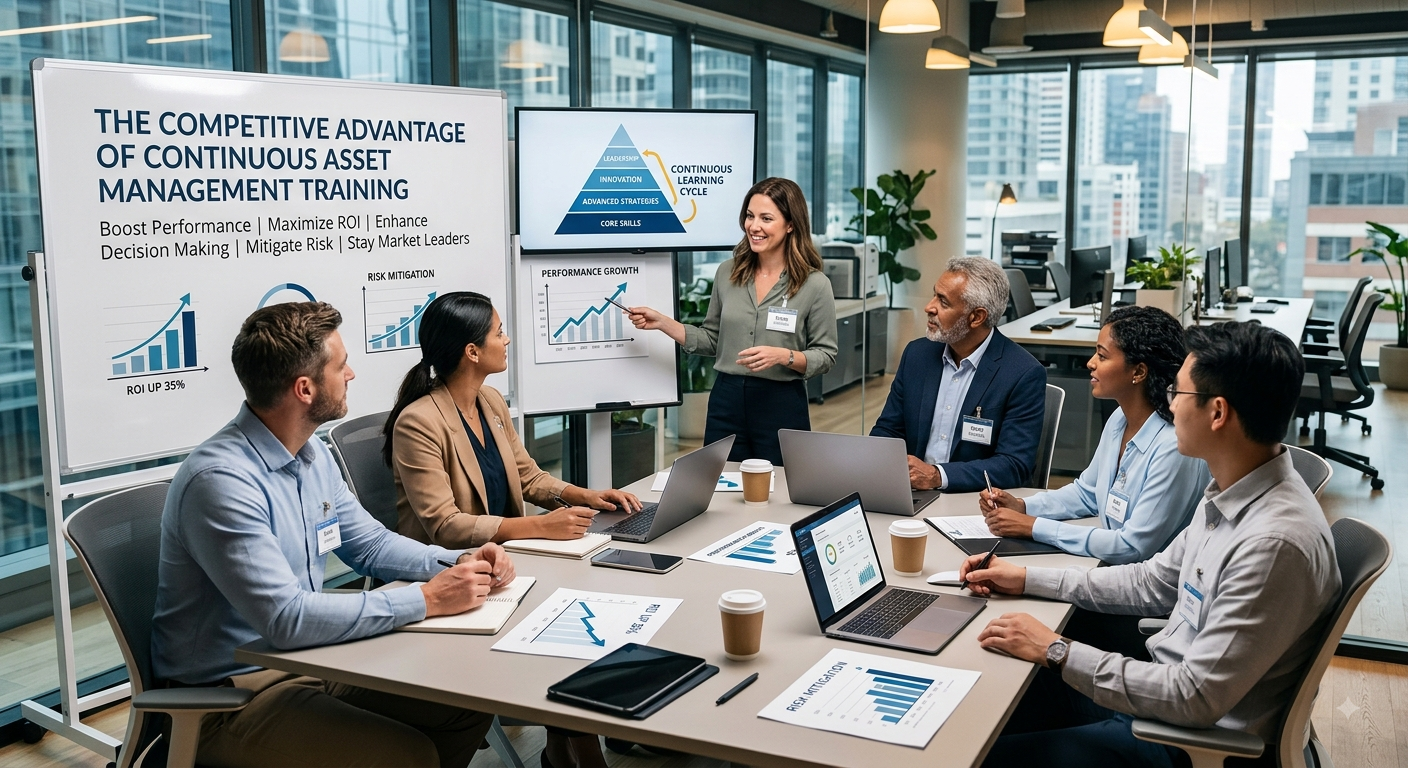
Why Continuous Learning Has Become Essential in Modern Asset Management
Asset management has changed significantly over the past decade, and organisations can no longer depend on outdated maintenance practices or knowledge gained years ago. New technologies, evolving international standards, changing regulations, and increasing operational complexity require professionals to keep learning throughout their careers. Businesses that invest in continuous asset management training often outperform competitors because their teams make better decisions, reduce operational risks, and maximise the value of physical assets. As industries become more competitive, organisations need professionals who understand both traditional maintenance principles and modern asset management strategies. We believe that continuous learning creates a workforce that is adaptable, knowledgeable, and capable of responding confidently to changing business demands. Rather than treating training as a one-time event, successful organisations recognise it as an ongoing investment that strengthens operational performance and long-term business growth.
Building Knowledge That Evolves with Industry Standards
Asset management is closely connected to internationally recognised frameworks, best practices, and evolving methodologies that continue to shape how organisations operate. Professionals who regularly update their knowledge are better prepared to implement processes that align with current expectations instead of relying on outdated approaches. Continuous training allows maintenance teams, engineers, planners, and managers to understand why standards evolve and how those changes affect daily operations. This deeper understanding creates consistency across departments and improves collaboration between technical and management teams. Organisations that prioritise professional development are also better positioned to meet compliance requirements while maintaining efficient operations. We encourage learners to build knowledge that remains relevant as industries continue to evolve rather than depending on information that gradually loses its value.
Creating Smarter Maintenance Decisions Every Day
Maintenance decisions have a direct influence on production efficiency, operational costs, equipment reliability, and business profitability. Professionals who continue expanding their knowledge develop stronger analytical skills that help them identify the most effective maintenance strategies for different asset types. Instead of reacting to failures after they occur, trained professionals become more confident in planning preventive, predictive, and reliability-focused maintenance activities. Continuous education also improves the ability to interpret asset data and translate that information into practical actions that support operational objectives. Better-informed maintenance decisions reduce unnecessary repairs while extending the useful life of valuable assets. We focus on helping professionals strengthen the practical thinking required to support reliable operations across diverse industries.
Strengthening Organisational Resilience Through Skilled People
Technology plays an important role in asset management, but knowledgeable people remain the foundation of every successful maintenance strategy. Organisations with highly trained employees are generally more resilient because their teams can respond effectively to unexpected equipment failures, changing production requirements, and operational challenges. Continuous training develops confidence that enables professionals to make sound decisions under pressure without compromising safety or performance. Experienced employees who continue learning also become valuable mentors for newer team members, creating a culture where knowledge is shared throughout the organisation. This ongoing development reduces the risk of knowledge gaps that often appear when experienced employees retire or move into different roles. Investing in people strengthens the organisation far beyond the classroom because improved knowledge continues delivering value long after training has been completed.
Supporting Better Asset Life Cycle Management
Every asset follows a life cycle that includes planning, acquisition, operation, maintenance, renewal, and eventual replacement. Understanding each stage requires more than technical expertise because financial considerations, operational requirements, and business objectives all influence asset management decisions. Continuous training helps professionals evaluate long-term asset performance instead of focusing only on immediate maintenance activities. This broader perspective supports better investment decisions and helps organisations balance cost, reliability, and operational efficiency. Professionals with updated knowledge are also better equipped to identify opportunities for extending asset life while maintaining acceptable levels of performance and safety. We help learners develop the comprehensive understanding required to manage assets throughout their complete operational life cycle.
Improving Maintenance Planning and Scheduling Performance
Effective maintenance planning is one of the strongest contributors to operational efficiency because well-organised work reduces downtime and improves resource utilisation. Professionals who regularly update their planning skills become more capable of organising maintenance activities that minimise production interruptions while ensuring critical work is completed on time. Continuous education introduces new planning techniques, scheduling strategies, and workflow improvements that can significantly enhance maintenance performance. Better planning also improves communication between maintenance teams, production departments, contractors, and management. As coordination improves, organisations experience fewer delays, better labour productivity, and more consistent maintenance outcomes. Continuous learning ensures maintenance planners continue refining their abilities as operational environments become increasingly complex.
Enhancing Reliability and Operational Performance
Reliable equipment supports consistent production, predictable operating costs, and improved customer satisfaction. Continuous asset management training helps professionals understand how maintenance decisions influence reliability across the entire organisation rather than focusing on individual equipment failures. By developing stronger knowledge of reliability principles, teams become better at identifying recurring problems and implementing long-term solutions instead of temporary fixes. This proactive approach reduces repeat failures while improving equipment availability and operational stability. Organisations that consistently invest in employee development often experience stronger reliability performance because their teams understand how to connect maintenance activities with broader business objectives. Continuous learning transforms maintenance from a reactive function into a strategic contributor to organisational success.
Preparing Professionals for Digital Asset Management
Digital transformation continues changing the way organisations manage physical assets through technologies such as Computerised Maintenance Management Systems, predictive analytics, condition monitoring, and data-driven decision making. While these technologies offer significant opportunities, they only deliver meaningful value when professionals understand how to apply them effectively. Continuous training helps employees develop both technical competence and strategic thinking required for successful digital implementation. Professionals who regularly expand their knowledge become more comfortable interpreting digital information and integrating technology into maintenance planning and asset management processes. They also become more adaptable as new systems and innovations continue entering the workplace. Keeping skills current allows organisations to maximise returns from technology investments while avoiding the challenges associated with insufficient user knowledge.
Encouraging a Culture of Continuous Improvement
One of the greatest advantages of ongoing professional development is its ability to create a workplace culture that values continuous improvement. Employees who actively pursue learning are more likely to question inefficient practices, identify opportunities for improvement, and contribute innovative ideas that strengthen organisational performance. This mindset encourages collaboration because individuals become more willing to share knowledge and learn from one another. Continuous education also reinforces accountability since professionals better understand the impact of their decisions on reliability, safety, costs, and productivity. Over time, these behaviours become embedded within the organisation and contribute to sustainable operational excellence. We believe that creating a culture of learning is one of the most effective ways to build lasting competitive advantage.
Developing Future Leaders in Asset Management
Technical knowledge alone is not enough for professionals who aspire to lead maintenance and asset management teams. Leadership requires the ability to make strategic decisions, communicate effectively, manage change, and align technical activities with organisational objectives. Continuous training supports this development by exposing professionals to broader business concepts alongside advanced asset management principles. As learners gain experience and expand their knowledge, they become better prepared to lead multidisciplinary teams and guide organisational improvement initiatives. Strong leaders also inspire others to pursue ongoing professional development, creating a positive cycle of learning throughout the organisation. Investing in continuous education today helps build the knowledgeable leaders that organisations will depend on in the future.
Supporting Long Term Career Growth
Professionals who continue investing in their education often discover new career opportunities because employers increasingly value individuals who demonstrate commitment to lifelong learning. Continuous asset management training expands technical capability while improving problem-solving, communication, leadership, and strategic thinking skills that are valuable across many industries. As responsibilities increase, professionals with updated knowledge are often better positioned for promotions, leadership roles, and specialised technical positions. Ongoing education also builds confidence because individuals feel prepared to manage more complex operational challenges and changing workplace expectations. Career growth becomes more sustainable when learning remains an ongoing habit instead of a one-time achievement. We are committed to helping learners develop knowledge that supports both immediate workplace performance and long-term professional success.
Investing in Continuous Learning for Sustainable Success
Organisations that consistently invest in continuous asset management training position themselves to compete more effectively in increasingly demanding industries. Skilled professionals make better maintenance decisions, improve asset reliability, strengthen operational efficiency, and contribute directly to long-term business performance. Continuous education also helps organisations remain adaptable as technologies, standards, and operational challenges continue evolving. At Terotechnica, our commitment is to provide education that equips professionals with practical knowledge and strategic understanding that creates lasting value for both individuals and organisations. Through comprehensive learning opportunities, we help our students build expertise that supports stronger maintenance practices, better asset management decisions, and sustainable operational excellence. Continuous learning is not simply an educational activity but a competitive advantage that enables organisations and professionals to achieve greater success well into the future.