
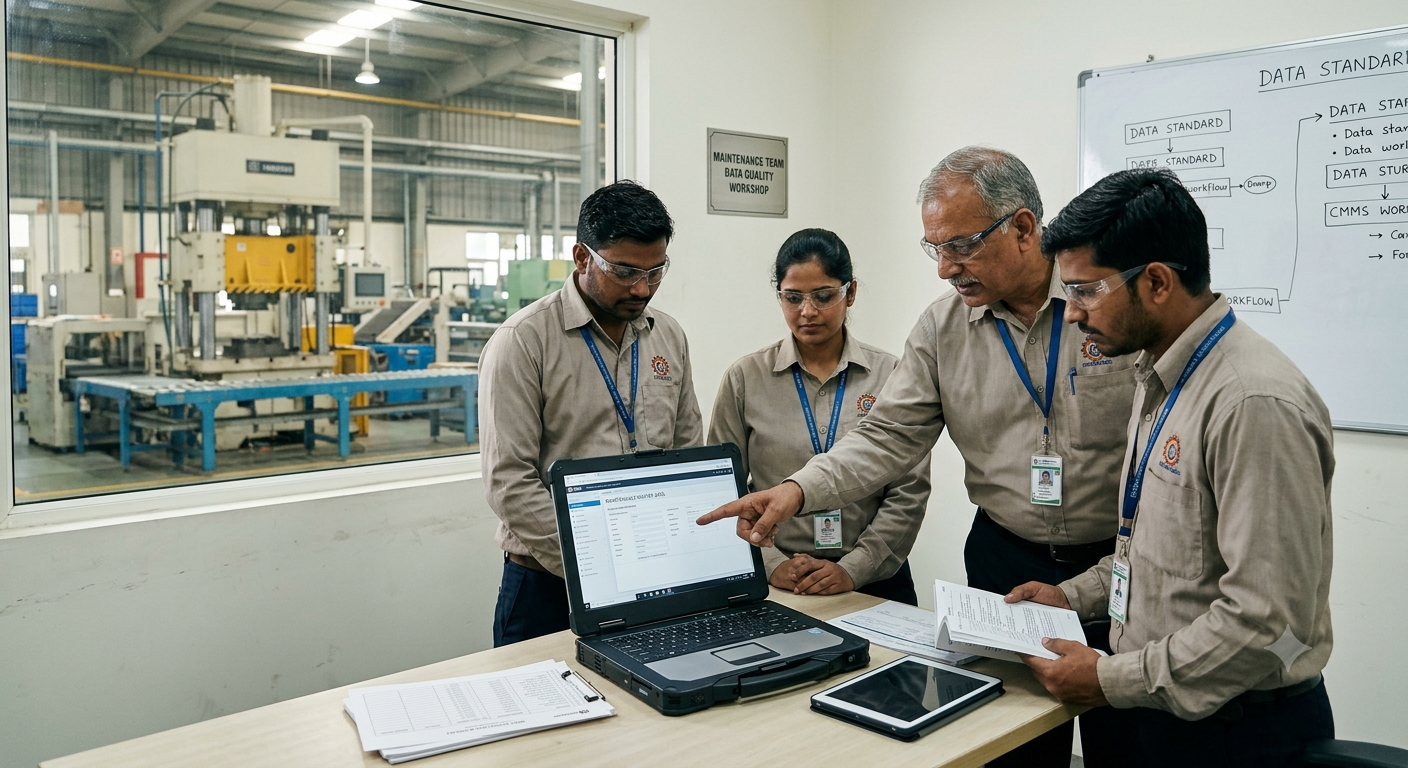
How CMMS Training Can Improve the Quality of Maintenance Master Data
Maintenance master data is one of the most important foundations of an effective asset management strategy, yet it is often one of the most overlooked areas of maintenance improvement. Asset registers, equipment hierarchies, functional locations, bills of materials, maintenance plans, spare parts records, failure codes, task lists, and technical specifications all depend on accurate and consistent master data. When this information is incomplete, duplicated, outdated, or incorrectly structured, maintenance teams can struggle to plan work, analyse equipment performance, manage spare parts, and make reliable decisions. A Computerised Maintenance Management System, commonly known as a CMMS, can provide a powerful platform for managing this information, but the software itself cannot guarantee data quality. The quality of the information inside the system depends heavily on the knowledge, discipline, and practices of the people responsible for creating and maintaining it. This is why effective CMMS training should be considered an important component of any strategy focused on improving maintenance master data quality.
Understanding Maintenance Master Data
Maintenance master data refers to the relatively stable information that supports the ongoing execution and management of maintenance activities. It can include asset identification numbers, equipment descriptions, manufacturers, model numbers, serial numbers, technical characteristics, locations, criticality classifications, maintenance strategies, spare parts relationships, and standard maintenance tasks. Unlike transactional records such as completed work orders, master data provides the structural foundation on which maintenance transactions are performed. If an asset is incorrectly classified or linked to the wrong functional location, every subsequent maintenance activity involving that asset can potentially be affected. Poor master data can also make historical maintenance information difficult to interpret because similar assets may be recorded under inconsistent names or identifiers. For this reason, improving maintenance master data should be treated as a core element of maintenance management rather than as a simple data entry exercise.
Why CMMS Training Matters
A CMMS is only as effective as the processes and people supporting it, which means training plays a significant role in determining the reliability of the information stored within the system. Employees need to understand not only how to navigate screens and enter records, but also why particular data fields, structures, naming conventions, and relationships matter. Without this understanding, users may enter information according to personal preferences, resulting in inconsistent records across departments and sites. Proper training helps employees recognise the difference between essential master data and optional information while also showing them how their individual data entry decisions influence planning, reporting, procurement, reliability analysis, and asset performance management. It also establishes a common vocabulary that allows maintenance planners, engineers, technicians, stores personnel, and asset managers to work from the same information structure. By developing this shared understanding, organisations can reduce the variations that commonly undermine CMMS data quality.
Establishing Consistent Asset Naming Conventions
One of the most common master data problems occurs when different users describe the same type of equipment in different ways. A pump might be entered as "water pump," "pump water," "WP," or by a manufacturer-specific description, making it difficult to search, group, analyse, or report on similar assets. CMMS training can teach users how to apply standard naming conventions based on agreed organisational rules. Training can also explain the relationship between asset descriptions, equipment types, functional locations, tag numbers, and parent-child structures. When employees understand how these fields are intended to work together, they are less likely to create unnecessary variations or duplicate records. Standardised naming makes asset information easier to find and improves the reliability of maintenance reports and performance analysis.
Improving Asset Hierarchy Structure
A well-designed asset hierarchy provides a logical representation of how physical assets are organised within a facility, production process, or infrastructure network. It may connect sites to areas, areas to systems, systems to equipment, and equipment to components or subassemblies. Incorrect hierarchy structures can make it difficult to understand where failures occur and can distort maintenance costs when work is recorded against the wrong asset level. CMMS training can demonstrate how hierarchy design affects work management, cost reporting, reliability analysis, and maintenance history. Users can learn when information should be associated with a parent asset, a child asset, a functional location, or a specific maintainable item. This understanding helps prevent the gradual deterioration of asset structures that can occur when users create records without considering the wider information architecture.
Strengthening Equipment Identification
Reliable asset identification is essential for ensuring that maintenance activities are performed against the correct equipment. Training should therefore cover the appropriate use of asset numbers, tag numbers, serial numbers, equipment types, manufacturers, model references, and other identifiers. Users need to understand that these identifiers serve different purposes and should not be treated as interchangeable fields. A technician who understands the identification structure is more likely to select the correct asset when creating a work request or completing a work order. Maintenance planners can then use the resulting history with greater confidence when evaluating recurring failures, maintenance costs, and equipment performance. Consistent identification also reduces the risk of duplicate equipment records that can fragment maintenance history across multiple CMMS entries.
Improving Bill of Materials Accuracy
Equipment bills of materials provide an important connection between assets and the components or spare parts required to maintain them. If these relationships are incomplete or inaccurate, technicians may have difficulty identifying the correct parts, while stores teams may struggle to forecast demand. CMMS training can help maintenance personnel understand how equipment bills of materials should be structured and maintained. Users can learn how to distinguish between interchangeable parts, consumable items, critical spares, and components that belong to specific equipment configurations. Training can also reinforce the importance of reviewing bills of materials after equipment modifications, replacements, and engineering changes. Maintaining these relationships accurately improves maintenance preparation and creates a stronger connection between asset management, materials management, and procurement.
Reducing Duplicate and Inconsistent Records
Duplicate master data is a major source of confusion within maintenance systems because multiple records can represent the same physical asset, spare part, or equipment type. These duplicates can arise when users lack clear procedures for searching existing records before creating new ones. CMMS training can teach employees how to conduct effective searches using different identifiers, descriptions, classifications, and attributes before adding new records. It can also explain the consequences of duplication, including fragmented maintenance histories, inaccurate inventory information, misleading reports, and inflated asset counts. When users understand the operational consequences of duplicate records, they are more likely to follow established data creation procedures. Over time, this discipline can significantly improve the integrity and usability of the maintenance database.
Supporting Better Maintenance Strategy Data
Maintenance master data is closely connected to the maintenance strategies applied to individual assets. Preventive maintenance schedules, inspection requirements, lubrication tasks, condition monitoring activities, and statutory requirements all depend on accurate information about equipment and its operating context. CMMS training can help users understand how maintenance strategies should be associated with the correct assets and how standard task information should be structured. This is particularly important when organisations use equipment classes or templates to establish maintenance programs across groups of similar assets. Incorrect or poorly structured strategy data can lead to excessive maintenance on some assets while other assets receive insufficient attention. Better training allows maintenance professionals to build and maintain strategies that are more closely aligned with equipment function, failure modes, criticality, and operating requirements.
Developing Data Ownership and Accountability
Data quality improves when organisations clearly establish who is responsible for creating, reviewing, approving, and maintaining different categories of master data. Without defined ownership, everyone may assume that someone else is responsible for correcting inaccurate information. CMMS training can incorporate these responsibilities into the wider maintenance management process so that users understand their role in maintaining data integrity. Maintenance planners may be responsible for certain planning parameters, engineers may control technical attributes, stores personnel may maintain material information, and asset managers may oversee broader asset structures. Clear accountability creates a governance framework in which data quality becomes part of normal work rather than an occasional cleanup activity. When responsibilities are understood and supported by appropriate training, organisations can maintain higher-quality master data over the long term.
Connecting Training With Data Governance
CMMS training becomes significantly more effective when it is connected to formal maintenance data governance. Data governance establishes the rules that determine how information is created, classified, validated, changed, reviewed, and retired. Training provides the practical knowledge required for employees to apply those rules correctly during daily maintenance activities. A governance framework can define naming standards, mandatory fields, approval workflows, classification structures, duplicate prevention procedures, and data quality requirements. Training can then translate those requirements into practical behaviours that users can apply while working within the CMMS. This combination creates a stronger control environment because employees understand both the technical process and the business reason behind each data requirement.
Improving Data Quality Through Practical Training
Effective CMMS training should not rely entirely on theoretical demonstrations because master data quality problems are often best understood through realistic maintenance scenarios. Employees can be trained using examples involving incorrectly identified equipment, duplicate assets, incomplete specifications, inaccurate bills of materials, and poorly structured maintenance plans. These scenarios allow users to see how seemingly small data errors can affect downstream maintenance activities. Practical exercises can also demonstrate how a technician's work order entry eventually influences reliability analysis, management reporting, spare parts planning, and maintenance optimisation. This approach makes the consequences of poor data more tangible and encourages users to treat data entry as an operational responsibility. Over time, practical training can help transform master data management from an administrative task into an integral part of professional maintenance practice.
Training Maintenance Planners and Reliability Professionals
Maintenance planners and reliability professionals have particularly important roles in maintaining high-quality CMMS master data because they frequently interact with asset structures, maintenance strategies, task lists, failure information, and historical records. Their decisions influence how maintenance work is planned and how equipment performance is analysed over time. Advanced CMMS training can help these professionals understand data relationships rather than simply individual fields within the system. They can learn how poor asset classification affects reliability calculations, how inconsistent failure coding affects analysis, and how inaccurate equipment relationships can distort maintenance costs. This broader understanding allows planners and reliability professionals to identify data problems before they become embedded in recurring maintenance processes. It also encourages a more systematic approach to continuous improvement.
Training Technicians to Protect Data Quality
Technicians are often among the most important contributors to CMMS data quality because they interact directly with equipment and generate large volumes of maintenance information. Their observations can provide valuable information about equipment condition, failure symptoms, component replacements, operating abnormalities, and completed maintenance tasks. However, this information is only useful when technicians know how to record it consistently and accurately. CMMS training can show technicians how to select the correct assets, use standard failure and cause codes, record meaningful completion information, and identify changes that require master data updates. When technicians understand that their entries become part of the asset's permanent maintenance history, they are more likely to provide useful and accurate information. This creates a feedback loop in which field experience continuously improves the quality of the maintenance database.
Using Data Quality Checks as Part of Training
Organisations can strengthen CMMS training by teaching employees how to recognise common data quality indicators. These indicators may include missing mandatory fields, duplicate equipment records, inconsistent descriptions, obsolete assets, incomplete bills of materials, invalid classifications, and maintenance plans without appropriate task content. Training users to identify these issues encourages them to participate actively in data quality management instead of relying exclusively on a central administrator. Regular data quality reviews can then become part of maintenance management routines. Employees can use established rules to identify records requiring correction, validation, approval, or retirement. This creates a continuous improvement cycle in which training, data governance, system usage, and maintenance performance reinforce one another.
Supporting Asset Lifecycle Management
Master data quality should not be viewed as something that matters only when an asset is initially entered into the CMMS. Asset information changes throughout the lifecycle as equipment is modified, refurbished, relocated, replaced, upgraded, or decommissioned. CMMS training can help employees understand how these lifecycle events should be reflected in the maintenance database. Training can also explain the importance of preserving historical information while updating current asset status and configuration. When lifecycle changes are not captured correctly, organisations can end up maintaining obsolete equipment records or losing important historical relationships. Strong lifecycle data practices therefore help ensure that the CMMS remains an accurate representation of the physical asset base throughout its useful life.
The Relationship Between Master Data and Maintenance Performance
High-quality master data can have a direct influence on maintenance performance because reliable information supports better planning and decision-making. Accurate asset structures allow maintenance teams to identify where work is required and where costs are being generated. Reliable equipment classifications make it easier to compare similar assets and identify recurring problems across a population of equipment. Complete spare parts relationships improve work preparation and reduce the likelihood of delays caused by unavailable or incorrectly identified components. Consistent maintenance strategy information also supports more effective preventive and predictive maintenance programs. By improving the quality of the information used throughout these processes, CMMS training can contribute to better maintenance execution and stronger asset performance.
Building a Culture of Data Discipline
Technology alone cannot create a strong maintenance data culture because data quality ultimately depends on human behaviour and organisational discipline. Employees need to understand that maintenance data is an operational asset rather than merely information stored inside software. CMMS training provides an opportunity to establish this mindset by connecting individual data entry decisions to broader business outcomes. When employees recognise that accurate data supports safety, reliability, cost control, planning efficiency, spare parts availability, and management decision-making, they are more likely to treat data quality seriously. Managers can reinforce this culture by incorporating data quality expectations into maintenance procedures, performance reviews, audits, and improvement programs. A consistent culture of data discipline can prevent many of the problems that would otherwise require expensive database cleansing projects later.
Continuous Improvement Through Ongoing Training
A single CMMS training session is rarely sufficient to maintain high-quality master data because maintenance systems, equipment configurations, organisational structures, and business requirements change over time. New employees need onboarding, existing employees may require refresher training, and advanced users may benefit from specialised training in areas such as reliability analysis, maintenance optimisation, asset hierarchy design, and data governance. Periodic training can also be used to address recurring data quality problems identified through audits and system reports. This creates an opportunity to use actual organisational data issues as learning material for future training sessions. Continuous development ensures that employees remain aligned with current processes and understand how changes to the CMMS should influence their working practices. In this way, training becomes an ongoing mechanism for protecting and improving the value of maintenance master data.
Developing Professional CMMS Competence
Professional development in CMMS usage should extend beyond learning where to click within the system. Maintenance professionals need to understand the principles of asset information management, data structures, maintenance workflows, reliability concepts, and lifecycle management that sit behind the technology. Training that combines these disciplines can help employees make better decisions when creating or modifying master data. It can also improve communication between maintenance, engineering, operations, procurement, stores, and asset management teams because each function gains a clearer understanding of how its information affects other parts of the organisation. Our approach to maintenance education recognises that competent people are essential to achieving sustainable improvements in maintenance performance. Developing CMMS competence therefore means developing the capability to manage maintenance information as a strategic business resource.
CMMS training can make a substantial contribution to the quality of maintenance master data when it is designed around real maintenance processes rather than limited to software navigation. It can help users establish consistent naming conventions, build reliable asset hierarchies, reduce duplicate records, maintain accurate bills of materials, improve maintenance strategies, and strengthen asset lifecycle information. It can also clarify data ownership and encourage technicians, planners, engineers, stores personnel, and asset managers to recognise their individual responsibilities for data quality. The strongest results occur when training is combined with clear data governance, defined standards, practical workflows, quality checks, and continuous improvement. Organisations that invest in these capabilities can turn their CMMS from a basic maintenance record system into a dependable source of asset intelligence. At Terotechnica, we believe that effective maintenance training should develop not only software skills but also the professional judgement required to create, maintain, interpret, and improve the information on which modern asset management depends.