

Courses (30)
S811: Water Treatment Plant Operation and Maintenance
Water treatment is a very serious and emotive issue at this time
 This topic is continuously in the news. Local governments struggle to operate and maintain water treatment plants successfully. Some large industrial organisations have the same problem. In the meantime the environment and consumers of water are at risk.
 The need for operations and care of different production plants is similar – i.e. the operational and maintenance principles are the same. Yet, water treatment plants clearly do have many aspects that are unique.
The course touches on both operations and maintenance issues. Its objective is to train both operations staff and maintenance staff. What's more, it deals with both fresh water supply plants and wastewater treatment plants.
The course addresses the following areas:
Day 1: Water Treatment and Maintenance Principles: Nature’s water treatment cycle, Water quality requirements, Water treatment system overview, Wastewater sources, Maintenance Principles: The maintenance function in context, Principles of Preventive Maintenance, Plant Inspection.
Day 2: Water Treatment Technology: Operation and Maintenance I: Water intake and screening, Coagulation and Flocculation, Sedimentation, Biological Treatment, Filtration, Disinfection, Distribution, Discharge Effluent, Maintenance of Water Plant components: Pump Maintenance, Pipeline Maintenance, Maintenance of Civil Structures, Lubrication, Corrosion Control, Machinery Alignment, V-belt drives, Flexible Couplings, Electric Motors, Control Components, Lighting.
Day 3: Water Treatment Technology: Operation and Maintenance II: Water Delivery Quality, Monitoring water quality, Advanced treatment of Wastewater, Membrane Separation Technologies, Ion Exchange, Solids Management.
Course Content
|
Day 1 - Water Treatment and Maintenance Principles
|
Day 2 - Water Treatment Technology: Operation and Maintenance 1
|
Day 3 - Water Treatment Technology: Operation and Maintenance 2
|
 Who Should Attend
The course is intended for both operations and maintenance staff. It is also meant for managing staff.
|
Credits 8*, level 5** * The course comprises 40 hours of study, of which 24 hours are in class, with a further 16 hours for the assignment. **Occupational Certificate level |
Textbook Provided
|

S805: Maintenance Control
Good control makes success a snap!
 Maintenance Control is the twin of Maintenance Planning. Without control the maintenance plan that was created may never be achieved.
Maintenance Control is the function that ensures that good results are achieved. Without proper control you are only hoping for the best. With good control, you set the seal on quality maintenance.
One gets the idea that maintenance control is not regarded as important in most courses – including our own. Maintenance planning is seen as important by most. Some highlights ideas such as Total Productive Maintenance (TPM). Others stress methods such as Reliability Centred Maintenance (RCM). Course upon course insist on these as solutions to all maintenance problems.
Undoubtably, these are important! But they can never be separated from good control. Control is the 'cherry on the cake' of a good plan. It makes sure that the objectives of the plan have been met.
 Good control has four elements:
- Strategic steering of maintenance.
- Tactical steering of the maintenance actions - this is based on a good maintenance plan.
- Sound performance management.
- Operational planning and control.
Most organisations focus on only one or two of these elements. This leads to them only achieving mediocre results - excellence is only to be had by those who both plan and control well.
The objective of this course is to rectify this situation. Remember, good control is the 'cherry on the cake'!
Course Content
|
Day 1 - Maintenance Control Basics
|
Day 2 - Advanced aspects of Maintenance Control
|


Who Should Attend
The course is intended for maintenance practitioners who want to improve their organisation's performance in this very important area.
|
Credits 6*, level 5** CPD Points: 2 * The course comprises 30 hours of study, of which 16 hours are in class, with a further 14 hours for the assignment. **Occupational Certificate level
|
Textbook Provided
|

S804: Decision Making in Maintenance
 Asset Management / Maintenance is not for sissys. Fortunately, there are tools available to make us heroes.
Asset Management / Maintenance practitioners are often faced with situations where they need to take challenging decisions. Such decisions are mostly based on limited information and years of experience. While experience and gut feel are invaluable in such situations, it can often be enhanced by good analysis.
Typically, maintenance decisions require the evaluation of alternative solutions in terms of various maintenance criteria such as cost, failure history, time to repair, time to failure and uptime.
 The course Decision-making in Maintenance is aimed at providing such analysis tools. Specifically, it addresses the following decision making areas:
- Preventive maintenance decisions
- Component replacement decisions
- Asset replacement decisions
- Repairable Systems decisions
- Condition Based Maintenance decisions
- Maintenance resource decisions
- Outsourcing decisions
The course intends to enable maintenance practitioners to be able to:
- Use a variety of mathematical and statistical techniques to assist them in maintenance decision making.
- Apply the techniques of component replacement decision-making, reconditioning decision-making, and equipment replacement decision-making to limited scale problems, using standard student copies of commercially available software.
- Develop proper maintenance strategies for the assets under their care.
- Do basic failure analyses.
- Find the optimal replacement age of components.
- Develop an essential understanding of capital replacement decision making models and techniques.
Course Content
|
Day 1
|
Day 2
|
Day 3
|
|
Day 4
|
Day 5
|
 Who Should Attend
The course is intended for maintenance managers, maintenance engineers and other maintenance personnel who need to make important maintenance decisions regarding the different aspects of maintenance (both managerial and technical decisions).

Important note: Laptop computer required – refer to terms and conditions on Course Registration form, and footnote on the Course Listing.
|
Credits 12*, level 6** CPD Points: 2 * The course comprises 60 hours of study, of which 40 hours are in class, with a further 20 hours preparation for tests and a final examination. **Higher Diploma level |
Textbooks Provided
|

S803: Root Cause Failure Analysis
Root Cause Analysis is one of the most potent tools in the fight against failure
 Root Cause Analysis is used in a routine way in most medical situations. It is recognised that a symptom has an immediate cause, which can in turn be caused by a deeper seated problem. Physicians also understand that you cannot just jump in and start treating the symptoms. You need to stop to consider whether there's actually a deeper problem that needs your attention.
If you only address the symptoms – what you see on the surface – the problem will almost certainly happen again... which will lead you to re-address the same symptoms, again, and again, and again. If, instead, you look deeper to find out why the problem is occurring, you can remedy the underlying systems and processes that cause the problem.
We in maintenance also work with 'patients', machine patients. In the same way as with patients in the medical case, we have to find problems through the use of Root Cause Analysis.
Root Cause Analysis seeks to identify the origin of a problem. It uses a specific set of steps, with associated tools, to find the primary cause of the problem, so that you can:
- Determine what happened.
- Determine why it happened.
- Decide on an action to reduce the risk of it happening again.
 Root Cause Analysis typically leads to one or more of the following three basic types of causes:
- Physical causes – something physical failed or stopped working.
- Human causes – somebody did something wrong, made a judgment error.
- Organisational causes – a system, process, or policy that people use to make decisions or do their work is inadequate.
The course's main aim is to equip course participants with sufficient skills to be able to do the following:
- Put in place a group of people with the necessary qualities to perform Root Cause Analyses successfully.
- Define the problem clearly and unambiguously.
- Perform the required data assembly through learnt investigation and exploration techniques.
- Find the root cause through various techniques, including cause and effect diagrams, and the 5M method.
- Generate solutions to the problem, find the best solution, implement the solution.
The accent of the course is on practical application through group work. The purpose of this is for students to internalise the method well.
Course Content
|
Module 1 – Problem Solving Fundamentals
|
Module 2 – Failure Cause Analysis Fundamentals
|
Module 3 – Principles of RCFA
|
|
Module 4 – Getting RCFA to Work
|
Module 5 – RCFA Workshop
|
Who Should Attend
The course is intended for maintenance people who need to cope with maintenance problem situations.


|
Credits 12*, level 5** CPD Points: 5 * The course comprises 60 hours of study, of which 40 hours are in class, with a further 20 hours for the assignment. **Occupational Certificate level |
Included with this course: See www.hbdi.com |
|

S802: Asset Management for Executives
Knowledge is necessary to steer the Asset Management / Maintenance function successfully
 Asset Management / Maintenance is inescapably part of the production success of any business. As such it is dependent on machinery or buildings to generate a profit or service.
Those people steering such organisations inevitably need some knowledge of the Asset Management / Maintenance function. Such knowledge will enable them to steer the Asset Management / Maintenance function successfully.
This course was specifically designed with these top managers in mind.

More and more courses on various Asset Management / Maintenance topics become available. The Asset Management world is being reshaped through the application of new techniques and philosophies being presented at such courses.
However, the lack of knowledge higher up in the organisation often limits the possibility of achieving success through such improvement drives.
Some of the executives who should provide the necessary co-ordination are not able to do so because of their own lack of understanding of the processes involved.
|
This course is meant to provide in this important need:
Use the strategy tree to guide you regarding what maintenance to perform to reduce the incidence of critical failure modes:
and use the Maintenance Strategy Triangle to decide how to develop success-producing maintenance strategy for your organisation:
|
Course Content Module 1 – Asset Management Fundamentals
|
|
|
Module 2 – Maintenance Engineering Fundamentals
|
||
|
Module 3 – Advanced Asset Management Concepts
|
||


Who Should Attend
The course is intended for all who need to have a total overview of the modern Asset Management / Maintenance function and the newest maintenance philosophies and techniques.
The accent is on the (strategic) needs of top ranking Asset Management / Maintenance and Production executives.
|
Credits 8*, level 6** CPD Points: 3 * The course comprises 40 hours of study, of which 24 hours are in class, with a further 16 hours for the assignment. **Higher Diploma level |
|
Textbook Provided |

S801: Reliability Centred Maintenance
RCM is the best tool available to decide what maintenance to do to your equipment
 RCM = Reliability Centred Maintenance. The maintenance of physical assets needs to be scientifically determined based on reliability considerations. Reliability stands at the centre. This is the principle that improved the safety of modern jet liners and many industries to the level which improves the quality of our lives greatly.
Modern production equipment design is complex. It thus needs to be maintained scientifically. So how do you decide what maintenance to do on your critical production equipment? By deciding which failures are the ones that matter and then designing maintenance tasks for them.
The maintenance suggested by the manufacturer of your equipment often leads to one of two things. These are respectively over-maintenance or under-maintenance.
The reasons for this is:
- The manufacturer does not understand your specific production circumstances.
- The manufacturer is often over-conservative in their approach to ensure that their good name is preserved. This leads to unnecessary expensive maintenance.

Reliability Centred Maintenance (RCM) has become an industry standard. It is the tool of choice for the design and development of effective maintenance plans.
One of the key drives behind RCM was to assure a high level of safety performance. The safety record of modern passenger airliners bears this out. Similar success has been achieved in many industries using RCM.
Courses in RCM
We present two courses in RCM: C903 and S801. They provide a good theoretical and practical base for the use of the RCM technique.
The difference between the two courses are:
- The three day short course (S801) teaches RCM as technique.
- The five day course (C903) adds two days. These two days essentially adds facilitation skills to S801.
Course Content
|
Module 1 – RCM Principles
|
Module 2 – Select Failure Modes
|
Module 3 – Select Maintenance Tasks
Workshop: Use the techniques learnt to develop a maintenance plan for an example technical system. Note:This short course forms the first three days of the RCM Facilitation course (C903) |
 |
Who Should Attend The C903 course is recommended for facilitators of RCM sessions. The S801 course is meant for participants in RCM design sessions. Any person who needs to apply the RCM logic to a system or parts of a system will also benefit from any of the two courses. |
|
Important note: Laptop computer required – refer to terms and conditions on Course Registration form, and footnote on the Course Listing.
|
Credits 8*, level 6** CPD Points: 3 * The course comprises 40 hours of study, of which 24 hours are in class, with a further 16 hours for the assignment. **Higher Diploma level |
|
Textbook Provided |
C903: RCM Facilitation and Analysis
RCM is the best tool available to decide what maintenance to do to your equipment
 RCM = Reliability Centred Maintenance. The maintenance of physical assets needs to be scientifically determined based on reliability considerations. Reliability stands at the centre. This is the principle that improved the safety of modern jet liners and many industries to the level which improves the quality of our lives greatly.
Modern production equipment design is complex. It thus needs to be maintained scientifically. So how do you decide what maintenance to do on your critical production equipment? By deciding which failures are the ones that matter and then designing maintenance tasks for them.
The maintenance suggested by the manufacturer of your equipment often leads to one of two things. In some cases the manufacturer's recommendations lead to over-maintaining the equipment and in other cases under-maintaining them.
The reasons for this are:
- The manufacturer does not understand your specific production circumstances.
- The manufacturer is often over-conservative in their approach to ensure that their good name is preserved. This leads to unnecessary expensive maintenance.
 Reliability Centred Maintenance (RCM) has become an industry standard. It is the tool of choice for the design and development of effective maintenance plans.
One of the key drives behind RCM was to assure a high level of safety performance. The safety record of modern passenger airliners bears this out. Similar success has been achieved in many industries using RCM.
Courses in RCM
We present two courses in RCM: C903 and S801. They provide a good theoretical and practical base for the use of the RCM technique.
The difference between the two courses are:
- The three day short course (S801) teaches RCM as technique.
- The five day course (C903) adds two days. These two days essentially adds facilitation skills to S801.
Course Content
|
Module 1 – RCM Principles
|
|
Module 2 – Select Failure Modes
|
|
Module 3 - Select Maintenance Tasks
Workshop: |
|
Module 4 – Compile Maintenance Plan, RCM Living Programme
|
|
Module 5 – RCM Facilitation Workshop: |
|
|
Who Should Attend
The C903 course is recommended for facilitators of RCM sessions. The S801 course is meant for participants in RCM design sessions. Any person who needs to apply the RCM logic to a system or parts of a system will also benefit from any of the two courses.
Important note: Laptop computer required – refer to terms and conditions on Course Registration form, and footnote on the Course Listing.
|
Credits 16*, level 6** CPD Points: 5 * The course comprises 80 hours of study, of which 40 hours are in class, **Higher Diploma level |
|
Textbook Provided
|
C902: Leadership in Asset Management
Leadership in Asset Management presents a considerable challenge, which needs to be taken up with the necessary skills in the pocket
 The Asset Management / Maintenance function intends keeping the Physical Assets in its care in a good operational condition. Its objective is to sustain a high level of Operational Readiness (Availability, Reliability, Operability, and Qualibility), at acceptable levels of Safety, Environmental Risk, and Cost.
Leadership in Asset Management involves leading the functions of Asset Management / Maintenance. It particularly keeps itself busy with achieving success through people. The objective of its companion course, C901, is to equip engineers with knowledge regarding the strategic and tactical aspects of Asset Management / Maintenance Engineering.
Even so, C901 cannot include all the necessary learning to prepare an individual to be a top class Asset Manager / Maintenance Manager. C902 fulfills that purpose. The two together produce the foundation for Asset Management Excellence and Career Progression.
Leading the Asset Management function needs considerable skill. It is much more than just managing technical results. Asset Managers need to steer the function to have the greatest effect on the output of the organisation.
To achieve this the Asset Manager should:
- Understand the Asset Management / Maintenance function and the factors causing success well.
- Be able to analyse and understand maintenance situations.
- Have a good knowledge of modern management methods.
- Understand that success comes through people.
This course aims to provide the skills, knowledge, and innovative capacity to practicing Asset Managers / Maintenance Managers to make them into successful achievers. This includes addressing and teaching them knowledge and vocational insight into issues such as:
- The profit impact of a properly run Asset / Maintenance department.
- The challenges and dilemmas inherent to maintenance today; how to manage it, understanding the ‘New Maintenance Management Paradigm’.
- Classical Management Theory as a basis for success.
- Leadership and its critical role in maintenance.
- Achieving personal mastery, so as to be enabled to lead others successfully.
- Maintenance logistics - the ‘logics’ of the maintenance organisation - its role in achieving a successful maintenance department.
- Creating and maintaining a workplace culture that fosters success.
- Managing and developing a workforce to achieve success.
Course Content
|
Module 1 – Understanding Asset
|
Module 2 – The New Asset Management Paradigm
|
Module 3 – Leadership
|
|
Module 4 – Maintenance Logistics
|
Module 5 – Culture the Binding Force
|
Module 6 – Successful People Management
|

Who Should Attend
The course is intended for Asset Managers, Maintenance Managers, Maintenance Engineers, and all others who manage the Asset Management / Maintenance function.
|
Credits 16*, level 6** CPD Points: 5 * The course comprises 80 hours of study, of which 40 hours are in class, **Higher Diploma level |
|
Textbook Provided
|
C901: Maintenance Practice for Asset Management Engineers
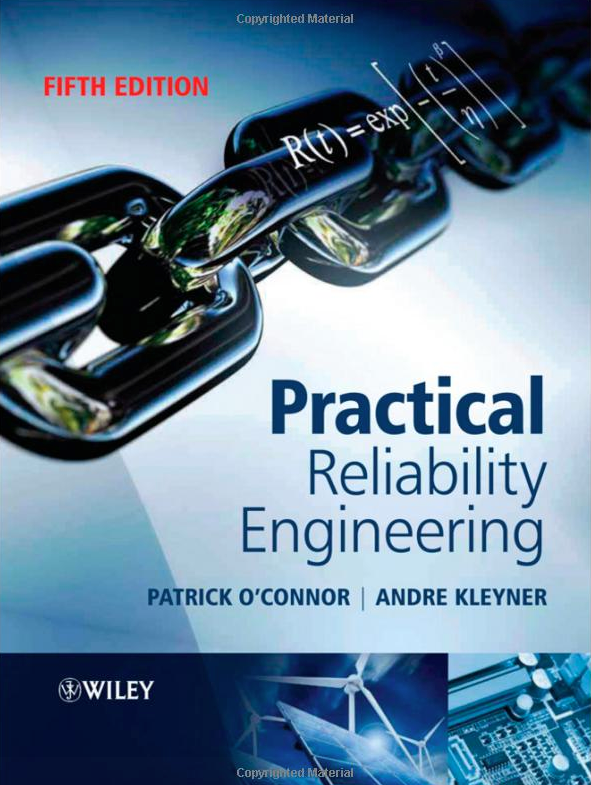
C702: Reliability Engineering in Asset Management
Reliable equipment produces sustainable production and safety results

Reliability is a built-in design feature of any physical asset. The designer makes decisions that influence the reliability of the machine/system in a major way. These decisions cannot be significantly changed during the operating and maintenance phase (the working life of the asset) without rebuilding the asset.
Naturally, achieving the designed-in reliability requires that the asset be maintained and operated so that failures are managed and their consequences minimised. This goes without saying, but does not change the fact that we cannot fundamentally improve the built-in reliability of the system in a major way.
 If the machine is not maintained properly, the built-in reliability of the system will be affected negatively. Although reliability cannot be fundamentally improved through maintenance, it can at least be preserved by the appropriate quality maintenance actions. This can be achieved in two ways, namely by ensuring that the right maintenance actions are taken, and that these maintenance actions are carried out diligently and in a professional manner by the maintenance staff.
Asset Management / Maintenance engineers need to be the operating company's experts on the subject of reliability. They are firstly necessary to guard the reliability of operating equipment against degradation and abuse. Secondly, they should be the initiators of reliability improvement drives, leading to higher operating capability and thus profit.
Course Content
|
Module 1
|
Module 2
|
Module 3
|
|
|
Module 4
|
Module 5 (Day 5)
|

Who Should Attend
The course is intended for Asset Management Engineers, Maintenance Reliability Engineers, and Maintenance Engineers.
Important note: Laptop computer required – refer to terms and conditions on Course Registration form, and footnote on the Course Listing.

|
Credits 16*, level 6**
* The course comprises 80 hours of study, of which 40 hours are in class, with a further 40 hours to prepare for tests and the final examination. **Higher Diploma level.
|
|
Textbook Provided |
More...
C501: Maintenance Shutdown and Project Management
'Good maintenance project managers are both scarce and worth their weight in gold'
 Maintenance abounds with projects, originating from the objective of high plant uptime. These include a seemingly perpetual stream of small and not so small improvement projects requested by production, as well as those deemed necessary by observation of failure trends.
Furthermore, the nature of the equipment being maintained often necessitates grouping preventive maintenance actions into shutdown occasions, varying from a weekly maintenance shift to extended maintenance occasions, ranging from a few days to a week or more. As lost production time is expensive, these events need to be managed closely using project management principles. It is consequently necessary to have a sound knowledge of the subject.
 Short shutdown turnaround times are vital to profitability
Project and Shutdown Management embraces a variety of disciplines, including detailed project scheduling, task planning and control, purchasing control, cost control, and the ability to coordinate actions under highly pressurised circumstances.
The course in Shutdown and Project Management endeavours to provide the necessary theoretical foundation to equip maintenance people with the necessary skills to facilitate successful Maintenance Shutdowns and Project Management occasions. It is presented by a seasoned maintenance manager with extensive experience in this field.
 The course is presented in an alternating fashion, with hands-on practical sessions in the use of Microsoft Project, to facilitate project planning and control, being interspersed between successive project management foundational sessions. Course documentation includes a comprehensive course file, and the book 'Microsoft Project 2010 Step by Step' (or the older ‘Microsoft Project 2007 Step by Step’ until our stocks are depleted), by Carl S. Chatfield and Timothy D. Johnson, Microsoft Press.
Course Content
|
Module 1
|
Module 2
|
Module 3
|
|
Module 4
|
Module 5
|
Note: Hands-on work is based on the Microsoft Press book 'Microsoft Project 2010 Step by Step' (or the 2007 book until stock is depleted) by Carl S. Chatfield and Timothy D. Johnson, of which each student receives a copy.
Who Should Attend
The C501 course is primarily intended for maintenance managers (to manage maintenance shutdowns and maintenance projects), and secondly for maintenance planners (who need to plan shutdowns and maintenance projects).
Important note: Laptop computer required – refer to terms and conditions on Course Registration form, and footnote on the Course Listing.
|
Credits 16*, level 5** CPD Points: 5 * The course comprises 80 hours of study, of which 40 hours are in class, with a further 40 hours for the assignment. **Occupational Certificate level |
C302: Advanced Maintenance Planning
While the Maintenance Planning course (C301) fundamentally prepares a planner for the task of planning, more is required to ensure a high level of output from the planning function. This has led to many requests for an advanced course.
Maintenance planning is the function that ensures that the correct maintenance actions are performed to the right equipment at the right time, and having all necessary preparation and resources in place. It is furthermore arguably the function that ensures that all maintenance actions can be completed correctly and efficiently.

Make sure that your artisans are used efficiently by giving them tasks that are "ready to go" **
 Maintenance Planning is becoming more and more important to secure the success of maintenance actions. The theory and tools of maintenance planning are also becoming more sophisticated.
The Maintenance Planning course (C301) prepares planners to understand the first part of the planning process, namely Work Order Planning. But it does not address the process of preparing the Weekly Schedule, and it does not equip the planner with advanced capabilities, such as Task Design, and Work Measurement. These are provided in this advanced course. This course:
1. Completes the tuition of the planner regarding the full planning function.
2. Prepares he planner for taking the role of senior or head planner after gaining enough experience.
This course (C302) is ideally aimed at the further development of maintenance planners after they successfully completed the course in Maintenance Planning and had time to implement and integrate that knowledge in practice.
Who Should Attend
The course is intended for maintenance planners and those who manage them. Having attended and passed the C301 course is prerequisite for enolling for this course.
** Tasks that are "ready to go" are ones for which all the necessary resources (men, materials, permits, instructions, drawings, manuals, etc.) are available for the artisan to complete the task without delays.
Course Content
|
Module 1
|
Module 2
|
Module 3
|
|
Module 4
|
Module 5
|
|
Credits 16*, level 5** * The course comprises 80 hours of study, of which 40 hours are in class, with a further 16 hours of private study, and 24 hours for an assignment. **Occupational Certificate level |
Prerequisites: Completion of C301: Maintenance Planning |
C301: Maintenance Planning
If one compares maintenance to the human body, maintenance planning provides the thinking capacity that determines what work to do, and when, while the artisans provide the doing capacity of the hands and feet, and supervisors provide the controlling function of the brain, steering the hands and feet.
 Because nothing in life takes place before it has been thought through, no worthwhile maintenance task can take place before planning (naturally including any planning done by supervisors and artisans).
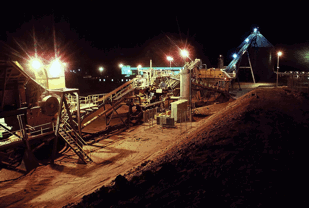 No worthwhile maintenance task can take place without good planning
Maintenance planning fulfils a crucial role in the organisation. Maintenance success is absolutely dependent on good scheduling of maintenance work, proper task planning, and timely procurement of parts and materials. The Maintenance Planner plays a critical role in achieving this essential outcome.
The course thus has as its purpose to prepare Maintenance Planners for this role. This includes training in the various scheduling techniques, such as simple time slot scheduling, detailed network scheduling of maintenance shutdowns and projects, as well as batch workshop scheduling. It also includes training in task planning methods, procurement methods, use of maintenance systems, task flow optimisation, maintenance information analysis, and the support of maintenance management through well defined and formatted reporting.
The course is extremely hands-on, allowing candidates to practice the skills learnt through practical application during four to five group assignments per day. This is augmented by an application project following course completion.
Course Content
|
Module 1
|
Module 2
|
Module 3
|
|
Module 4
|
Module 5
|
|
Credits 16*, level 5** * The course comprises 80 hours of study, of which 40 hours are in class, with a further 16 hours of private study, and 24 hours for the assignment. **Occupational Certificate level |
|
Who Should Attend
The course is intended for maintenance planners, maintenance supervisors, artisans and those who manage them.
The reason for including the wording 'those who manages them' in the sentence above is that we often find that some class of Asset Management / Maintenance people are sent on courses without the person managing them being able to activate their newly acquired knowledge after the course. What rather happens is that they are managed exactly in the same way as before the course, which often leads to the course not having the required effect.
Artisans are also specifically added above as the effect of maintenance planning and the information fed back to the Computerised Maintenance System is to a large extent dependent on their knowledgeability of, and support to, the Maintenance Planning function.
C201: Asset Management for Maintenance Supervisors
The Maintenance Supervisor needs to be able to get results through people
 It is certainly so that the technology, that the maintenance function maintains, needs a sophisticated approach to maintenance. However, there is a growing gap between this need and maintenance’s ability to fulfil it.
The person that plays a critical role in this is the maintenance supervisor. He/she must firstly understand and embrace modern maintenance technologies (such as Condition Based Maintenance, Laser Alignment, and Tribological Practice), methodologies (such as Reliability Centred Maintenance), and Systems.
Secondly, the role of maintenance workers implementing and effectively using these technologies, methodologies, and systems is critical to the success of the organisation. And the only person that can ensure that this does occur is the Maintenance Supervisor.
He/she should be able to get the best (sometimes even the almost impossible) from maintenance artisans and workers to ensure that this gap is closed properly.
 The problem is that maintenance supervisors are mostly appointed from amongst the artisan fraternity and have to supervise on the little knowledge regarding supervision that he/she gained from his/her previous supervisor(s). Although this often teaches one the negatives of wrong supervision and some of the positives, it is simply not enough to produce the supervisor that will get quality maintenance output through other people.
This course above all focusses on three aspects of supervision, namely to be open for new learning, getting results through people, and manage the facilities/resources to his/her disposal effectively. Its aim is to effectively motivate and equip the maintenance supervisor for his/her role in ensuring maintenance success.
Course Content
|
Module 1
|
|
Module 2
|
|
|
|
Module 3
|
Module 4
|
|||
|
Module 5
|
Who should attend
The course is intended for maintenance supervisors, maintenance charge hands, and artisans who have to perform supervisory relief.
|
|
|
Credits 12*, level 5** * The course comprises 60 hours of study of which 32 hours are in class, with a further 12 hours of private study, and 16 hours for an assignment. **Occupational Certificate level. |
|
 |
- You are here:
-
Home

-
Study Information
- Courses