
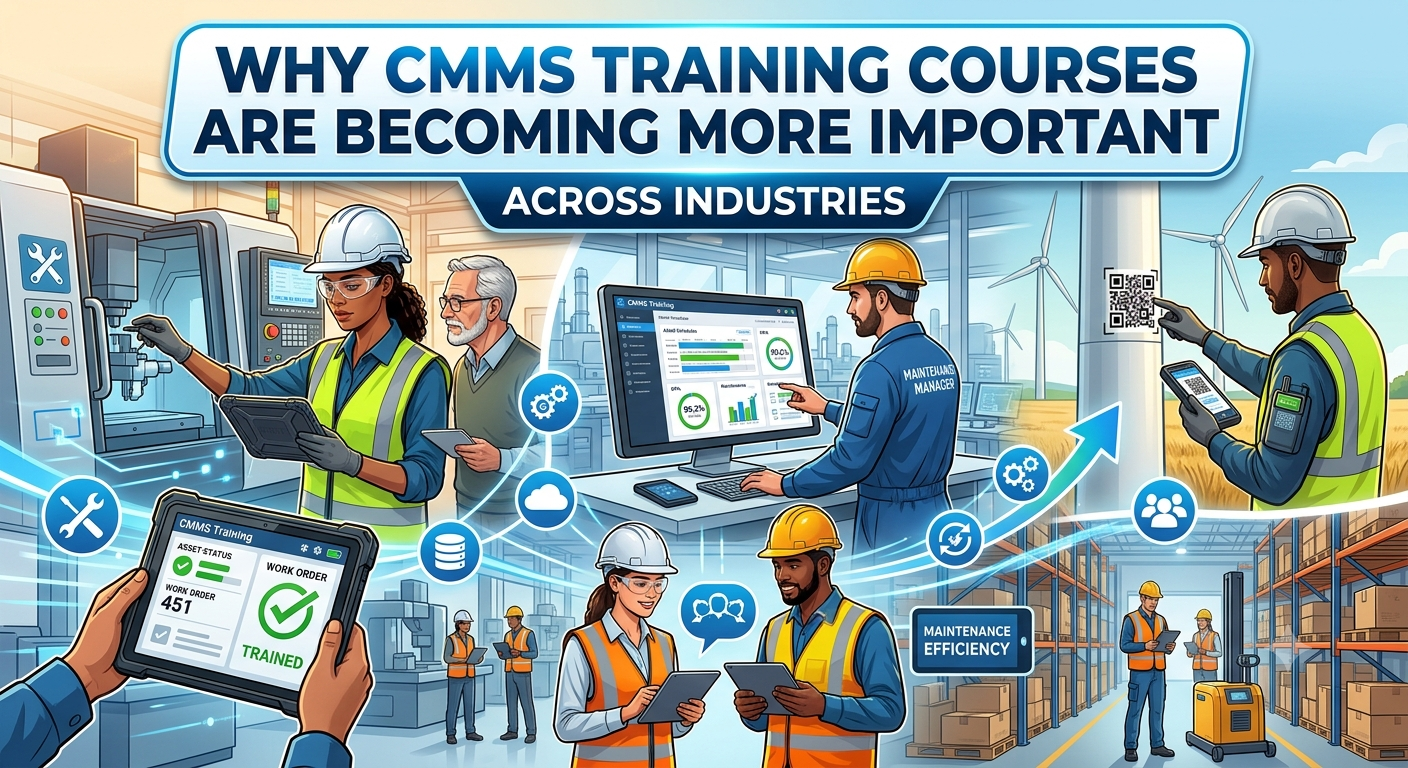
Why CMMS Training Courses Are Becoming More Important Across Industries
Modern industries are evolving at a pace that demands smarter maintenance strategies, better asset visibility, and stronger operational control. Organizations are no longer relying on outdated maintenance methods that depend heavily on paperwork, disconnected systems, or reactive repairs. Businesses today want reliability, efficiency, and data driven decision making. This shift is one of the biggest reasons why CMMS training courses are becoming increasingly important across industries.
Computerized Maintenance Management Systems have transformed the way organizations manage equipment, maintenance schedules, inventory, compliance, and asset performance. However, implementing software alone is not enough. Companies are realizing that the true value of a CMMS comes from the people who know how to use it effectively. This growing demand for skilled professionals has made CMMS education a critical part of workforce development.
At Terotechnica, we understand how industries are changing and why professionals need practical skills that align with modern asset management systems. As maintenance operations become more technology focused, organizations are actively searching for individuals who can confidently manage digital maintenance platforms and contribute to operational excellence.
The Growing Complexity of Industrial Operations
Industries such as manufacturing, energy, healthcare, transportation, aviation, mining, logistics, and facilities management operate with increasingly complex equipment and infrastructure. Downtime has become more expensive than ever before. A single equipment failure can disrupt production schedules, impact customer service, and lead to major financial losses.
To reduce these risks, companies are investing in preventive and predictive maintenance strategies supported by CMMS platforms. These systems help organizations schedule maintenance activities, track equipment history, manage spare parts, monitor work orders, and analyze performance data.
As these systems become central to operations, businesses need trained professionals who can properly configure, operate, and optimize them. Without adequate training, even advanced software can fail to deliver meaningful results.
Industries Are Prioritizing Asset Reliability
Asset reliability has become a major business priority. Companies are no longer viewing maintenance as a simple support function. Instead, maintenance is now recognized as a strategic driver of productivity, safety, and profitability.
Organizations want maintenance teams that can prevent failures before they occur. CMMS training equips professionals with the ability to create maintenance schedules, interpret asset data, improve equipment lifespan, and reduce unexpected breakdowns.
This is particularly important in industries where equipment reliability directly impacts safety and compliance. Hospitals rely on properly maintained medical equipment. Airlines depend on strict maintenance processes for aircraft safety. Manufacturing plants require uninterrupted machine performance to meet production targets. In all these environments, trained CMMS professionals play a crucial role.
Digital Transformation Is Changing Maintenance Careers
Digital transformation is no longer limited to office operations or customer service departments. Maintenance and asset management are now deeply connected to digital technologies. Smart factories, Industrial Internet of Things systems, automation, and real time monitoring tools are reshaping maintenance practices across the world.
As organizations adopt these technologies, maintenance professionals are expected to understand digital systems and data based maintenance workflows. CMMS training helps bridge the gap between traditional maintenance knowledge and modern digital practices.
Professionals who understand how to work with computerized maintenance systems are becoming more valuable in the job market. Employers are actively seeking candidates who can manage maintenance software, generate reports, analyze trends, and support data driven maintenance planning.
This growing demand is making CMMS education a strong career investment for technicians, engineers, supervisors, planners, and facility managers.
Better Maintenance Planning Requires Skilled Users
One of the biggest advantages of a CMMS is its ability to improve maintenance planning. Poor planning often leads to delayed repairs, unnecessary downtime, spare parts shortages, and increased labor costs.
Properly trained professionals can use CMMS platforms to organize maintenance schedules, prioritize critical assets, allocate resources effectively, and ensure maintenance tasks are completed on time.
Training also helps users understand how to collect accurate data and maintain system integrity. Reliable data is essential because organizations use CMMS reports to make important operational decisions. When users lack training, systems can quickly become filled with incomplete or inaccurate information, reducing their effectiveness.
At Terotechnica, we focus on helping learners understand not just the technical features of CMMS platforms but also the operational thinking behind effective maintenance management.
Compliance and Safety Requirements Are Increasing
Regulatory compliance is becoming stricter across many industries. Organizations must maintain accurate maintenance records, demonstrate equipment inspections, and prove that safety procedures are being followed consistently.
CMMS platforms simplify compliance management by storing maintenance histories, generating audit trails, and tracking inspection schedules. However, these benefits depend on users knowing how to operate the system correctly.
CMMS training helps professionals understand documentation practices, compliance tracking, and reporting procedures. This is especially important in industries such as pharmaceuticals, healthcare, food production, aviation, and energy, where compliance failures can lead to serious consequences.
Companies recognize that trained personnel reduce the risk of missed inspections, incomplete documentation, and non compliant maintenance practices.
Data Driven Decision Making Is Becoming Essential
Modern organizations rely heavily on data to improve operational performance. Maintenance departments are no exception. CMMS systems generate valuable information about asset reliability, maintenance costs, equipment downtime, labor productivity, and spare parts usage.
Without proper training, many organizations fail to fully utilize this data. Users may enter inconsistent information or overlook important analytical features.
CMMS training enables professionals to understand how to interpret maintenance data and turn it into actionable insights. This helps organizations identify recurring equipment problems, optimize maintenance schedules, reduce unnecessary costs, and improve overall operational efficiency.
Companies increasingly value employees who can combine technical maintenance knowledge with analytical thinking and software proficiency.
Workforce Development Is a Major Industry Focus
Many industries are facing skilled labor shortages and an aging workforce. Experienced maintenance professionals are retiring, creating a growing need for younger workers with updated technical capabilities.
Organizations are investing more in workforce development programs to prepare employees for modern maintenance environments. CMMS training courses are becoming a key part of these initiatives because they provide practical skills that can be applied immediately in the workplace.
Training also supports career advancement. Maintenance technicians who understand CMMS systems often move into supervisory, planning, reliability, or asset management roles more quickly than those without digital maintenance expertise.
As industries continue modernizing their operations, employees with strong CMMS knowledge are likely to remain in high demand.
Remote and Multi Site Operations Require Better Coordination
Many organizations now manage operations across multiple locations. Facilities may be spread across cities, regions, or even different countries. Coordinating maintenance activities in these environments requires centralized systems and standardized processes.
CMMS platforms make it possible to manage assets, work orders, and maintenance records across multiple sites. However, this level of coordination depends on trained users who understand system workflows and data management practices.
Training helps professionals work more efficiently within connected maintenance environments. It also improves communication between maintenance teams, operations departments, and management.
This is particularly important for industries such as logistics, retail chains, utilities, and large manufacturing organizations where consistency across locations is critical.
The Future of Maintenance Is Technology Driven
Maintenance management will continue evolving alongside advances in automation, artificial intelligence, predictive analytics, and connected asset technologies. CMMS platforms are expected to become even more sophisticated as organizations seek greater efficiency and operational intelligence.
Professionals who invest in CMMS training today are preparing themselves for the future of maintenance and asset management. They are building skills that align with industry trends and increasing their ability to adapt to technological changes.
At Terotechnica, we believe education should prepare professionals not only for current industry needs but also for future developments in maintenance and asset management. CMMS training is no longer optional for many industries. It has become an essential component of operational success and professional growth.
The growing importance of CMMS training reflects a larger transformation happening across industries worldwide. Organizations are moving toward smarter maintenance strategies, greater asset reliability, stronger compliance management, and more data driven operations.
As maintenance systems become increasingly digital, companies need professionals who can confidently manage and optimize these technologies. CMMS training provides the practical knowledge and technical understanding required to meet these expectations.
From improving equipment reliability to supporting compliance and operational efficiency, the value of trained CMMS professionals continues to grow. Industries recognize that successful maintenance management depends not only on technology but also on the expertise of the people using it.
This is why CMMS training courses are becoming more important than ever across modern industries.