
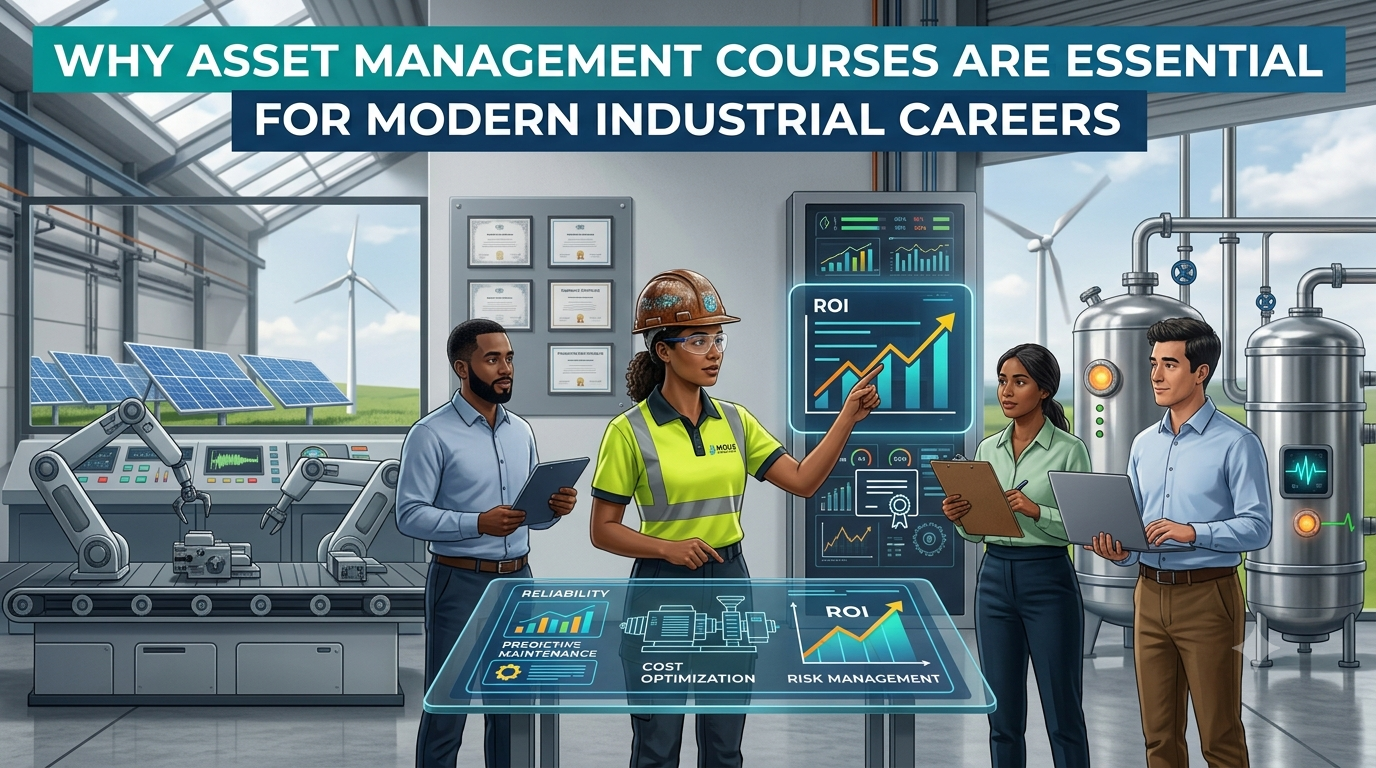
Why Asset Management Courses Are Essential for Modern Industrial Careers
The industrial sector has undergone a major transformation over the last decade. Modern facilities now rely on advanced machinery, digital systems, predictive technologies, and data driven maintenance strategies to remain competitive. Companies are no longer focused only on production output. They are equally concerned with operational efficiency, equipment reliability, sustainability, and long term profitability. As industries continue to evolve, the demand for professionals who understand asset management principles has grown significantly.
Asset management is no longer limited to maintaining equipment or reducing downtime. It has become a strategic discipline that directly impacts business performance, workplace safety, operational continuity, and cost optimization. This shift has created strong demand for skilled individuals who can manage industrial assets with technical expertise and strategic thinking.
For students and professionals seeking rewarding opportunities in industrial sectors, asset management courses provide the practical knowledge and industry insight needed to build successful careers in a highly competitive market.
The Growing Importance of Asset Management in Industry
Industrial organizations invest millions in equipment, infrastructure, machinery, and operational systems. These assets form the foundation of production and service delivery. When assets fail unexpectedly, businesses experience production losses, safety risks, repair costs, and customer dissatisfaction.
Modern industries now recognize that effective asset management is critical for long term success. Companies are implementing structured systems to monitor asset performance, predict failures, improve maintenance schedules, and extend equipment life cycles. This has created a strong need for trained professionals who understand how to manage assets strategically rather than reactively.
Asset management professionals play a vital role in improving reliability, minimizing operational disruptions, and ensuring that industrial facilities operate at maximum efficiency. Their responsibilities often include maintenance planning, reliability engineering, risk assessment, lifecycle costing, data analysis, and compliance management.
As industrial systems become more sophisticated, employers increasingly prefer candidates with formal training in asset management methodologies and modern maintenance practices.
How Asset Management Courses Prepare Students for Modern Careers
Asset management courses bridge the gap between theoretical engineering knowledge and practical industrial applications. Many technical graduates possess strong academic foundations but lack exposure to real world maintenance strategies, reliability systems, and operational planning.
These specialized courses provide hands on learning experiences that help students understand how industrial environments function on a daily basis. Participants learn how to evaluate asset performance, analyze failures, implement preventive maintenance systems, and improve operational reliability.
At Terotechnica, we focus on developing practical industry ready skills that align with current industrial demands. Our programs are designed to help learners understand the complete lifecycle of industrial assets and the importance of proactive maintenance strategies.
Students also gain exposure to internationally recognized asset management frameworks and maintenance standards that are widely used across manufacturing plants, oil and gas facilities, power generation sectors, mining operations, and infrastructure industries.
Industries That Demand Asset Management Professionals
One of the strongest advantages of asset management education is its versatility across multiple industries. Nearly every industrial sector relies on asset intensive operations, which means skilled professionals are needed in a wide range of environments.
Manufacturing companies require asset management specialists to improve machine reliability and production efficiency. Power plants depend on maintenance planners and reliability engineers to ensure uninterrupted operations. Oil and gas facilities need professionals who can manage critical equipment safely and efficiently under demanding conditions.
Transportation systems, mining operations, pharmaceutical manufacturing, food processing industries, and infrastructure projects also require experts who understand maintenance optimization and asset lifecycle management.
Because asset management principles apply across diverse sectors, graduates often enjoy strong career flexibility and long term employment opportunities.
The Role of Technology in Modern Asset Management
Technology has dramatically changed the way industrial assets are monitored and maintained. Today’s facilities use predictive analytics, industrial automation, Internet of Things sensors, computerized maintenance management systems, and condition monitoring technologies to optimize operations.
Asset management professionals must now combine technical knowledge with digital competencies. They need to interpret operational data, identify performance trends, and make informed maintenance decisions based on analytics.
Asset management courses help students understand these evolving technologies and how they integrate into modern industrial systems. Learners gain familiarity with reliability centered maintenance concepts, predictive maintenance tools, vibration analysis, root cause analysis, and maintenance planning software.
At Terotechnica, we prepare students for this technology driven industrial environment by incorporating practical applications and modern maintenance methodologies into our training approach.
This combination of technical expertise and digital understanding significantly improves employability in today’s competitive industrial job market.
Why Employers Value Specialized Asset Management Training
Industrial employers increasingly prefer candidates who possess specialized maintenance and reliability knowledge. Businesses are under constant pressure to reduce operational costs, improve efficiency, and maximize equipment availability. Hiring professionals who already understand asset management systems helps organizations achieve these goals more effectively.
Employees with formal asset management education often adapt more quickly to industrial roles because they understand maintenance planning, reliability improvement strategies, equipment criticality, and operational risk management.
Specialized training also demonstrates commitment to professional development and industry standards. Employers view candidates with asset management qualifications as individuals who are serious about building long term industrial careers.
In many organizations, professionals with advanced maintenance and reliability expertise are also considered for leadership positions because they contribute directly to operational performance and strategic planning.
Career Opportunities and Professional Growth
Asset management education can open the door to a wide range of career opportunities. Graduates may pursue roles such as maintenance engineer, reliability engineer, asset integrity specialist, maintenance planner, condition monitoring analyst, shutdown coordinator, or operations improvement consultant.
These roles often provide strong career progression because asset management skills are closely connected to operational leadership and strategic decision making. Professionals who develop expertise in reliability and maintenance management frequently advance into supervisory and management positions over time.
Global industrial expansion and infrastructure development have also increased international demand for qualified maintenance and asset management professionals. This creates opportunities for individuals who wish to work in multinational environments or pursue careers abroad.
At Terotechnica, we understand the evolving needs of modern industries and aim to equip students with practical knowledge that supports long term professional growth in industrial sectors worldwide.
The Future of Industrial Careers
The future of industry will continue to be shaped by automation, sustainability goals, digital transformation, and operational efficiency. As companies invest in smarter systems and more advanced infrastructure, the importance of effective asset management will only continue to grow.
Organizations cannot afford unplanned failures, inefficient maintenance practices, or poor asset utilization. They need professionals who can combine technical expertise, analytical thinking, and strategic planning to optimize industrial performance.
Asset management courses provide the foundation needed to succeed in this evolving environment. They help students develop industry relevant skills, improve technical understanding, and build confidence in handling real world industrial challenges.
For anyone considering a career in engineering, maintenance, operations, or industrial management, asset management education offers a valuable pathway toward stable, rewarding, and future focused opportunities. As industries continue to modernize, professionals with asset management expertise will remain essential contributors to operational success and long term industrial growth.