
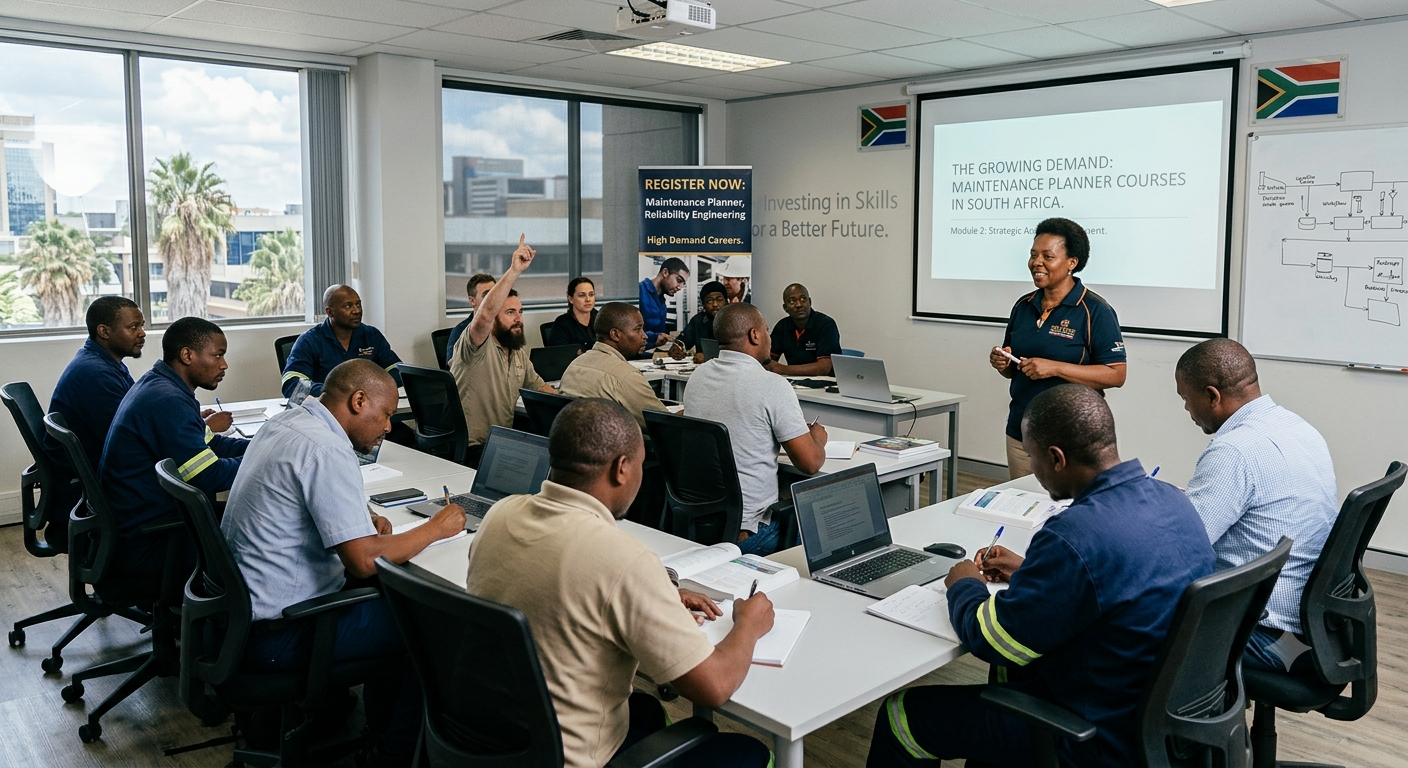
The Growing Demand for Maintenance Planner Courses in South Africa
South Africa’s industrial sector is evolving rapidly as companies place greater focus on operational efficiency, equipment reliability, and long term asset performance. Industries such as mining, manufacturing, power generation, oil and gas, logistics, and utilities are under constant pressure to reduce downtime while improving productivity. As a result, the demand for skilled maintenance planners has increased significantly across the country.
Organizations now recognize that reactive maintenance approaches are costly and unsustainable. Poor planning often leads to unexpected equipment failures, production delays, higher repair costs, and safety concerns. Because of this, businesses are investing in professionals who can organize maintenance activities effectively and help create structured maintenance systems that improve operational outcomes.
This shift has created strong interest in maintenance planner training programs. More professionals are seeking specialized education that prepares them for modern industrial challenges while helping employers improve reliability and asset performance. At Terotechnica, we have seen a growing number of students and industry professionals looking to strengthen their planning and maintenance management skills through industry focused learning.
Why Maintenance Planning Has Become Critical
Maintenance planning is no longer viewed as a secondary administrative function. It has become a core operational strategy for organizations that rely heavily on equipment and physical assets. Proper planning helps companies manage resources effectively, reduce maintenance backlogs, and improve equipment availability.
In South Africa, industries face unique operational pressures that make maintenance planning even more important. Aging infrastructure, increasing operational costs, energy challenges, and production targets require organizations to maximize every asset’s performance. Companies cannot afford frequent breakdowns or inefficient maintenance processes.
Maintenance planners play a central role in ensuring maintenance work is executed efficiently. They coordinate labor, materials, tools, spare parts, schedules, and work procedures to minimize disruptions. Their work helps maintenance teams operate with greater structure and accountability.
As industries modernize and adopt advanced asset management systems, the need for qualified planners continues to rise. Employers increasingly seek individuals who understand preventive maintenance, reliability principles, shutdown planning, computerized maintenance management systems, and workflow optimization.
The Skills Industry Employers Are Looking For
Modern maintenance planning requires far more than basic scheduling knowledge. Employers today expect planners to possess a combination of technical understanding, analytical thinking, communication skills, and operational awareness.
Professionals entering this field must understand maintenance processes from both strategic and practical perspectives. They need the ability to interpret maintenance data, prioritize work orders, manage maintenance resources, and align maintenance activities with production objectives.
Many organizations also expect maintenance planners to work closely with reliability engineers, maintenance supervisors, procurement teams, and operations managers. Strong coordination skills are essential because maintenance planning impacts multiple departments within an organization.
Digital transformation has also influenced the role significantly. Companies increasingly use CMMS and enterprise asset management software to manage maintenance activities. This means maintenance planners must be comfortable working with digital systems and using data to support decision making.
At Terotechnica, our focus is on preparing students for these real industry expectations by combining theoretical knowledge with practical application that reflects modern workplace demands.
Career Opportunities Are Expanding Across Industries
One major reason maintenance planner courses are gaining popularity in South Africa is the growing number of career opportunities available. Skilled maintenance planners are needed in nearly every asset intensive industry.
Mining companies rely heavily on maintenance planning to keep critical equipment operating efficiently in demanding environments. Manufacturing facilities require structured planning to maintain production flow and minimize equipment downtime. Energy and utility sectors depend on maintenance planners to support infrastructure reliability and operational continuity.
The logistics and transportation industries also require professionals who can coordinate maintenance schedules for fleets, machinery, and operational systems. As industrial operations continue expanding, demand for trained planners is expected to remain strong.
Professionals who complete maintenance planner courses often position themselves for career advancement into supervisory, reliability, or asset management roles. The ability to improve maintenance efficiency and asset reliability makes these professionals valuable assets to employers.
Many organizations now prioritize candidates with formal training because structured education demonstrates both technical competency and commitment to professional development.
The Shift Toward Preventive and Predictive Maintenance
Traditionally, many organizations operated with reactive maintenance practices where equipment was repaired only after failures occurred. This approach often resulted in costly downtime and inefficient operations.
Today, South African industries are increasingly shifting toward preventive and predictive maintenance strategies. Businesses understand that planned maintenance reduces long term costs and improves equipment lifespan.
Maintenance planners are essential to making these strategies successful. They ensure inspections, preventive tasks, and maintenance interventions are scheduled properly without disrupting operations unnecessarily.
Predictive maintenance technologies such as condition monitoring, vibration analysis, and equipment diagnostics are also becoming more common. Maintenance planners must understand how to integrate these activities into broader maintenance schedules and workflows.
This industry transformation has created stronger demand for advanced maintenance planning knowledge and specialized training programs.
Professional Training Supports Industry Standards
As industries become more competitive, organizations are paying closer attention to maintenance standards, reliability practices, and asset management frameworks. Maintenance planning now plays a direct role in supporting safety compliance, operational performance, and business sustainability.
Formal training helps professionals understand internationally recognized maintenance and asset management principles. This improves consistency in maintenance execution while helping organizations achieve better operational outcomes.
Companies increasingly prefer employees who can contribute to long term reliability goals rather than simply respond to breakdowns. Maintenance planner courses provide structured knowledge that supports this objective.
At Terotechnica, we emphasize practical industry aligned education that reflects current maintenance management expectations. Our programs are designed to help professionals understand both the technical and organizational aspects of maintenance planning.
Why Professionals Are Investing in Maintenance Planner Courses
Many professionals view maintenance planner training as an investment in long term career growth. Industrial sectors continue evolving, and employees recognize the importance of staying competitive in a changing job market.
Technical workers, artisans, supervisors, and maintenance personnel often pursue maintenance planner courses to expand their responsibilities and increase their professional value. These courses help individuals move into more strategic operational roles with greater decision making responsibilities.
Organizations also benefit when employees receive proper training. Improved planning leads to better maintenance coordination, reduced downtime, improved labor productivity, and stronger asset reliability.
For many companies, investing in maintenance planning education ultimately contributes to lower operational costs and improved business performance.
The Future of Maintenance Planning in South Africa
The future of maintenance planning in South Africa appears highly promising as industries continue focusing on operational excellence and asset optimization. Companies are under pressure to improve efficiency while managing operational risks more effectively.
Maintenance planners will continue playing a vital role in helping organizations achieve these goals. Their ability to organize maintenance processes, support reliability strategies, and improve maintenance execution makes them essential contributors to industrial success.
As automation, digital systems, and advanced maintenance technologies become more widespread, the role of maintenance planners will continue evolving. Professionals with strong planning expertise and modern technical knowledge will remain in high demand across industries.
At Terotechnica, we remain committed to supporting this growing need by providing industry relevant education that helps professionals build practical maintenance planning capabilities for today’s industrial environment.
The growing demand for maintenance planner courses in South Africa reflects a broader shift toward proactive maintenance management and improved asset reliability. Organizations across multiple industries now recognize the importance of structured maintenance planning in achieving operational success.
As businesses seek greater efficiency, reduced downtime, and stronger asset performance, skilled maintenance planners have become increasingly valuable. Professionals who invest in specialized training position themselves for strong career opportunities while helping organizations improve long term operational performance.
With industries continuing to modernize and adopt advanced maintenance practices, the importance of qualified maintenance planners is only expected to grow further in the years ahead.