
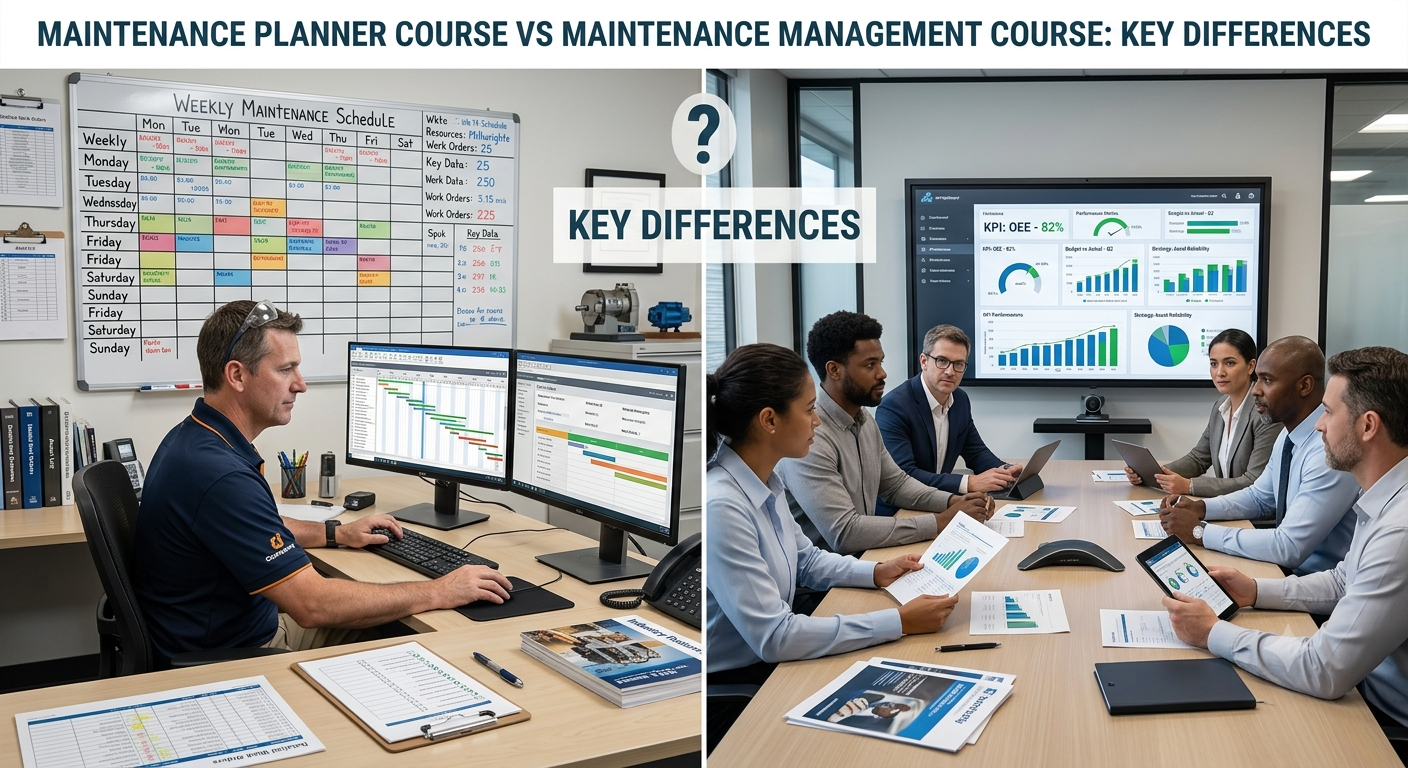
Maintenance Planner Course vs Maintenance Management Course: Key Differences
The maintenance and asset management industry continues to evolve as organizations place greater emphasis on equipment reliability, operational efficiency, and long-term asset performance. As industries across South Africa invest in modern maintenance strategies, the demand for skilled professionals continues to grow.
Many aspiring professionals and experienced technicians often find themselves deciding between a Maintenance Planner Course and a Maintenance Management Course. While both qualifications are valuable, they serve different purposes and prepare learners for different responsibilities within an organization.
At Tero Technica, we help learners understand these distinctions so they can choose a training path that aligns with their career goals and industry requirements.
Understanding the Role of Maintenance Planning
Maintenance planning focuses on preparing maintenance activities before work begins. A maintenance planner ensures that technicians have the resources, information, tools, spare parts, and schedules needed to complete maintenance tasks efficiently.
The primary objective of maintenance planning is to reduce downtime, improve productivity, and ensure maintenance work is completed correctly the first time.
Professionals in maintenance planning are responsible for organizing maintenance activities, developing work packages, estimating labor requirements, coordinating resources, and supporting maintenance execution teams.
A Maintenance Planner Course is designed to equip learners with the practical skills needed to manage these responsibilities effectively.
What Is a Maintenance Planner Course?
A Maintenance Planner Course focuses on the technical and administrative processes required to prepare maintenance work. The curriculum typically concentrates on planning methodologies, scheduling techniques, work management systems, and maintenance coordination.
Learners develop an understanding of preventive maintenance planning, job scoping, backlog management, shutdown planning, and spare parts coordination. They also learn how to use maintenance management systems to organize and track maintenance activities.
The course is particularly suitable for maintenance technicians, supervisors, planners, and individuals who wish to specialize in maintenance planning functions within industrial environments.
Because planning directly impacts equipment reliability and workforce productivity, organizations rely heavily on qualified planners to maintain efficient operations.
Understanding Maintenance Management
Maintenance management operates at a broader organizational level. While planning focuses on preparing maintenance work, management involves directing the overall maintenance strategy of a business.
Maintenance managers are responsible for establishing maintenance objectives, managing teams, controlling budgets, improving reliability programs, and ensuring maintenance activities align with business goals.
They oversee planning and scheduling functions while also making strategic decisions that influence asset performance and organizational profitability.
A Maintenance Management Course prepares professionals to lead maintenance departments and develop long-term maintenance strategies.
What Is a Maintenance Management Course?
A Maintenance Management Course provides a comprehensive understanding of leadership, asset management, maintenance strategy, financial management, and organizational performance.
Learners study maintenance policies, reliability improvement initiatives, risk management, performance measurement, budgeting, workforce leadership, and asset lifecycle management.
The course helps participants understand how maintenance contributes to overall business success and how strategic maintenance decisions affect production, safety, compliance, and profitability.
Rather than focusing solely on daily maintenance preparation, maintenance management training develops the skills required to oversee entire maintenance operations.
Key Difference: Scope of Responsibility
One of the most significant differences between the two courses lies in the scope of responsibility.
Maintenance planners concentrate on preparing and coordinating maintenance activities. Their work is operational and detail-oriented. They focus on ensuring maintenance tasks can be executed efficiently and safely.
Maintenance managers, on the other hand, oversee broader organizational objectives. They are responsible for leading teams, setting goals, managing resources, and ensuring maintenance performance supports business outcomes.
While planners focus on how maintenance work gets done, managers focus on why maintenance strategies are implemented and how they contribute to organizational success.
Key Difference: Daily Responsibilities
The day-to-day activities of maintenance planners and maintenance managers differ considerably.
Maintenance planners typically spend their time reviewing work orders, preparing schedules, coordinating spare parts, estimating labor requirements, and organizing maintenance resources. Their success is often measured through schedule compliance, maintenance efficiency, and work execution quality.
Maintenance managers spend more time evaluating performance metrics, managing budgets, conducting strategic reviews, leading personnel, and developing reliability improvement initiatives. Their success is measured through asset availability, cost control, safety performance, and overall maintenance effectiveness.
Understanding these daily responsibilities can help learners determine which career path best matches their interests and strengths.
Key Difference: Leadership Requirements
A Maintenance Planner Course generally emphasizes technical planning and coordination skills. While communication and collaboration are important, leadership development is not usually the primary focus.
A Maintenance Management Course places much greater emphasis on leadership capabilities. Maintenance managers must supervise teams, resolve conflicts, motivate employees, manage change, and influence organizational decision-making.
Individuals seeking leadership positions often benefit from maintenance management training because it develops the managerial competencies required for senior roles.
Key Difference: Strategic Versus Operational Focus
Maintenance planning is primarily operational. The focus is on preparing maintenance work to ensure smooth execution.
Maintenance management is strategic. The focus extends beyond individual work orders to include long-term asset performance, maintenance policies, business objectives, and continuous improvement initiatives.
Organizations need both operational excellence and strategic direction. As a result, planners and managers work closely together to achieve maintenance goals.
Career Opportunities for Maintenance Planners
A Maintenance Planner Course can open doors to several specialized career opportunities across industries such as mining, manufacturing, utilities, transportation, energy, and processing plants.
Common career paths include maintenance planner, maintenance scheduler, shutdown planner, maintenance coordinator, reliability support specialist, and work management planner.
These positions are highly valued because effective planning significantly reduces maintenance costs and improves equipment reliability.
Professionals with strong planning skills are often viewed as critical contributors to maintenance performance.
Career Opportunities for Maintenance Managers
A Maintenance Management Course prepares individuals for leadership and decision-making roles within maintenance organizations.
Graduates may pursue positions such as maintenance manager, asset manager, reliability manager, engineering manager, maintenance superintendent, or operations leader.
These roles involve greater responsibility and often require professionals to oversee multiple teams, manage budgets, and contribute to strategic business planning.
As organizations continue to adopt advanced asset management practices, the demand for skilled maintenance managers remains strong.
Which Course Is Right for You?
Choosing between a Maintenance Planner Course and a Maintenance Management Course depends largely on your current experience, career aspirations, and professional interests.
If you enjoy organizing maintenance activities, coordinating resources, and improving work execution efficiency, a Maintenance Planner Course may be the ideal choice.
If your goal is to lead maintenance teams, develop maintenance strategies, manage budgets, and influence organizational performance, a Maintenance Management Course may be the better option.
Some professionals begin their careers in planning roles and later pursue maintenance management training as they advance into leadership positions.
The Importance of Industry-Relevant Training
Regardless of the path chosen, industry-focused education plays a crucial role in professional success. Employers seek individuals who understand modern maintenance practices, reliability principles, asset management concepts, and performance improvement methodologies.
At Tero Technica, we recognize the importance of providing practical, industry-aligned training that prepares learners for real-world maintenance challenges. Our programs are designed to bridge the gap between theoretical knowledge and workplace application.
By gaining relevant skills and professional expertise, learners position themselves for long-term career growth within the asset management and maintenance sectors.
Both Maintenance Planner Courses and Maintenance Management Courses play important roles in developing maintenance professionals. While planners focus on organizing and coordinating maintenance work, managers oversee strategy, leadership, performance, and long-term asset success.
Understanding the differences between these two educational pathways helps professionals make informed career decisions and pursue training that aligns with their ambitions. Tero Technica supports learners at every stage of their professional journey by offering industry-focused education that builds the skills needed to succeed in today's maintenance and asset management environment.
Whether your goal is to become an expert planner or a future maintenance leader, investing in the right training can create opportunities for career advancement, improved performance, and greater professional impact.