
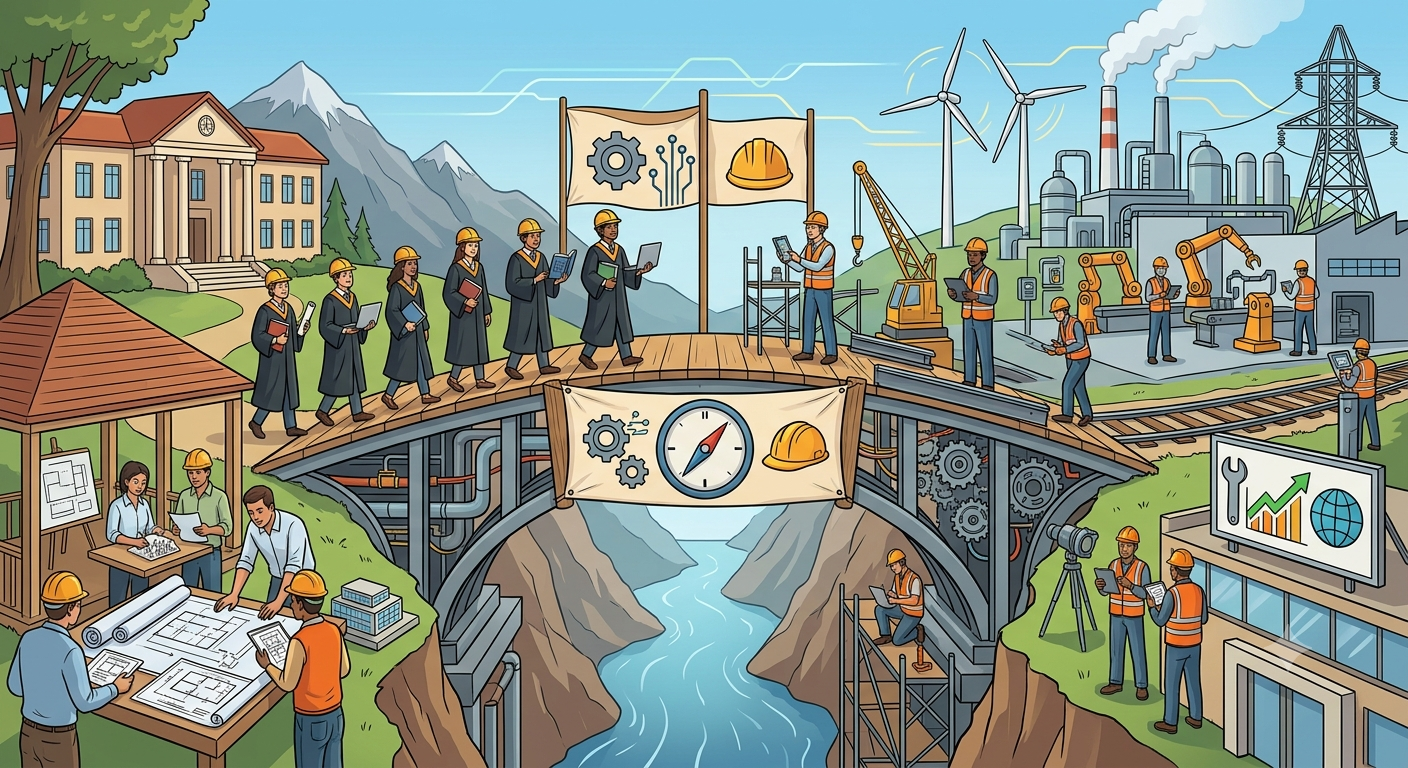
Understanding the Design to Operations Gap
Maintenance engineering plays an important role in ensuring that industrial assets remain reliable, safe and productive throughout their working life. Engineers are often involved in the design and specification of equipment, but the practical realities of operating and maintaining those assets can be very different from what was anticipated during the design stage. A design may meet technical specifications while still creating challenges for inspection, maintenance access, component replacement or long term reliability. This gap can lead to unnecessary downtime, higher maintenance costs and reduced asset performance once equipment enters service. Through our maintenance engineering courses, we focus on helping engineers understand how design decisions influence operational reliability and maintenance outcomes. This approach is particularly relevant across South Africa, where industries depend on reliable infrastructure, production equipment and well managed physical assets.
Why Maintenance Must Be Considered During Design
Reliability should not begin when an asset experiences its first failure because many reliability outcomes are determined much earlier during the design process. Choices relating to materials, equipment configuration, component selection, accessibility and redundancy can have a major influence on future maintenance requirements. When maintenance considerations are overlooked, engineers may inherit assets that are difficult or costly to inspect, repair and service. Designing for maintainability can therefore reduce maintenance complexity while improving equipment availability and workforce safety. Engineers who understand maintenance principles can contribute more effectively during design reviews and help identify potential operational problems before construction or commissioning. Our training encourages this broader perspective by connecting engineering design decisions with the practical requirements of asset operation and maintenance.
Connecting Engineering Design With Asset Reliability
Operational reliability depends on more than selecting high quality equipment because the complete asset system must perform consistently under real operating conditions. Engineers need to consider how equipment will behave under changing loads, environmental conditions, operating cycles and maintenance practices. Reliability centred thinking can help identify potential failure modes and determine which design features can reduce their likelihood or consequences. This requires engineers to move beyond individual components and consider the interaction between equipment, people, processes and operating conditions. Maintenance engineering courses can provide the structured knowledge required to evaluate these relationships before reliability problems become established. We use this systems based approach to help learners understand how engineering decisions can support dependable asset performance throughout the asset life cycle.
Designing for Maintainability
Maintainability is a critical consideration when developing industrial equipment because even reliable assets eventually require inspection, servicing, adjustment or component replacement. Equipment that has poor access to critical components can increase maintenance duration and expose personnel to unnecessary safety risks. Engineers should therefore consider access routes, lifting arrangements, isolation points, inspection requirements and replacement procedures during the design stage. These considerations can have a significant effect on mean time to repair and the overall availability of production assets. A maintenance focused design can also make planned maintenance more predictable and reduce disruption to production activities. By developing maintainability awareness, engineers can help create assets that are not only technically capable but also practical to operate and maintain.
Using Failure Mode Analysis During Design
Failure Mode and Effects Analysis can provide engineers with a structured method for identifying potential weaknesses before an asset is placed into operation. The process allows teams to examine how individual components or systems could fail, what could cause those failures and what consequences might follow. This information can then be used to review design choices and determine whether additional controls, monitoring systems or alternative components are required. Applying failure analysis early can be more effective than waiting for operational failures to provide evidence of weaknesses. Engineers with maintenance knowledge can contribute valuable practical insight when assessing how failures will affect safety, production and maintenance resources. We include this type of reliability thinking because understanding failure behaviour is fundamental to making informed engineering and maintenance decisions.
Understanding Asset Criticality
Not every asset carries the same operational or business risk, which makes asset criticality an important part of reliability planning. Criticality assessments help organisations identify equipment where failure could have significant consequences for safety, production, environmental performance, quality or financial outcomes. Engineers can use this information when making decisions about equipment specification, redundancy, condition monitoring and maintenance requirements. A highly critical asset may justify additional protection or monitoring that would not be appropriate for a less important component. Understanding these differences helps engineering teams allocate resources according to risk rather than treating every asset in exactly the same way. Our maintenance engineering courses help develop this risk based perspective so that engineers can connect technical decisions with wider operational priorities.
Designing Effective Condition Monitoring
Condition monitoring can provide valuable information about the health of equipment before a functional failure occurs. However, effective monitoring begins with understanding which failure mechanisms are relevant to the asset and what measurable indicators can reveal deterioration. Engineers can influence the availability of monitoring points, sensor locations and diagnostic capabilities during the design stage. If these requirements are considered too late, organisations may face expensive modifications or limited opportunities to collect useful condition data. Integrating condition monitoring into the original design can support earlier intervention and more informed maintenance planning. This connection between design engineering and maintenance strategy can help organisations develop stronger reliability programmes throughout the asset life cycle.
The Role of Reliability Centred Maintenance
Reliability Centred Maintenance provides a structured approach for determining appropriate maintenance strategies based on asset function, failure modes and consequences. Engineers who understand RCM principles can help ensure that maintenance requirements are aligned with how equipment is expected to operate. Instead of automatically applying fixed maintenance intervals, teams can consider whether scheduled restoration, condition based maintenance, failure finding or other strategies are suitable. This can prevent unnecessary maintenance while ensuring that important failure mechanisms receive appropriate attention. Understanding the relationship between equipment design and maintenance strategy also helps engineers recognise when a design change may provide a better solution than increasing maintenance activity. This type of thinking supports a more balanced approach to reliability, cost and operational performance.
Learning From Operational Feedback
The transition from design to operation should not be treated as the end of the engineering process because operational experience provides valuable information for future improvement. Maintenance teams often discover practical issues that were not obvious during design, including difficult access, recurring component failures or unexpected operating stresses. Capturing this information and feeding it back to engineering teams can strengthen future designs and prevent repeated problems. Engineers who understand maintenance can communicate more effectively with technicians, operators and reliability professionals when reviewing this operational evidence. A strong feedback loop allows organisations to turn maintenance history into engineering knowledge and better asset decisions. Through structured maintenance education, we encourage engineers to view operational feedback as an important source of reliability improvement.
Building Collaboration Between Engineering and Maintenance Teams
The gap between design and operational reliability is often influenced by organisational separation rather than a lack of technical knowledge. Design engineers, maintenance engineers, operators and reliability specialists may work with different objectives, systems and performance measures. Effective collaboration allows these groups to share information about equipment requirements, failure risks, maintenance constraints and operational realities. Cross functional design reviews can identify issues that may otherwise only become visible after commissioning. Engineers who understand maintenance terminology and reliability principles are better positioned to participate in these discussions and contribute practical solutions. This collaborative approach is particularly valuable in complex South African industrial environments where equipment reliability can directly affect productivity, safety and operating costs.
Considering Life Cycle Cost During Engineering Decisions
The purchase price of an asset represents only one part of its total financial impact because maintenance, energy, downtime, refurbishment and eventual replacement can contribute substantially to life cycle cost. Engineers therefore need to consider how design alternatives may influence expenditure throughout the operational life of an asset. A component with a lower initial cost may require more frequent replacement, while a more robust alternative could provide better long term value. Life cycle cost analysis helps engineering teams evaluate these trade offs using a broader financial perspective. Maintenance knowledge gives engineers a better understanding of how reliability and maintainability influence these long term costs. This helps organisations make engineering decisions that support sustainable asset performance rather than focusing only on initial capital expenditure.
Developing Competence Through Maintenance Engineering Courses
Maintenance engineering education can help engineers develop the knowledge required to connect technical design principles with practical asset management requirements. A strong course should cover areas such as reliability engineering, maintainability, failure analysis, maintenance strategies, asset criticality and life cycle thinking. These subjects give engineers a framework for understanding how their decisions influence equipment performance after commissioning. They also provide useful knowledge for professionals who are moving from traditional engineering roles into maintenance, reliability or asset management positions. We structure our learning around practical engineering challenges so that learners can apply reliability concepts to real industrial situations. This helps build the competence required to participate confidently in design reviews, maintenance planning and operational improvement initiatives.
Applying South African Industrial Contexts
South Africa has a diverse industrial environment that includes mining, manufacturing, energy, infrastructure, processing and other asset intensive sectors. These industries require engineering professionals who can understand both technical asset requirements and the operational realities associated with maintaining complex equipment. Reliability challenges can have significant consequences where production depends on large interconnected systems and specialised machinery. Engineers therefore benefit from developing a practical understanding of maintainability, risk, asset criticality and life cycle performance. Maintenance education can help professionals apply internationally recognised principles while considering the conditions and operational requirements found within South African industries. At Terotechnica, we focus on developing knowledge that can support engineers and maintenance professionals working within this broader asset management environment.
From Design Engineer to Reliability Focused Engineer
A design engineer does not need to become a maintenance specialist to contribute meaningfully to operational reliability, but a stronger understanding of maintenance can significantly broaden their engineering perspective. Engineers who understand failure mechanisms, maintenance requirements and operational constraints can make more informed decisions when developing or specifying assets. They can also communicate more effectively with maintenance teams when reviewing equipment performance and resolving recurring reliability problems. This creates a professional connection between engineering design and the operational stage of the asset life cycle. Over time, this approach can help organisations reduce avoidable failures, improve maintainability and strengthen overall asset performance. The objective is not simply to design equipment that works, but to design assets that can continue to deliver their required function reliably throughout their intended life.
Creating a Stronger Reliability Culture
Bridging the design and operational gap requires more than technical tools because it also requires a culture where reliability is considered a shared responsibility. Engineers, maintenance professionals, operators and asset managers all influence how effectively physical assets perform. When reliability objectives are considered from the earliest design decisions through commissioning, operation and eventual replacement, organisations can make more consistent asset management decisions. Training plays an important role by giving professionals a common understanding of reliability terminology, risk principles and maintenance strategies. A strong reliability culture encourages teams to identify potential problems early rather than relying solely on reactive maintenance after failures occur. This creates a more proactive foundation for managing industrial assets and supporting sustainable operational performance.
Preparing Engineers for Life Cycle Asset Management
The future of engineering increasingly requires professionals to understand what happens to an asset after it leaves the design office. Asset management places greater emphasis on balancing performance, risk and cost throughout the complete life cycle of physical assets. Engineers with maintenance and reliability knowledge can contribute to this process by considering operational requirements alongside technical specifications. They can help organisations make better decisions about asset selection, maintenance strategies, condition monitoring, modifications and replacement. This broader competence is valuable for professionals seeking to contribute to reliability improvement and asset management programmes across South Africa. By developing these skills through structured maintenance engineering courses, engineers can help create a stronger connection between sound design and dependable operational performance.
The relationship between engineering design and operational reliability is fundamental to successful asset management because decisions made during design can influence an asset for decades. Engineers who understand maintainability, failure analysis, asset criticality, condition monitoring and life cycle cost can contribute more effectively to long term reliability. Maintenance engineering courses provide an opportunity to develop this broader understanding and connect engineering theory with practical operational requirements. The result is a more integrated approach where design, maintenance, reliability and asset management work towards common performance objectives. We believe that developing this capability is important for engineers working across South Africa's asset intensive industries and for organisations seeking to improve the value delivered by their physical assets. Through practical and structured learning, Terotechnica helps professionals strengthen the knowledge needed to bridge the gap between designing an asset and keeping that asset reliable throughout its operational life.