
Introduction: Why Physical Asset Governance Matters
Organizations across asset intensive industries depend on physical assets to deliver consistent services, maintain productivity, and achieve long term business objectives. From manufacturing equipment and transportation fleets to buildings, utilities, and infrastructure, every physical asset requires careful oversight throughout its lifecycle. Poor governance can lead to unnecessary costs, operational disruptions, safety concerns, and inefficient investment decisions. This is why asset management has become an increasingly important strategic discipline rather than simply a maintenance responsibility. ISO 55000 provides organizations with a structured framework for understanding and managing assets in alignment with broader business goals. Through effective ISO 55000 training, professionals can develop the knowledge required to connect asset related decisions with governance, risk management, performance, and organizational value. At Terotechnica, we believe that strong asset governance begins with building the right competencies among the people responsible for managing and maintaining critical physical assets.
Understanding the Connection Between ISO 55000 and Governance
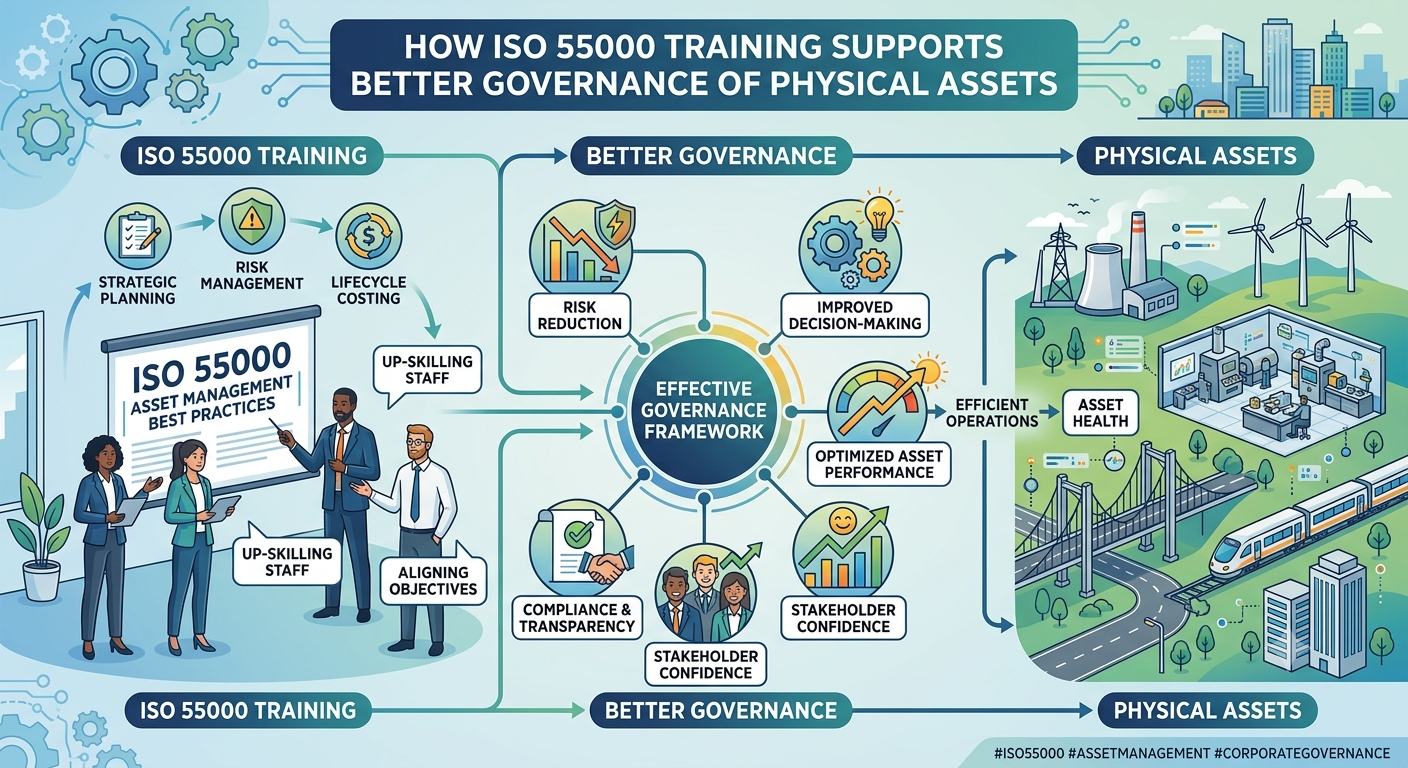
ISO 55000 establishes principles and concepts that help organizations manage assets systematically and consistently. Governance plays an essential role because asset decisions often involve significant financial investments, operational risks, and long term consequences. Senior leadership must have confidence that asset management activities are aligned with organizational objectives and stakeholder expectations. ISO 55000 training helps professionals understand how accountability, decision making authority, policies, and performance oversight contribute to effective governance. It also emphasizes that asset management should not operate independently from corporate strategy or financial planning. When employees understand these connections, organizations can create clearer structures for managing physical assets and making informed decisions. This alignment helps ensure that every level of the organization understands its responsibilities in delivering value from assets.
Creating Clear Accountability Across the Organization
One of the most important benefits of ISO 55000 training is the development of clear accountability for asset related activities. In many organizations, responsibilities for assets are distributed across operations, maintenance, engineering, finance, and leadership teams. Without proper coordination, important decisions can become fragmented and accountability may become unclear. Training helps professionals understand how roles should contribute to the overall asset management system while supporting common organizational objectives. It encourages teams to establish responsibilities for planning, operating, maintaining, monitoring, and improving physical assets. Clear accountability also makes it easier to identify gaps in decision making and address issues before they become major operational problems. By strengthening role clarity, organizations can create a more disciplined governance environment around their most valuable physical resources.
Supporting Better Strategic Decision Making
Physical assets require decisions that can affect an organization for decades, particularly when dealing with infrastructure, facilities, or capital intensive equipment. ISO 55000 training teaches professionals to view these decisions through a structured and value focused perspective. Instead of making decisions based only on immediate maintenance needs or short term financial considerations, organizations can evaluate the broader consequences of their choices. This includes understanding lifecycle costs, operational performance, risk exposure, and future asset requirements. A well trained workforce is better equipped to provide decision makers with relevant information and evidence when investments are being considered. This improves the quality of strategic discussions and reduces the likelihood of decisions based on incomplete information. Better decision making ultimately strengthens governance because leadership can demonstrate that asset related investments are managed responsibly and transparently.
Improving Risk Management for Physical Assets
Every physical asset presents a range of risks that must be understood and managed appropriately. Equipment failures can disrupt production, aging infrastructure can create safety concerns, and inadequate maintenance can result in unexpected financial losses. ISO 55000 training helps professionals recognize the importance of integrating risk management into everyday asset management practices. Rather than responding only after failures occur, trained teams can identify potential risks and develop strategies to reduce their impact. This proactive approach supports stronger governance because leaders gain greater visibility into the risks associated with critical assets. It also allows organizations to prioritize resources based on the potential consequences of asset failures. When risk information becomes part of governance discussions, organizations can make more balanced decisions about investment, maintenance, replacement, and operational priorities.
Establishing Consistent Asset Management Processes
Consistency is essential when organizations manage large numbers of physical assets across multiple departments or locations. Without standardized processes, different teams may apply different methods for maintenance planning, condition assessment, asset replacement, and performance monitoring. ISO 55000 training provides a common language and framework that can help align these activities. Professionals gain a better understanding of how policies, objectives, plans, and processes should work together within an asset management system. This consistency makes it easier for leadership to evaluate performance and compare results across different areas of the organization. It also reduces the risk of critical information being lost when responsibilities change or experienced employees leave. A structured approach to asset management strengthens governance by creating repeatable processes that can be monitored, reviewed, and continuously improved.
Strengthening Lifecycle Thinking
Effective governance requires organizations to look beyond the immediate condition or cost of an asset. ISO 55000 promotes lifecycle thinking, which considers the full journey of an asset from planning and acquisition through operation, maintenance, renewal, and eventual disposal. Training helps professionals understand how decisions made at one stage of the lifecycle can influence costs and performance at later stages. For example, selecting a lower cost asset during procurement may create higher maintenance expenses or reliability problems in the future. Lifecycle thinking encourages organizations to evaluate the total value and long term implications of asset decisions. This perspective supports better governance because it prevents short term priorities from undermining long term organizational performance. It also helps leadership ensure that capital and operational expenditures are considered as connected elements of the overall asset strategy.
Enhancing Performance Measurement and Oversight
Governance depends heavily on the ability to measure whether asset management activities are delivering the intended results. ISO 55000 training helps professionals understand the importance of establishing meaningful performance measures that connect operational activities with organizational objectives. Simply collecting large amounts of maintenance or asset data does not guarantee effective governance. Organizations need to identify the information that genuinely supports better decisions and demonstrates whether objectives are being achieved. Training can help teams develop a stronger understanding of performance indicators related to reliability, availability, cost, risk, condition, and service delivery. These measures provide leadership with greater visibility into the effectiveness of asset management activities. With stronger oversight mechanisms, organizations can identify performance gaps earlier and take corrective action before problems escalate.
Encouraging Collaboration Between Departments
Physical asset governance cannot be managed effectively by a single department working in isolation. Maintenance teams may understand equipment condition, while operations teams understand production requirements and finance teams understand investment constraints. Engineering professionals may contribute technical expertise, while senior leadership provides strategic direction and governance oversight. ISO 55000 training helps bring these perspectives together by promoting an integrated approach to asset management. It encourages communication between departments and helps employees understand how their decisions affect other areas of the organization. This improved collaboration reduces conflicts caused by competing priorities and supports more balanced asset related decisions. When departments share information and work toward common objectives, the entire organization becomes better positioned to govern physical assets effectively.
Supporting Compliance and Organizational Assurance
Organizations operating in regulated or high risk industries often need to demonstrate that their assets are being managed responsibly. Strong asset governance provides greater assurance to regulators, investors, customers, and other stakeholders that appropriate systems and controls are in place. ISO 55000 training helps professionals understand the principles behind creating a structured and auditable asset management approach. Employees can learn how documentation, processes, responsibilities, and performance reviews contribute to organizational assurance. This does not mean that governance should become an administrative exercise focused only on paperwork. Instead, the objective is to create evidence that important asset decisions are based on defined processes and relevant information. A well implemented approach can therefore improve confidence among stakeholders while supporting stronger operational and strategic outcomes.
Building a Culture of Continual Improvement
Effective asset governance is not a one time initiative because physical assets, technologies, risks, and organizational priorities continue to evolve. ISO 55000 training supports a mindset of continual improvement by encouraging organizations to regularly review their asset management practices and performance. Teams learn to identify opportunities for improving processes, decision making, and resource allocation. Lessons from asset failures, maintenance activities, audits, and performance reviews can be used to strengthen future practices. This creates a learning environment where asset management becomes progressively more mature and responsive to changing conditions. Continual improvement also helps prevent organizations from becoming overly dependent on outdated practices that may no longer support current business objectives. By developing this culture, we can help professionals recognize that effective governance requires ongoing attention, learning, and adaptation.
Developing Competent Asset Management Professionals
The effectiveness of any asset management framework ultimately depends on the people responsible for applying it. Policies and procedures can establish direction, but competent professionals are needed to translate those requirements into practical actions. ISO 55000 training helps develop the knowledge necessary to understand asset management principles and their relationship with governance. It can also improve communication between technical professionals and organizational leaders by providing a shared understanding of asset management concepts. This is particularly valuable in organizations where technical decisions must be connected with financial, operational, and strategic considerations. At Terotechnica, we focus on helping learners build practical knowledge that can support more informed and structured approaches to physical asset management. Developing capable professionals creates a stronger foundation for sustainable governance across the entire asset lifecycle.
Connecting Maintenance Activities With Organizational Objectives
Maintenance is often viewed as a technical function focused primarily on repairing equipment and preventing failures. However, ISO 55000 encourages organizations to recognize that maintenance activities should contribute directly to broader asset management objectives. Training helps maintenance professionals understand how their work influences reliability, risk, cost, safety, and organizational performance. This broader perspective can improve the prioritization of maintenance activities and resource allocation. Instead of treating every maintenance task as equally important, teams can consider the criticality and value contribution of different assets. Governance becomes stronger when maintenance decisions can be explained in relation to organizational goals and risk appetite. This connection transforms maintenance from a reactive operational function into an important contributor to strategic asset performance.
Improving Transparency in Asset Related Decisions
Transparency is a fundamental characteristic of effective governance, particularly when significant resources are being allocated to physical assets. Organizations need to understand why certain assets receive investment, why maintenance strategies are selected, and how risks are being addressed. ISO 55000 training encourages structured decision making based on defined criteria and relevant information. This can reduce reliance on informal practices or decisions based solely on individual preferences and experience. When decision processes are documented and consistently applied, leadership gains greater confidence in the management of asset related investments. Transparency also makes it easier to communicate decisions to stakeholders and demonstrate the reasoning behind major asset management choices. Over time, this creates a more accountable organizational culture where asset decisions can be reviewed and improved when necessary.
Preparing Organizations for Long Term Asset Challenges
Many organizations are facing increasingly complex challenges related to aging infrastructure, technological change, sustainability expectations, and financial constraints. These challenges require asset management professionals to think strategically about the future rather than focusing exclusively on current operational demands. ISO 55000 training supports this forward looking perspective by encouraging alignment between asset management objectives and long term organizational planning. Professionals can better understand how future demand, changing risks, and asset condition trends should influence current decisions. This improves governance by ensuring that leadership considers the long term consequences of asset strategies. Organizations become better prepared to manage uncertainty and adapt their asset management approaches as circumstances change. A proactive and informed workforce is therefore an important advantage in maintaining resilient and sustainable physical asset portfolios.
Conclusion: Training as a Foundation for Better Asset Governance
Strong governance of physical assets requires more than technical expertise or well written maintenance procedures. It requires clear accountability, informed decision making, effective risk management, meaningful performance measurement, and alignment with organizational objectives. ISO 55000 training provides a valuable foundation for developing these capabilities across different levels of an organization. By helping professionals understand the strategic importance of asset management, training can improve how organizations plan, operate, maintain, and invest in physical assets. It also creates a shared framework that encourages collaboration between leadership, operations, maintenance, engineering, and financial teams. As organizations continue to depend on complex and valuable physical assets, the ability to govern those assets effectively will become increasingly important for long term success. Investing in professional knowledge and asset management competence is therefore a practical step toward building stronger governance, improving organizational confidence, and achieving greater value throughout the asset lifecycle.